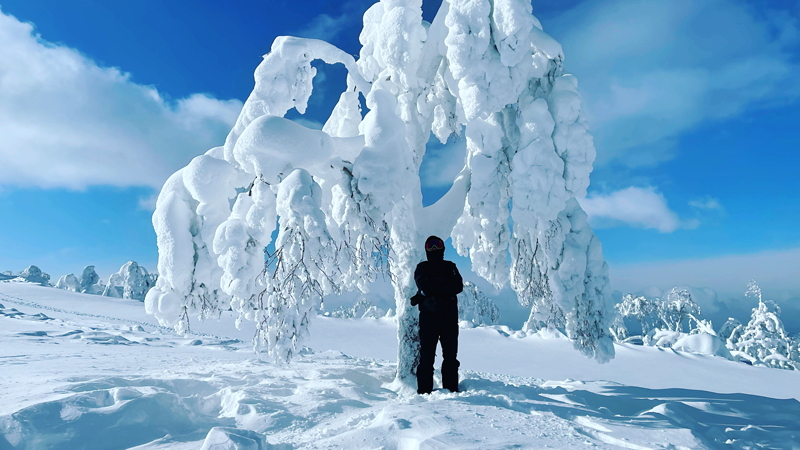
There is a specific sound to deep Japanese powder—or rather, a lack of it. It’s a silence so profound that it feels like the world has been wrapped in acoustic foam. I’ve spent twenty years chasing storms across the Andes, the Alps, and the Rockies, but nothing prepares you for the "Japow" phenomenon. It’s the result of a perfectly calibrated meteorological engine: freezing Siberian air sweeps across the Sea of Japan, picks up moisture, and slams into the mountains of Hokkaido and Honshu. The result? Some of the lightest, most consistent snow on the planet.
If you’re planning a pilgrimage for the 2026 season, timing is everything. For the most reliable, "bottomless" conditions, January and February are the gold standard. This is when the "Snow Monster" trees are at their peak and the base layers are deep enough to turn even the steepest Honshu faces into pillows. But 2026 isn't just about the snow; it's about the evolution of Japanese ski luxury. We’re seeing a sophisticated blend of traditional ryokan culture and ultra-modern alpine amenities that rival anything in Courchevel or Aspen.
Quick Picks: 2026 Winter Highlights
Before we dive into the details, here’s a snapshot for those of you looking to match a resort to your specific riding style:
| Resort | Best For | Annual Snowfall | Pass Compatibility |
|---|---|---|---|
| Niseko United | International Luxury & Nightlife | 500+ inches | Ikon Pass |
| Mt. T (Tenjindaira) | Hardcore Backcountry & Steep Vertical | 600+ inches | Ikon Pass |
| Shiga Kogen | Families & Traditional Culture | 400+ inches | Ikon Pass |
| Rusutsu | Lift-Accessed Tree Skiing | 550+ inches | Epic Pass |
| Hakuba Valley | Alpine Peaks & Olympic Runs | 450+ inches | Epic Pass |
1. Niseko United (Hokkaido): The Epicenter of Luxury
Niseko is no longer a "hidden gem"—it is the undisputed heavyweight champion of Japanese skiing. Comprising four interconnected resorts (Grand Hirafu, Hanazono, Niseko Village, and Annupuri) on Mount Niseko-Annupuri, it offers a scale that is rare in Japan. What I love most about Niseko isn't just the sheer acreage; it’s the Gate System. Niseko has a sophisticated backcountry policy that allows riders to access out-of-bounds terrain safely through designated gates when conditions permit.
For 2026, the luxury stakes have been raised again. If you want the "see and be seen" vibe, Park Hyatt Niseko Hanazono remains the benchmark for ski-in/ski-out sophistication. However, for a more contemplative, high-end experience, I suggest looking at Zaborin. This award-winning ryokan features only 15 villas, each with its own private indoor and outdoor onsen, tucked away in a private forest.
Pass Information: Niseko United is a premier partner on the Ikon Pass, offering up to 7 days of unrestricted access depending on your pass level.
The Dining Scene: You cannot visit Niseko without trying to snag a seat at Rakuichi Soba. Watching Master Tatsuru Rai hand-cut buckwheat noodles is a religious experience. For sushi, Sushi Shin by Miyakawa (the Niseko outpost of the three-Michelin-starred Sapporo original) is where you’ll find the elite crowd.
2. Rusutsu Resort (Hokkaido): The Tree Skiing Paradise
Just a 40-minute drive from Niseko lies its quieter, more powder-focused cousin, Rusutsu. While Niseko has the glitz, Rusutsu has the trees. Spread across West Mountain, East Mountain, and Mount Isola, the resort is famous for its perfectly spaced glades and lack of crowds.
I’ve spent days here where I didn't see another soul while riding through chest-deep powder on Mount Isola. The terrain is less steep than the Alps, but the "surfability" of the snow is unmatched.
Where to Stay: The Vale Rusutsu offers five-star, ski-in/ski-out luxury condos that overlook the slopes. It’s modern, sleek, and puts you seconds away from the gondola.
Pass Information: Rusutsu is accessible via the Epic Pass, which typically offers 5 consecutive days of skiing.
3. Kiroro Resort (Hokkaido): The Hidden Powder Sanctuary
If Niseko is the party and Rusutsu is the forest, Kiroro is the sanctuary. Located in a "snow trap" valley near the coast, Kiroro often receives more snow than its neighbors—averaging over 800 inches annually. It’s a favorite for "storm chasing" because its high-speed gondolas are well-shielded from the wind.
Luxury Onsen & Stay: YU Kiroro is my top pick here. It’s an independent luxury ski-in/ski-out residence that feels more like a private club than a hotel. The onsen here is geothermally heated and rich in minerals, perfect for recovering from a day of high-cadence powder laps.
4. Hakuba Valley (Nagano): Olympic Slopes & Alpine Peaks
Moving to the "Japanese Alps" on the main island of Honshu, Hakuba Valley is a collection of 10 distinct ski areas. Unlike the rolling hills of Hokkaido, the terrain here is jagged, steep, and dramatic—reminding me of the Chamonix Valley. Happo-One is the crown jewel, offering over 3,500 feet of vertical drop and host to the 1998 Olympic downhill events.
The Luxury Experience: For 2026, the trend in Hakuba is moving toward ultra-exclusive chalets. One Happo is perhaps the most exclusive chalet in Japan, complete with a glass-walled gym, a black marble onsen, and a private chef. For a more traditional hotel feel, the Hakuba Tokyu Hotel offers old-world elegance and one of the best breakfast buffets in the valley.
Pass Information: Hakuba Valley is a major Epic Pass partner, providing 5 days of access across its 10 resorts.
5. Shiga Kogen (Nagano): Japan’s Largest Unified Ski Area
Shiga Kogen is a beast. It stands as Japan's largest ski area, uniquely connecting 18 different resorts under a single unified lift pass. Because of its high altitude (topping out at 7,568 ft), the snow quality remains "dry" and grippy even when lower-elevation resorts start to see spring conditions.
I suggest Shiga Kogen for those who want a truly "Japanese" experience. There are fewer western-style bars here and more traditional "Izakayas."
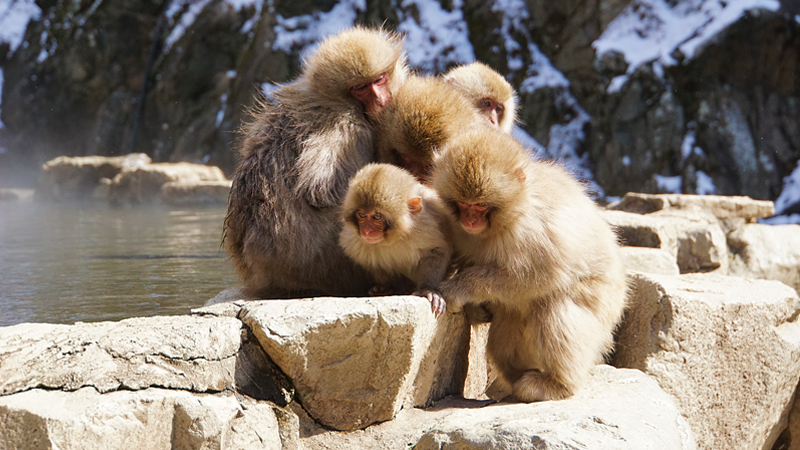
The Authentic Onsen: Stay in the nearby Yudanaka Onsen area. My recommendation is Jinpyokaku, a traditional luxury ryokan that has hosted Japanese emperors. It is located just minutes away from the famous Jigokudani Monkey Park.
6. Hakkaisan Ski Resort (Niigata): The Vertical & Sake Experience
Hakkaisan is not for the faint of heart. It features a single, 81-person ropeway that whisks you to the top of a ridge, leaving you with 2,600 vertical feet of mostly ungroomed, steep powder fields. This is "purist" skiing.
After a day of punishing your quads, you head into Minami-Uonuma, the heart of Japan’s sake country.
- Luxury Stay: Ryugon. This is a restored estate ryokan that blends farmhouse aesthetics with minimalist luxury. The architecture is breathtaking, and the local "Koshibikari" rice served at dinner is the best in the world.
7. Mt. T (Tanigawadake Tenjindaira): The Powder Purist’s Pilgrimage
For the true adventurer, Mt. T (Tanigawadake Tenjindaira) is the ultimate destination. Located in the Gunma prefecture, it averages a staggering 50 feet (approx. 15 meters) of snowfall annually, making it one of the deepest snow catchments in the world. This isn't a "resort" in the traditional sense; it’s a gateway to serious backcountry.
The Insider Tip: I highly recommend hiring a guide from Canyons. They offer 30-minute early access to the ropeway, ensuring you get fresh tracks before the (admittedly small) crowds arrive.
The Ultimate Onsen: The Minakami area near Mt. T is home to Bettei Senjuan. This is a Relais & Châteaux property and a Michelin "One-Key" winner. Every room has a private outdoor onsen made of stone or wood, overlooking the Tanigawa peaks. It is, in my opinion, the finest luxury onsen experience in the Japanese mountains.
Pass Information: Mt. T is a new addition to the Ikon Pass for the 2025-26 season, making it a must-add to your itinerary.
Travel Planning: Logistics & Costs for 2026
Planning a trip of this magnitude requires a bit of "mountain intelligence." Here is how to handle the logistics for a seamless 2026 expedition.
Transportation
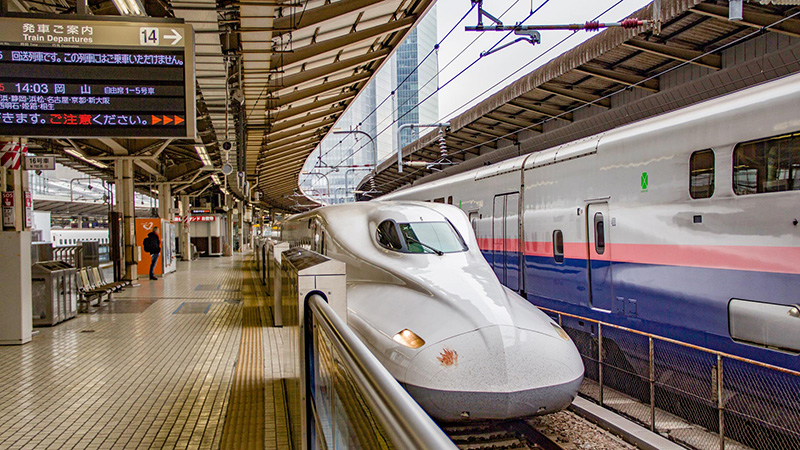
For the Honshu resorts (Hakuba, Shiga Kogen, Mt. T), the Shinkansen (Bullet Train) is your best friend. You can travel from Tokyo to Nagano or Yuzawa in under 90 minutes.
Budgeting for 2026
While luxury accommodations are priced globally, lift tickets in Japan remain a bargain compared to North America.
- Lift Tickets: Expect to pay around 10,500 yen ($70 USD) per day, compared to $250+ in Vail or Aspen.
- Dining: A Michelin-starred meal will cost significantly less than its equivalent in NYC or London due to favorable exchange rates.
The Booking Window
For the high-season (Jan/Feb), I suggest a 3-month lead time for top-tier ryokans like Zaborin or Bettei Senjuan. If you are targeting specific Michelin-starred restaurants, many open their booking portals exactly 30 or 60 days in advance—mark your calendars.
FAQ
Do I need a car to visit these resorts? In Hokkaido (Niseko/Rusutsu), it’s helpful but not necessary due to excellent resort shuttles. In Honshu, if you are staying in luxury ryokans, most provide private shuttles from the Shinkansen stations.
Is the backcountry safe in Japan? The snow is stable, but the terrain can be tricky with "crevasses" (large gaps between snow and shrubbery) and cornices. Always ride with a beacon, probe, and shovel, and I strongly recommend hiring a local guide for your first few days.
Can I use my Ikon Pass at all these locations? No, you need to check specific partnerships. For 2026, Niseko, Shiga Kogen, and Mt. T are on Ikon, while Hakuba and Rusutsu are on Epic.
Final Thoughts from Marcus
Japan isn't just a ski trip; it’s a sensory overhaul. You’ll spend your mornings charging through waist-deep "cold smoke" and your evenings soaking in mineral-rich waters while snow falls silently on your head. My advice? Don't try to see it all. Pick one Hokkaido hub and one Honshu sanctuary. Give yourself time to appreciate the culture—the sake, the architecture, and the hospitality—as much as the vertical.
Ready to drop in?