At seventeen, my suitcase for a London summer was a study in strategic erasure. It was packed with bootcut jeans, neutral knits, and a nondescript trench coat—a uniform designed to help me dissolve into the grey, rain-slicked landscape of the South Bank without a trace. I wanted to be a ghost in the machine of the metropole. Twenty years later, as I step onto the Jubilee Line, the narrative has shifted. I am draped in six yards of hand-loomed Chanderi silk, its edges a defiant shade of turmeric gold. I am no longer trying to fit in; I am choosing to stand out.
In the current climate of the United Kingdom, wearing a sari in London has transcended the realm of mere fashion. It has become a bold political statement—a visible assertion of South Asian identity that challenges anti-immigration rhetoric and the historical pressure to assimilate or disappear into cultural neutrality. For the modern diaspora, the sari is not just a costume for a wedding; it is a tool of "soft power," a reclamation of space in Western cosmopolitan centers that honors ancestral roots while navigating a complex contemporary reality.
The New Sartorial Landscape of London
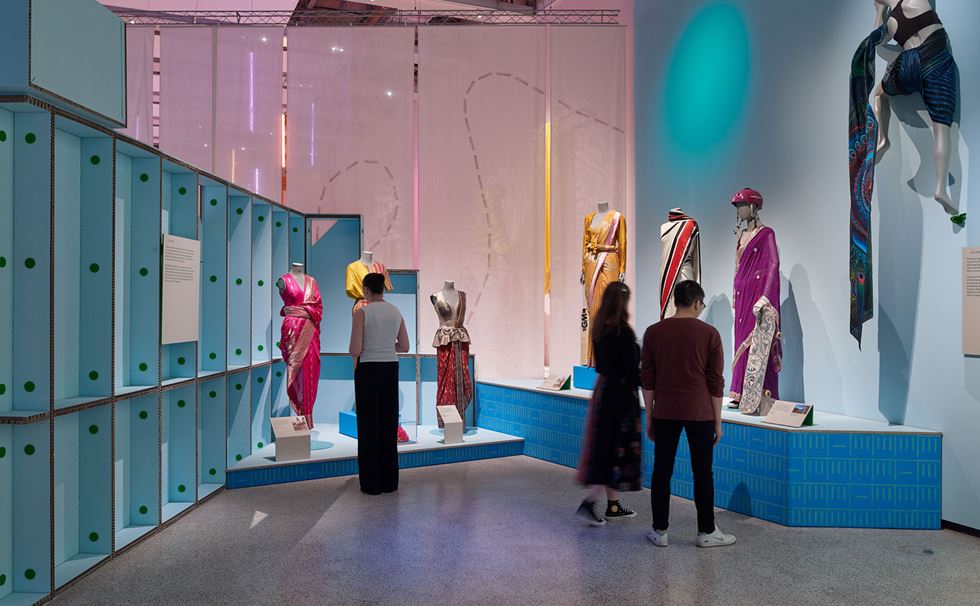
For decades, the South Asian diaspora in Britain followed a silent code of "wardrobe compartmentalization." Traditional attire was reserved for the private sphere—the living room, the community hall, the temple. The public square demanded a Western aesthetic. However, a sea change is occurring. From the halls of the Design Museum to the cafes of Shoreditch, the sari is being repurposed as a daily garment of resistance.
Cultural analysts have observed a staggering 60% increase in the use of traditional South Asian attire as a form of "identity reclamation" at high-profile UK events over the last five years. This shift is a direct response to a tightening political climate. When the air is thick with "Stop the Boats" slogans and debates over who "belongs" in the British landscape, the act of wearing an unstitched, six-yard garment becomes an act of visibility. It says: I am here, I am from here, and I will not be edited.
The core of this movement lies in the refusal to be "neutral." To wear a sari on the London Underground is to disrupt the visual monotony of the "wardrobe of grey." It is a refusal to perform the "good immigrant" role—the one who blends in so well they become invisible. Instead, it is a celebration of a heritage that is as much a part of London’s DNA as the Thames itself.
More Than Six Yards: The Versatility of Identity
The sari is often misunderstood by the Western gaze as a rigid, ceremonial dress. In reality, it is a marvel of sartorial engineering. Unlike the tailored constraints of a suit or a dress, the sari is a fluid canvas. There are over 100 different traditional draping styles across the Indian subcontinent, and in London, this versatility has seen a 75% growth in perceived utility among the younger diaspora.
Today’s wearer might pair a vintage heirloom silk with a Zara turtleneck, or a stiff cotton jamdani with a tailored blazer and Doc Martens. This hybridity is not just a style choice; it is a reflection of the dual identity of the British Asian experience.
- The Nivi Drape: The most common "modern" style, perfect for formal settings like the House of Lords or a gallery opening.
- The Pant-Style Drape: An urban adaptation that allows for mobility—ideal for the frantic pace of a London commute.
- The Dhoti Drape: A nod to rural roots and gender-fluid silhouettes, increasingly seen in East London’s creative circles.
When Fashion Meets Resistance
Visibility is a double-edged sword. In a city where political tensions often manifest in the public eye, wearing a sari can be a vulnerable act. Yet, it is precisely this vulnerability that lends it power. By choosing to be seen in a garment that is quintessentially South Asian, women are reclaiming the narrative of their own bodies against a backdrop of rising xenophobia.
The sari acts as a "Little Black Dress" of Indian culture, but with a sharper edge. It carries the weight of history—the spinning wheels of the Independence movement, the resilience of weavers in rural Bengal, and the survival of a craft that the colonial machine once tried to dismantle. In London, this history is being channeled into modern resistance.
"The sari is perhaps the only garment in the world that is both a shield and a bridge. It protects the wearer’s identity while demanding a conversation with the environment." — Cultural Analyst at the 'Offbeat Sari' Symposium.
The Architects of Modern Identity: Designer Spotlight
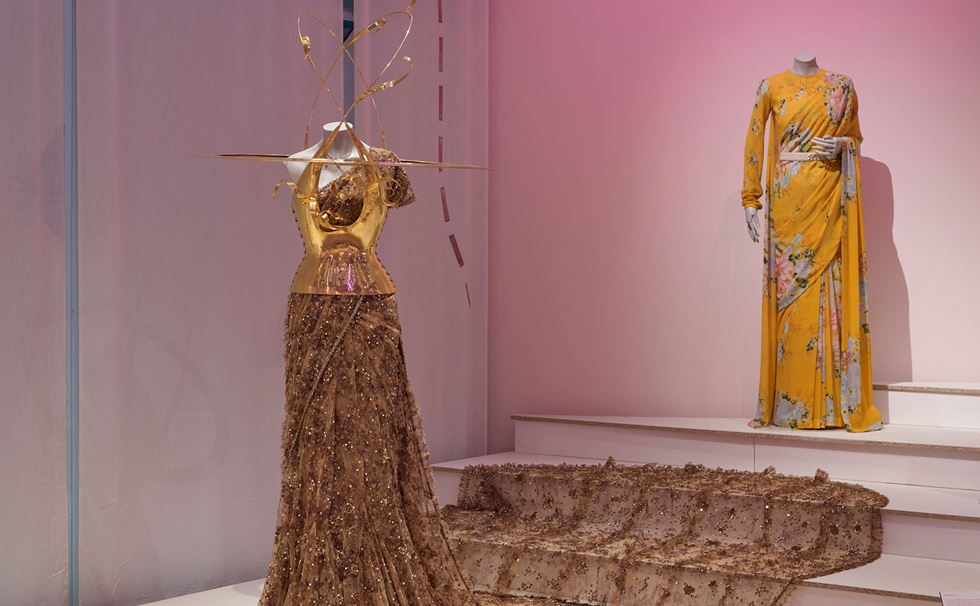
The resurgence of the sari in the West is bolstered by a new wave of designers who view the garment as a contemporary masterpiece rather than a relic of the past. These "architects of identity" are moving away from the heavy, "bling-heavy" aesthetics of the early 2000s toward a more intellectual, sustainable form of fashion.
| Designer | Focus | Impact on Diaspora Identity |
|---|---|---|
| Sanjay Garg (Raw Mango) | Reviving Mashru and Chanderi silks with minimalist motifs. | Re-positioned the sari as a luxury everyday garment for the global intellectual. |
| Amit Aggarwal | Using industrial materials (polymers and recycled textiles). | Created a "superhero" aesthetic that appeals to the futuristic, urban South Asian. |
| Anavila Misra | Linen saris in muted, earthy tones. | Revolutionized "workwear" for South Asian women in corporate London. |
These designers are not just selling clothes; they are providing "tools for identity preservation." They emphasize slow fashion and circularity, values that resonate deeply with a London audience increasingly weary of the environmental toll of fast fashion. A hand-loomed sari is, by definition, a sustainable choice—a garment meant to be passed down through generations, rather than discarded after a season.
For those looking to explore this world without the environmental footprint of new production, platforms like Pernia’s Pop-Up Shop or curated pre-loved marketplaces have become essential.
Explore Modern Designer Saris →
Reclaiming the Narrative in Cosmopolitan Centers
London is a city built on the convergence of worlds. To wear a sari on the Tube, or while walking through the manicured lawns of Kensington Gardens, is to insist that the "Melting Pot" is not just a concept, but a lived, visible reality. It is a connection to an ancestral lineage that spans thousands of miles, brought into the sharp, cold light of the Northern Hemisphere.
The sari is a reminder that culture is not static. It is a living, breathing entity that adapts, survives, and eventually, thrives. In London, the sari has evolved from a symbol of "the other" into a symbol of "the here." It is an assertion that one can be entirely British and entirely South Asian, without sacrificing a single yard of one's soul.
FAQ
1. Is it appropriate for non-South Asians to wear a sari in London? Cultural appreciation is a nuanced dialogue. While it is wonderful to admire the craftsmanship, it is essential to understand the history and the political weight the garment carries for the community. In festive or invited contexts (like a wedding), it is often welcomed. In everyday street style, it is important to be mindful of the difference between "costume" and "identity."
2. Where can I learn different ways to drape a sari? The modern sari movement has been fueled by digital creators and exhibitions. The Design Museum’s recent Offbeat Sari exhibition is a great resource. Additionally, digital platforms like The Sariseries provide tutorials for over 80 different regional drapes.
3. Is the sari practical for the London weather? Surprisingly, yes. The versatility of layering—pairing a sari with a trench coat, thermal leggings, or a heavy wool sweater—makes it adaptable to the British climate. Silk and wool-blend saris provide excellent insulation.
Join the Movement
Whether you are looking to reconnect with your heritage or seeking to support the artisan communities of South Asia, the journey begins with a single fold. Discover the art of the unstitched garment and make your own statement in the city.