The air in Cusco doesn't just fill your lungs; it tells a story. At 3,400 meters above sea level, the atmosphere is thin, crisp, and perpetually scented with a heady cocktail of woodsmoke, sun-warmed eucalyptus, and the distant, earthy aroma of roasting cacao. Known to the Incas as the Qosqo—the Navel of the World—this city is a living palimpsest where history is written in layers. You see it in the architecture: massive, interlocking Incan stones, laid without mortar, serving as the literal foundation for the white-washed walls and baroque balconies of Spanish colonial manors.
For years, Cusco was unfairly relegated to a mere logistical gateway—a place to catch one’s breath before the pilgrimage to Machu Picchu. And while nearly 1,000,000 travelers journeyed toward the "Lost City" in 2023, the real magic is found by those who linger in the cobblestoned alleys of the San Blas district or wait for the morning light to hit the Plaza de Armas. Today, Cusco is experiencing a profound cultural renaissance. It is a city where 16th-century manors have been transformed into sanctuary-like boutique hotels, where ancestral Andean ingredients are being reimagined by world-class chefs, and where a new generation of artists is weaving sustainable futures from ancient fibers.
The best luxury boutique hotels in Cusco today include Inkaterra La Casona, a meticulously restored 16th-century manor, and Palacio Nazarenas, which offers the ultimate indulgence of oxygen-enriched suites set atop ancient Incan foundations. Whether you are here for the high-altitude gastronomy or the intricate artisan soul of the San Blas neighborhood, this is your definitive guide to navigating the high-altitude elegance of the Andes.
Where to Stay: Historic Manors & Boutique Luxury
Choosing a residence in Cusco is an exercise in choosing which era of history you wish to inhabit. The most prestigious addresses are clustered around the Plaza de las Nazarenas, a quiet, cobbled square just a few minutes’ climb from the main plaza, where the noise of the city fades into a dignified hum.
The Golden Standard: Palacio Nazarenas
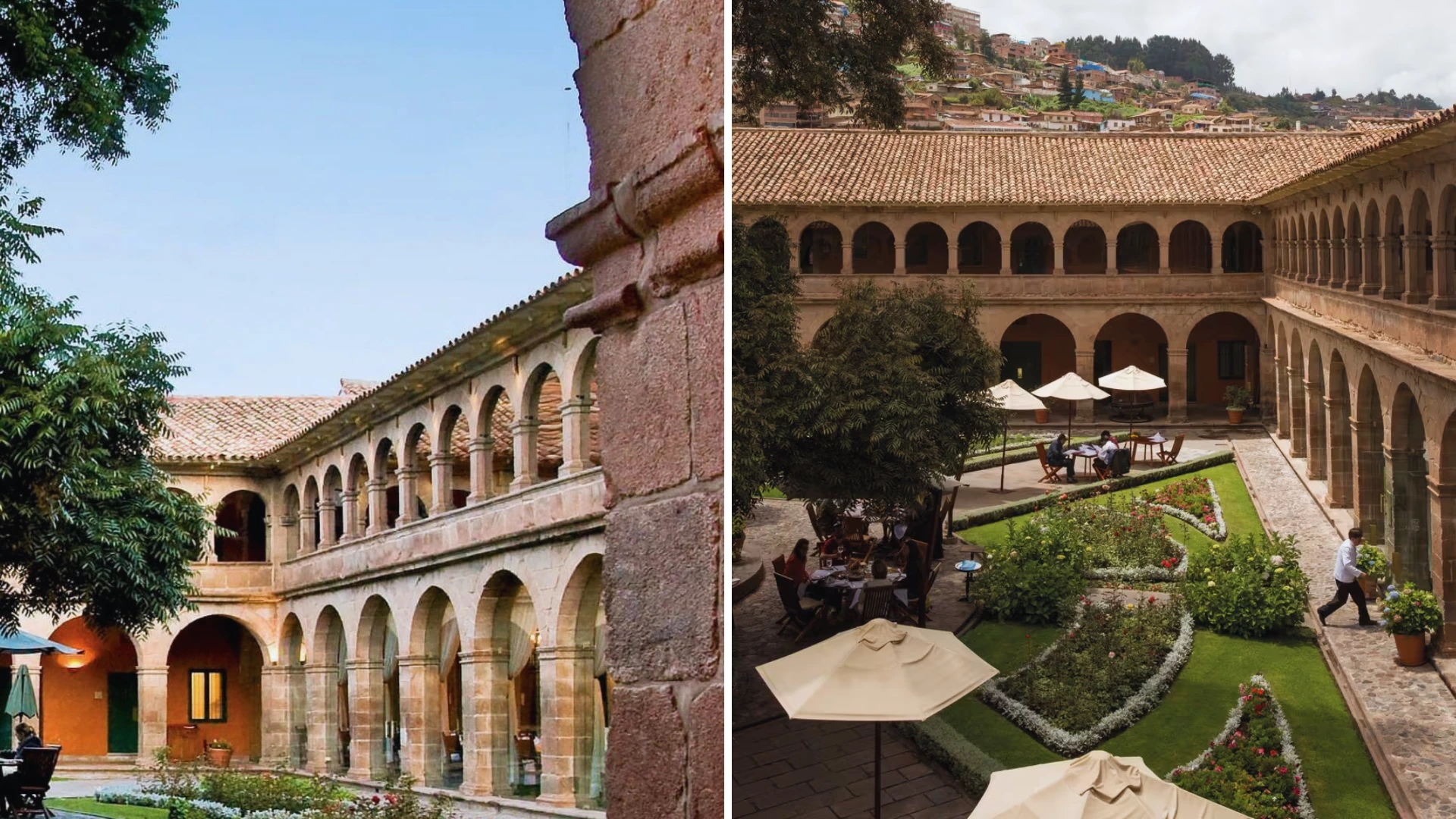
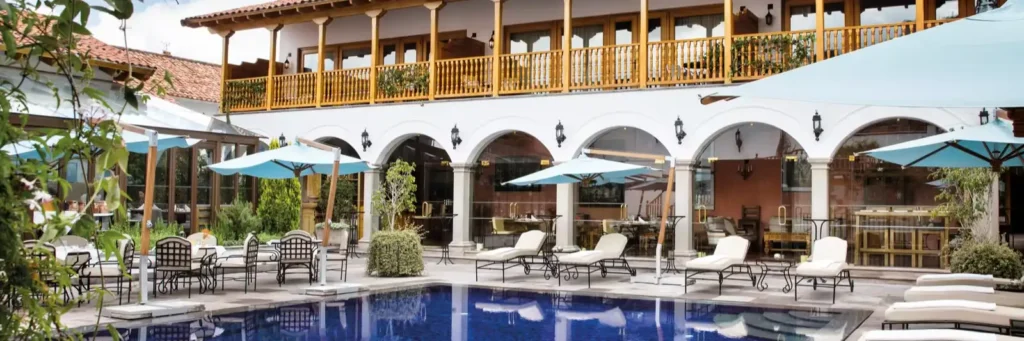
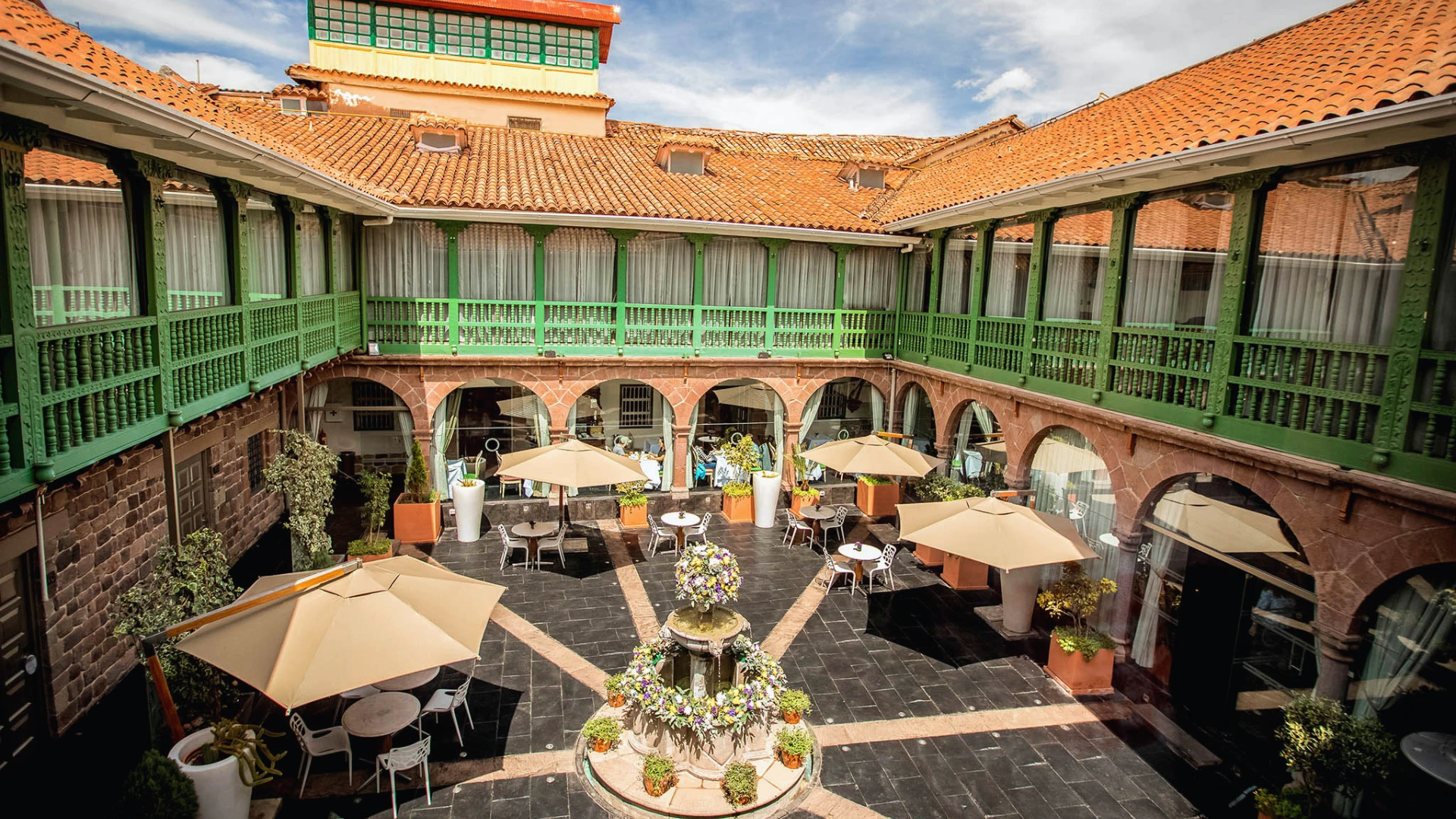
Palacio Nazarenas, A Belmond Hotel, is arguably the most sophisticated retreat in the southern hemisphere. This former palace and convent is built upon walls that date back to the Inca Empire. Walking through its hallways feels like a curated journey through time; the stones beneath your feet were carved by master masons centuries before the Spanish arrived. For travelers concerned with the thin Andean air, the hotel offers oxygen-enriched suites, a luxury that ensures a restful night’s sleep. The centerpiece of the property is its sapphire-blue outdoor pool—Cusco’s first—surrounded by manicured gardens and original colonial frescoes.
The Exclusive Sanctuary: Inkaterra La Casona
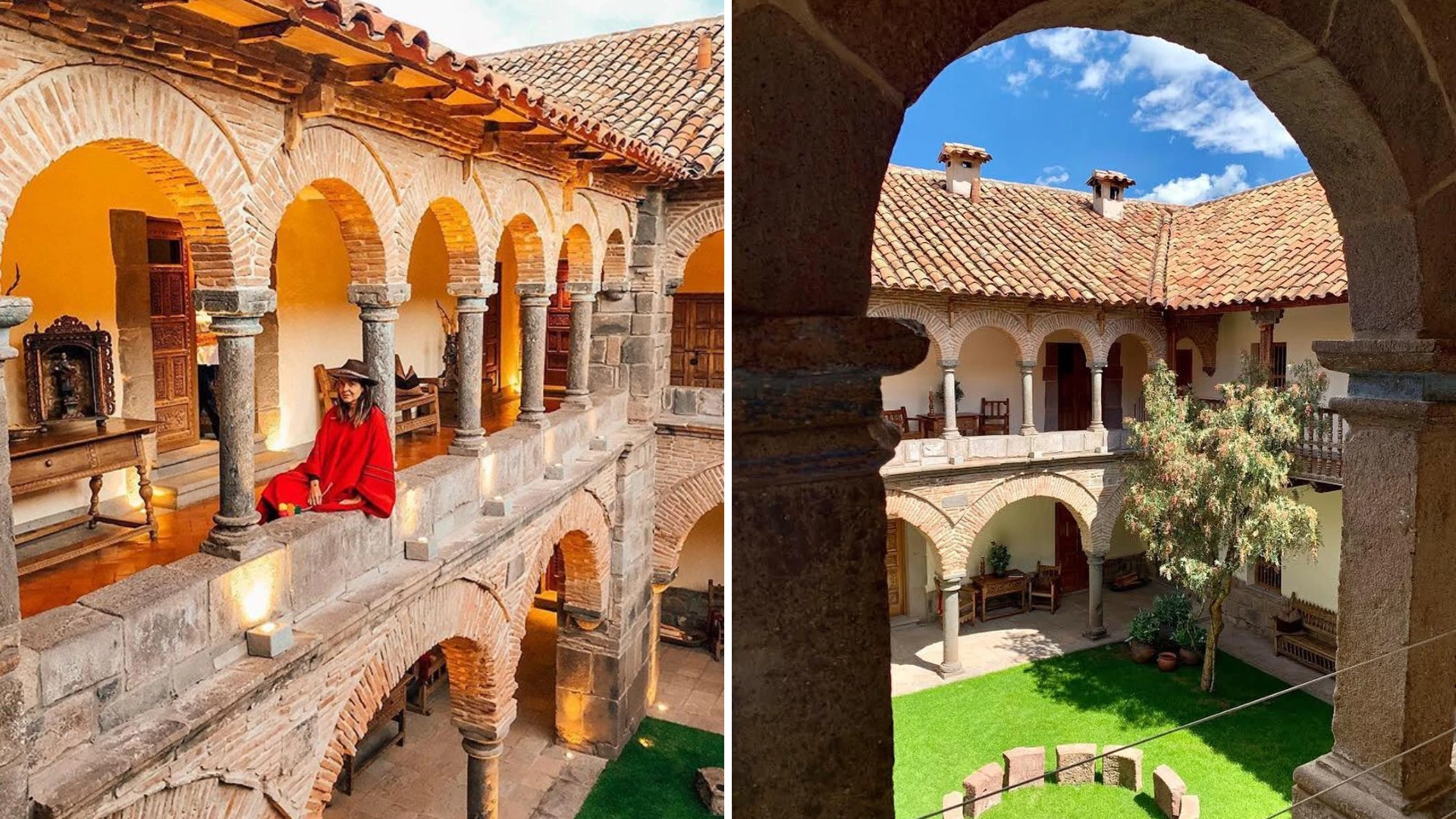
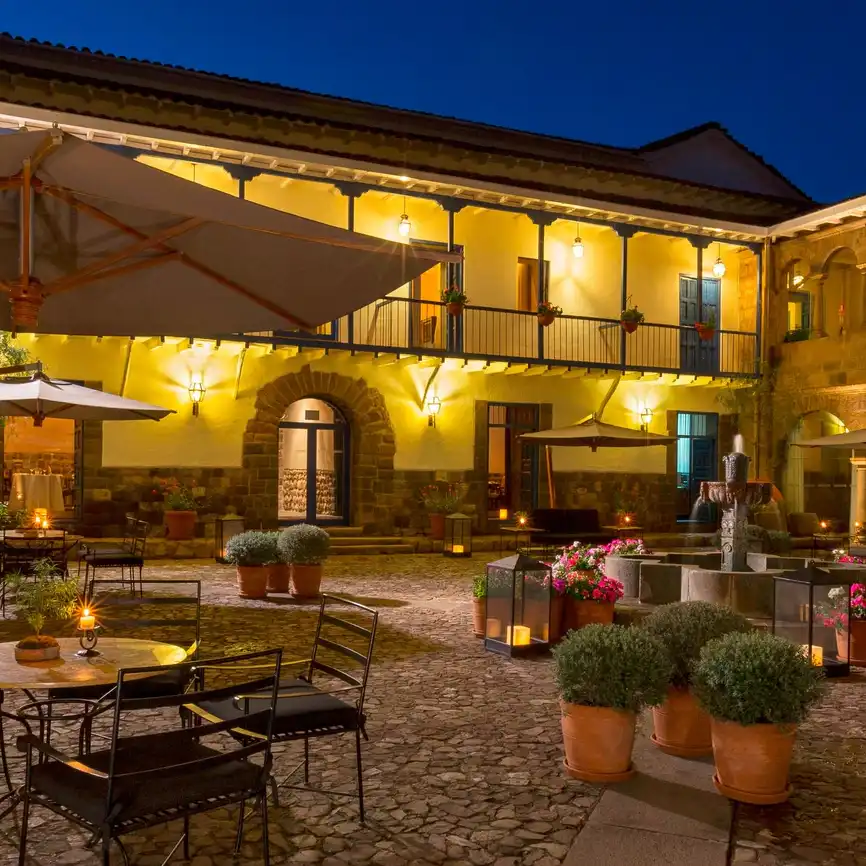
For those who prefer the intimacy of a private home over the scale of a grand hotel, Inkaterra La Casona is the definitive choice. As a Relais & Châteaux property with only 11 exclusive suites, it offers a level of privacy that is rare in the city. The manor was once the residence of the conquistador Diego de Almagro and later the Liberator Simón Bolívar. The design philosophy here is one of "slow luxury"—think hand-carved furniture, antique textiles, and roaring fireplaces in every room.
Boutique Charm in San Blas
If you seek a more bohemian, artisan-focused atmosphere, head to the San Blas neighborhood. Antigua Casona San Blas offers an incredibly warm, residential feel. Its central courtyard, anchored by a fire pit where guests gather for evening drinks, is the soul of the hotel. For the adventurous traveler, Andenes, managed by Mountain Lodges of Peru, serves as the perfect basecamp, specializing in preparing guests for the physical rigors of Andean trekking without sacrificing aesthetic comfort.
| Hotel | Key Feature | Vibe | Price Range (USD) |
|---|---|---|---|
| Palacio Nazarenas | Oxygen-enriched suites & sapphire pool | Regal, historical, grand | $650 - $1,200 |
| Inkaterra La Casona | 11-suite exclusivity & Relais & Châteaux | Quiet, antique, ultra-private | $500 - $900 |
| Antigua Casona | Courtyard fire pits & sustainable elegance | Cozy, local, artisanal | $200 - $350 |
| Andenes | Trekking-focused logistics & modern design | Active, sleek, functional | $180 - $280 |
Editor's Tip: To truly acclimate, spend your first afternoon in Cusco doing absolutely nothing. Order a pot of muña (Andean mint) tea—which many locals prefer over coca tea for digestion—and watch the light change over the terracotta rooftops from your hotel balcony.
Book Your Stay at Palacio Nazarenas →
The Art of Flavor: From Market Stalls to Fine Dining
Cusco’s culinary scene is a vibrant dialogue between the earth and the plate. To understand the food here, you must understand the altitude; ingredients are sourced from the high puna (plateaus), the fertile Sacred Valley, and the verdant Amazon basin. For an authentic dining experience, one must embrace both the grit of the local markets and the refinement of the city's new "Neo-Andean" stars.
The Local Beat: Mercado San Pedro
Every cultural journey in Cusco should begin at Mercado San Pedro. It is a sensory explosion: stacks of giant choclo (corn) with kernels the size of marbles, hundreds of varieties of native potatoes, and the sound of cleavers hitting wooden blocks.
The "menu" meals here remain the city's best-kept secret for value. For 15 to 20 soles (roughly $5-$7 USD), you can sit on a wooden bench and enjoy a three-course lunch. Start with a caldo de cordero (lamb soup), a hearty, restorative broth that is the local cure-all for altitude sickness. Follow it with a mountain of rice and lentils, and wash it down with a glass of chicha morada (purple corn drink). It is communal, loud, and utterly authentic.
Elevated Andean Gastronomy
For those looking to see how Cusco is redefining global food trends, Mauka by Pía León is essential. León, voted the World's Best Female Chef in 2021, uses Mauka to explore the biodiversity of the Andes. The menu is a deconstruction of ancestral ingredients—grains like kañiwa and tubers like mashua are elevated to fine-art status.
If you crave traditional Andean soul food in a more polished setting, Pachapapa in San Blas is legendary. Sit in the sun-drenched courtyard and order the alpaca skewers or the oven-roasted cuy (guinea pig), which is prepared here with great respect for tradition. For the growing number of plant-based travelers, Green Point has become a cult favorite, serving a mushroom ceviche that rivals the traditional seafood versions found on the coast.
Cultural Soul: San Blas Art & Sustainable Shopping
San Blas is the heart of Cusco’s creative community. Known as the Barrio de los Artesanos, its steep, narrow streets are lined with the workshops of families who have been carving wood or molding clay for generations. However, the modern San Blas is also home to a new wave of curated boutiques that focus on ethical luxury and cultural preservation.
Curated Artisanship
Cusco's premier art and shopping destination is the San Blas neighborhood, home to Xapiri Ground and HJK Knitwear. Xapiri Ground is more than a gallery; it is a bridge to the Amazon. They showcase Indigenous Amazonian art, photography, and textiles, with a high-end café that serves some of the best single-origin coffee in the city. Their mission is one of preservation, ensuring that the stories of the jungle tribes are heard in the high Andes.
For those seeking the "Gold of the Andes"—alpaca fiber—avoid the mass-produced stalls in the main square and head to HJK Knitwear. They specialize in sustainable, high-quality alpaca textiles, collaborating directly with local weaving communities to create modern silhouettes. The quality of the fiber here is tangible; it is soft, luminous, and designed to last a lifetime.
Another must-visit is L'atelier Café Concept. Part boutique, part café, this tiny shop offers a perfectly curated selection of leather goods and jewelry. The real draw, however, is the second-floor window seat, which offers a cinematic view over the blue-painted doors and cobblestones of San Blas.
Editor's Tip: When shopping for alpaca, look for "Baby Alpaca" labels, but use your hands. Real alpaca fiber should feel cool to the touch and have a slight "weight" to it that synthetic blends lack.
Logistics & Planning for 2026
As we look toward 2026, travel to Cusco is becoming more streamlined, though the city's ancient layout remains delightfully stubborn.
- How to Get There: Most international travelers fly into Lima's Jorge Chávez International Airport (LIM). From there, multiple daily flights to Cusco (CUZ) are operated by LATAM and JetSmart. The flight is a spectacular 75-minute journey over the snow-capped peaks of the Andes.
- Altitude Adjustment: Do not underestimate the elevation. Spend your first 24 hours resting. Hydrate more than you think is necessary, and utilize the Maras salt—rich in minerals—that you’ll find on most restaurant tables.
- When to Visit: The dry season (May to September) offers the most reliable weather, with brilliant blue skies and crisp nights. However, the "shoulder" months of April and October offer fewer crowds and a lush, green landscape.
Cusco is a city that demands your presence. It is not a place to be rushed. It is a place to walk slowly, to eat deeply, and to listen to the whispers of the stones. In the interplay between its Incan foundations and its modern creative spirit, you will find the true "Navel of the World."
FAQ
Q: Is Cusco safe for solo travelers? A: Absolutely. Cusco is one of the safest cities in Peru for tourists. Like any major destination, keep an eye on your belongings in crowded areas like Mercado San Pedro, but the boutique districts of San Blas and the Plaza de Armas are very friendly and well-patrolled.
Q: Do I need to book restaurants like Mauka in advance? A: Yes. For high-end dining experiences like Mauka or Cicciolina, it is highly recommended to book at least 2-4 weeks in advance, especially during the peak season (June-August).
Q: How much should I tip in Cusco? A: In local markets, tipping isn't expected for a 15-sol meal. In boutique hotels and fine-dining restaurants, a tip of 10% is standard and greatly appreciated by the local staff.
Ready to discover the magic of the Andes?
Plan your journey today and experience the perfect blend of history, luxury, and flavor in the heart of Peru.