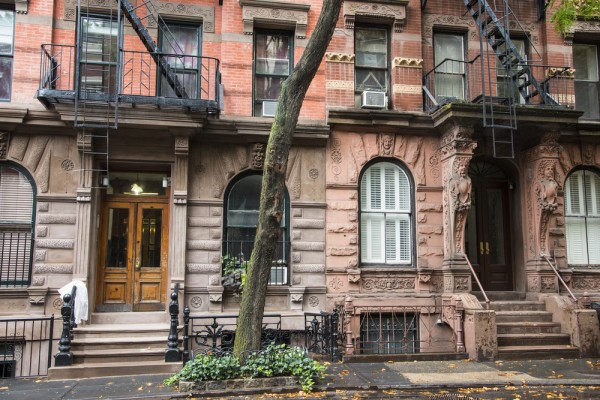
To walk the streets of the West Village is to navigate a cartography of the heart. Here, the rigid grid of Manhattan surrenders to a bohemian tangle of cobblestone arteries, where three-story Federal-style row houses lean into one another like old friends sharing a secret. There is a specific, golden weight to the air in this neighborhood—a scent of roasting coffee, old paper, and the lingering echoes of a revolution that changed the world. Even for those of us who don’t receive our mail here, the Village feels like a spiritual home. It is a place where the ghosts of James Baldwin and Edna St. Vincent Millay seem to linger at the corner of Bleecker and 11th, and where the history of the LGBTQ+ movement isn't just a chapter in a textbook, but a living, breathing presence. Within a half-mile radius of Christopher Street, you will find one of the highest concentrations of LGBTQ+ landmarks in the world—over 15 historic sites that stand as quiet sentinels of progress.
9:00 AM – Morning Coffee and the New Legacy
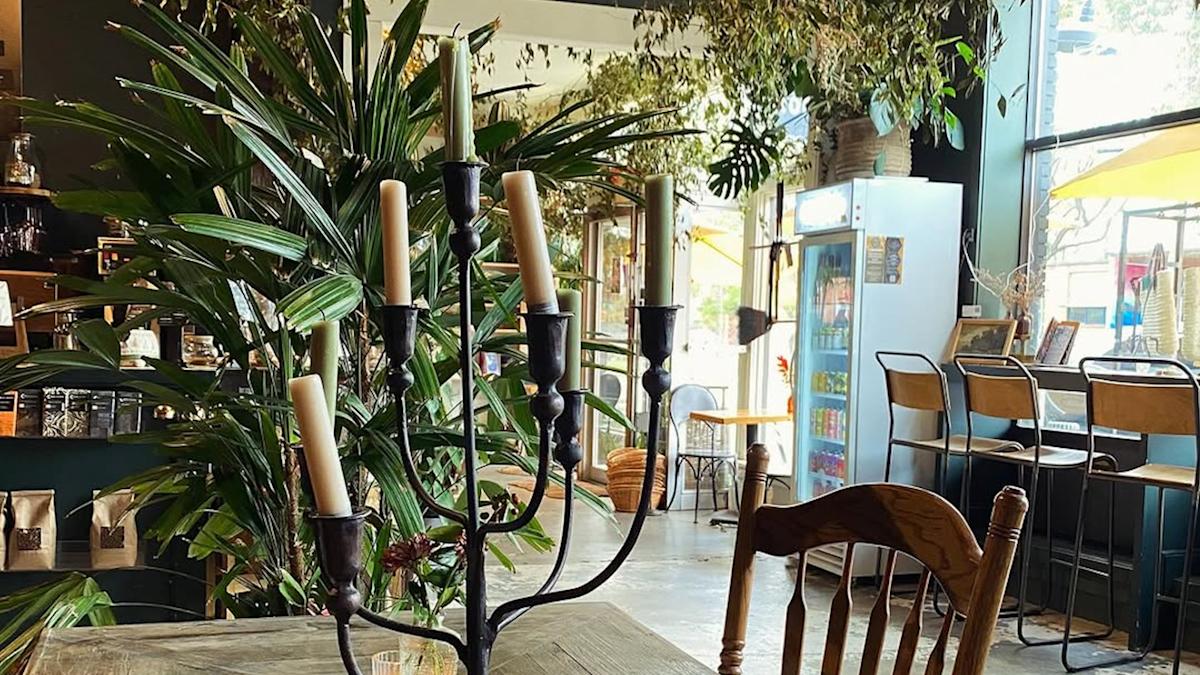
The West Village wakes up slowly, like a cat stretching in a sunbeam. Begin your journey at Paquita on Jane Street, a jewel-box of a shop where the walls are lined with tins of loose-leaf tea and the aroma of freshly pulled espresso provides a necessary jolt. If you prefer something more minimalist, ad hoc : cafe offers a sleek, modern counterpoint to the neighborhood’s antique charm.
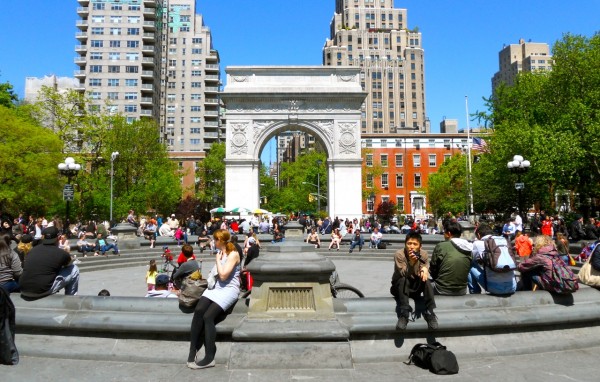
Once caffeinated, head toward Christopher Street. To truly understand the soul of this neighborhood, you must start at the beginning. If you are wondering where is the best place to learn about LGBTQ+ history in the West Village, look no further than the Stonewall National Monument Visitor Center. Opened in 2024, this is the first-ever LGBTQ+ visitor center within the National Parks System. Housed in the space immediately adjacent to the historic Stonewall Inn, it serves as a sophisticated educational hub, offering immersive exhibits that detail the 1969 Uprising and the decades of activism that followed.
Editor’s Tip: The center is small but potent. Allow yourself at least forty-five minutes to absorb the oral histories—they provide a hauntingly beautiful context for the streets you are about to walk.
Plan Your Visit to Stonewall →
11:00 AM – A Walk Through Revolution
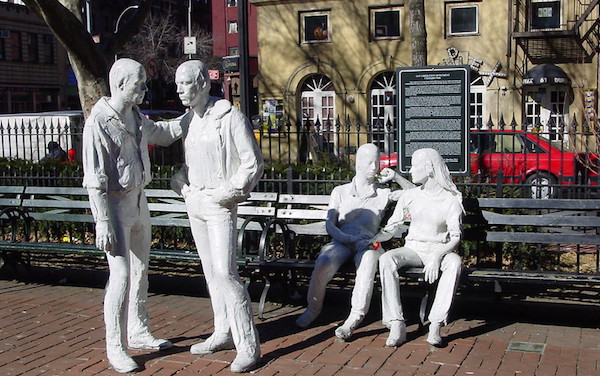
Leaving the visitor center, cross the street into Christopher Park. This small triangular oasis is the epicenter of the Stonewall National Monument. Here, you will find George Segal’s "Gay Liberation" statues—four white-lacquered bronze figures that capture the quiet intimacy of everyday life that was once considered a radical act.
As you wander, notice how the geography of the West Village (extending from 14th Street down to Houston) fosters a sense of intimacy. It is a village in the truest sense. For a moment of quiet reflection, duck into The Gardens at St. Luke in the Fields. This 200-year-old garden is a sanctuary of biodiversity, hidden behind brick walls. During the height of the HIV/AIDS crisis, this garden served as a place of solace for many in the community, and it remains a poignant reminder of the neighborhood's resilience.
1:00 PM – Lunch at a Historic Crossroads
By midday, the appetite demands something substantial. The West Village is a culinary museum; local business data indicates that nearly 40% of the neighborhood's most popular dining establishments are historic venues that have been operating for over 30 years.
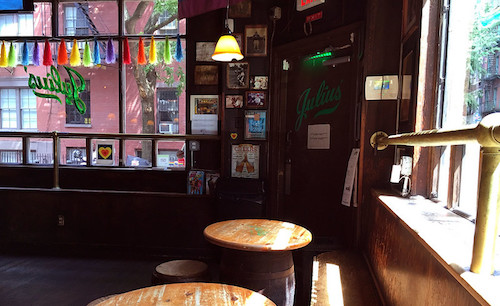
For a quintessential Village experience, lunch at Julius' Bar is non-negotiable. Established in 1864, it is the oldest gay bar in the city. Long before the Stonewall Uprising, it was the site of the 1966 "Sip-in," where activists challenged the then-illegal practice of bars refusing service to homosexuals. Today, it remains unpretentious and warm, serving what many locals swear is the best burger in Manhattan.
If you are in the mood for something more European, Boucherie West Village offers a sprawling, brass-and-mirror-laden French bistro experience. Located in a historic building that once housed a prominent local theater, it offers the perfect vantage point for people-watching through its floor-to-ceiling windows.
Iconic Historic LGBTQ+ Bars of the West Village
| Name | Year Opened | Historical Significance |
|---|---|---|
| Julius' | 1864 | Oldest gay bar in NYC; site of the 1966 "Sip-in." |
| The Stonewall Inn | 1967 | Site of the 1969 riots; birth of the modern pride movement. |
| Marie’s Crisis | 1839 (as a bar) | Legendary piano bar; Thomas Paine died in this building. |
| The Monster | 1982 | Iconic disco and drag venue with Fire Island roots. |
3:00 PM – Bibliophiles and Boutiques
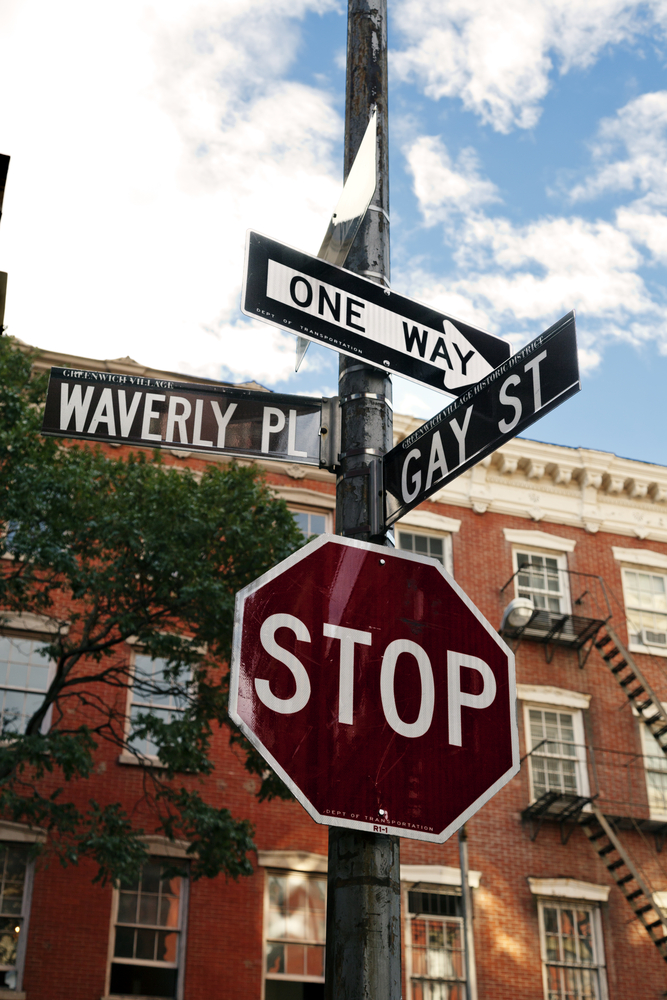
The afternoon is for getting lost. The streets here do not follow the orderly numbered system of Midtown; they curve and terminate unexpectedly. You might find yourself at the corner of West 4th and West 12th—a spatial impossibility that only makes sense in the Village.
No itinerary is complete without a stop at Three Lives & Company. This independent bookstore has been a neighborhood anchor since 1968. The wooden floors creak with authority, and the staff's recommendations are always pitch-perfect. Further down Bleecker Street, Bookmarc (Marc Jacobs’ literary venture) offers a more curated, high-fashion take on the bookshop.
For those who enjoy a "find," Housing Works Thrift Shop on West 10th Street is a must-visit. It is more than just a boutique; it is a non-profit whose proceeds support housing and healthcare for New Yorkers living with HIV/AIDS.
5:00 PM – The Golden Hour Aperitivo
As the sun begins to dip, the neighborhood’s red bricks take on a deep, burnt-orange glow. This is the hour of the aperitivo.
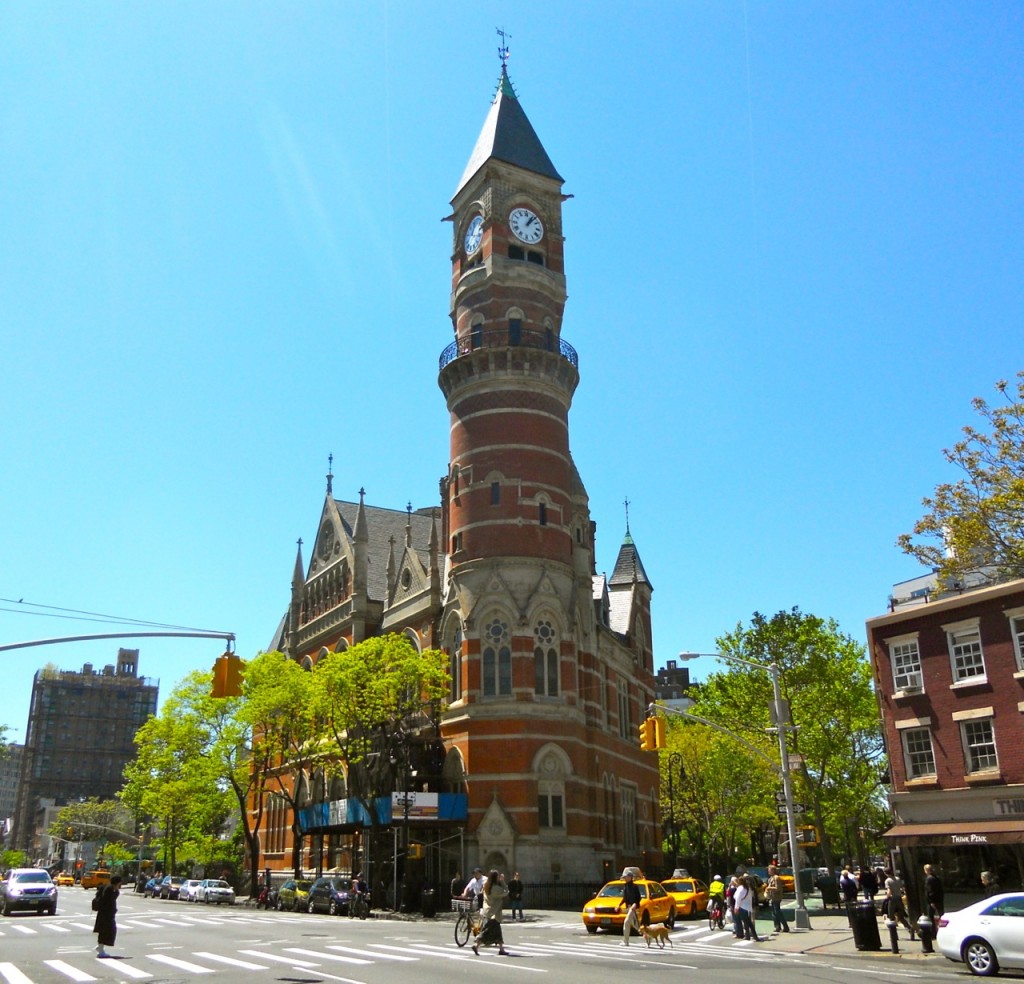
Bar Pisellino at the intersection of 7th Avenue and Christopher Street is the place to see and be seen. Sit at the outdoor tables with a Negroni Sbagliato and watch the world go by. If you want a taste of literary history, head to the White Horse Tavern. Once the haunt of Dylan Thomas and James Baldwin, it remains a rugged, wood-paneled portal to the past. Nearby, the Jefferson Market Library—once a courthouse and prison—looms over the neighborhood like a Victorian gothic castle, its clock tower a beacon for wanderers.
7:00 PM – A Masterclass in West Village Dining
When night falls, the West Village reveals its true culinary prowess. If you are searching for the top-rated dining options in the West Village, the diversity is staggering.
For a Michelin-starred journey through South India, Semma on Greenwich Avenue is revelatory. Chef Vijay Kumar presents dishes that are personal and powerful—think Dungeness crab with parboiled rice and tempered coconut, served in an atmosphere that feels both high-design and deeply soulful.
For something quintessentially French and intimate, Buvette is a neighborhood darling. It is a "bijou sibling" to its Paris counterpart, specializing in small plates like steamed eggs with prosciutto or mussels swimming in white wine. It is the kind of place where the tables are small, the wine flows freely, and the conversation hums at a perfect, low-lit frequency.
Other Notable Dining Options:
- Via Carota: Often cited as the best Italian food in the city (prepare for a wait).
- Tartine: A tiny, BYOB French corner spot that feels like a movie set.
- I Sodi: Exquisite, high-end Tuscan fare.
9:00 PM – Jazz, Theater, and Show Tunes
The Village has always been New York’s stage. Start your evening at the Village Vanguard, which has been the "temple of jazz" since 1935. Descending the narrow stairs into the basement is like entering a time capsule where the acoustics are legendary and the history is palpable.
If you prefer something more participatory, Marie’s Crisis is an essential experience. This piano bar is world-famous for its show-tune singalongs. There is no stage; the "show" is the crowd, led by a pianist who knows every note of the Sondheim and Rodgers & Hammerstein songbooks. It is a rowdy, joyful, and deeply communal experience that embodies the queer spirit of the Village.
For a quieter cultural fix, the Cherry Lane Theater on Commerce Street is the city’s oldest continuously running off-Broadway theater, having hosted everyone from Beckett to Albee.
11:00 PM – Dancing into the Morning
As midnight approaches, the energy shifts toward the dance floor. The Monster on Sheridan Square offers a classic West Village nightlife experience, featuring a piano bar upstairs and a disco downstairs. For those looking to celebrate lesbian nightlife history, Cubbyhole or Henrietta Hudson are legendary institutions that have provided safe and vibrant spaces for decades.
Before you retreat for the night, do as the locals do and grab a late-night slice. Two Boots Pizza offers quirky, Cajun-influenced toppings, while Faicco’s Italian Specialties on Bleecker remains the gold standard for a late-night hero or arancini, keeping the neighborhood's Italian heritage alive.
Where to Stay: Cozying Up Near the Village
To fully immerse yourself in the Village lifestyle, skip the generic Midtown high-rises and opt for something with character.
- The Marlton: Once a "bohemian hotel" for artists like Jack Kerouac, it has been transformed into a Parisian-style boutique hotel with a crackling fireplace in the lobby.
- The Manner: A new, sophisticated entry in nearby SoHo that offers a residential feel.
- The Standard High Line: Located at the edge of the Meatpacking District, offering sweeping views of the Village and the Hudson River.
FAQ
Q: Is the West Village safe for solo travelers at night? A: Yes, the West Village is one of the most walkable and safest neighborhoods in New York. The streets are busy well into the night, providing a "neighborhood watch" feel. However, as with any major city, stay aware of your surroundings.
Q: Do I need reservations for the historic bars? A: Most historic bars like Julius' and The Stonewall Inn do not take reservations; they are walk-in only. For dining at places like Semma or Via Carota, reservations are highly recommended and often hard to get—book well in advance.
Q: What is the best way to get to the West Village? A: The neighborhood is incredibly well-connected. The 1, 2, 3, A, C, E, B, D, F, and M trains all stop at the West 4th St-Washington Sq or Christopher St-Sheridan Sq stations.
Conclusion
The West Village is more than a destination; it is a reminder that history is not something that only happens in books—it happens on street corners, in basement bars, and over shared meals. Whether you are tracing the footsteps of the 1969 Uprising at the Stonewall National Monument or savoring a Michelin-starred meal at Semma, you are participating in a story of defiance and beauty that continues to unfold. Come for the history, stay for the flavors, and leave with a piece of the Village’s enduring spirit in your heart.