To step into a suite where Joy Harjo has stayed is to enter a space still vibrating with the ghost of a jazz riff. There is a specific kind of silence in a luxury hotel—a thick, velvet-lined quietude—that Harjo, the first person to serve three terms as the United States Poet Laureate, finds essential for her craft. While most travelers seek hotels for the thread count or the view, Harjo seeks them for the sound. Or rather, the permission to make it.
As a member of the Muscogee Nation and a titan of American letters, Harjo has spent decades navigating the liminal spaces between spoken word and musical notation. She has produced five award-winning musical albums and received a Native American Music Award for Best Female Artist, yet the image of the "Poet Laureate" often conjures a quiet library, not a brassy, wailing saxophone. But for Harjo, the two are inseparable. To understand her poetry is to understand the breath required to blow through a reed; to understand her travel habits is to understand the sanctuary required for a "Girl Warrior" to maintain her edge.
The Sanctuary of the Suite: Why Hotels Over Airbnbs
For Harjo, the choice between a curated Airbnb and a high-end hotel isn’t about the aesthetic of the furniture—it is about the architecture of privacy. In the modern travel landscape, the "home-sharing" model often forces an intimacy with neighbors that can stifle the creative impulse.
"In an Airbnb, you are always someone’s guest, even if they aren't there," one might imagine her reflecting over a glass of iced tea. "You hear the neighbors through the drywall; you feel the weight of their expectations." In contrast, the luxury hotel offers a unique kind of anonymity. It is a transitional space where the walls are often thicker and the staff is trained in the art of discretion.
The "room service" lifestyle is not an indulgence for Harjo; it is a tactical necessity. It allows her to remain in a "creative flow," a state where the transition from writing a poem to rehearsing a set list is seamless. In a hotel, she can practice her saxophone at odd hours without the social anxiety of "the clapping neighbors"—those well-meaning but intrusive souls who might overhear a rehearsal and feel the need to comment on it the next morning in a shared hallway.
| Travel Preference | Luxury Hotel Suite | Airbnb / B&B |
|---|---|---|
| Acoustic Privacy | High (Thick walls, professional soundproofing) | Variable (Often thin residential walls) |
| Creative Workflow | Uninterrupted (Room service, no chores) | Interrupted (Kitchen duties, host interactions) |
| Atmosphere | Neutral/Transitional (Easier to project one's own energy) | Domestic/Personal (Filled with someone else's history) |
| Anonymity | Professional distance | Personal connection (often required) |
The Toolkit: Traveling with a 'Travel Sax'
To watch Harjo unpack is to witness a ritual of grounding. Her luggage is a blend of the ancient and the cutting-edge. Alongside the laptops and cords are stones and rocks gathered from significant landscapes, small talismans that provide a physical weight to her nomadic life.
However, the centerpiece of her kit is the "travel sax." Because a traditional tenor saxophone is a cumbersome beast for a woman frequently on the move, Harjo utilizes a compact, electronic travel saxophone. This 21st-century tool is a marvel of portability: a plastic instrument with standard key action that mimics the feel of a traditional horn but fits easily into a carry-on.
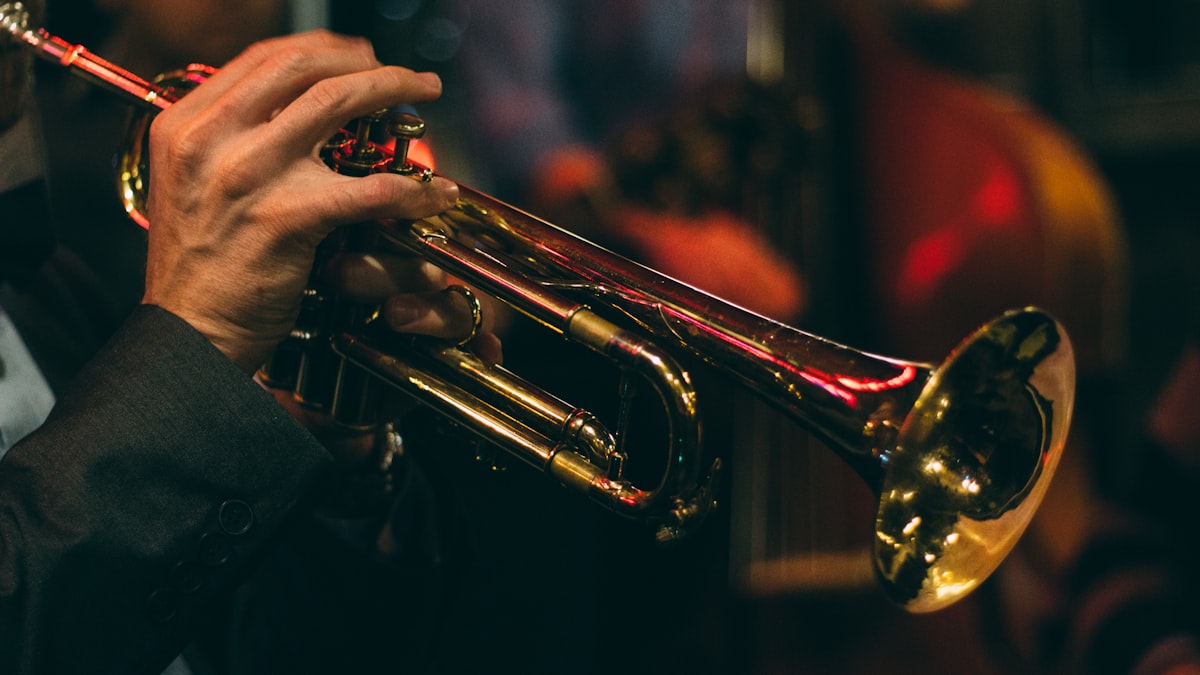
This digital interface allows her to connect to an iPhone app or a small, portable amplifier. She can play through headphones in the dead of night, hearing the rich, synthesized soul of a saxophone while the rest of the hotel sleeps, or she can plug into a speaker and let the sound fill the room when she needs to feel the vibration in her chest.
To make room for this musical gear, Harjo has made the ultimate sacrifice for a poet: she has largely traded her physical library for a Kindle. In the economy of a carry-on bag, the weight of ten paperbacks is replaced by the weight of a mouthpiece and a MIDI cable. It is a trade-off she makes willingly, ensuring that wherever she lands—be it a skyscraper in Chicago or a boutique hotel in Cairo—her voice, both literal and metaphorical, is never out of reach.
Reclaiming the Sound: A Late-Blooming Passion
The most evocative aspect of Harjo’s relationship with the saxophone is that it was a hard-won victory. She did not pick up the instrument as a child prodigy. Instead, she taught herself to play at the age of 40—a time when many artists are settling into their established rhythms.
Her journey back to the saxophone was an act of reclamation. As a young girl, she was deeply drawn to the instrument, but she was discouraged by the gender biases of the time. In the mid-20th century, the saxophone was seen as "rowdy" and "edgy," an instrument for men in smoky clubs, not for young women. Her teachers and family steered her toward more "appropriate" feminine pursuits.
For Harjo, the saxophone is the most "human" of instruments. It mimics the human voice—its capacity for wailing, whispering, and growling. By picking it up in her fourth decade, she was honoring the "Girl Warrior" within her, the one who refused to let her creative spirit be truncated by societal expectations.
"Music is a language that goes beyond words. When I play the saxophone, I am speaking a language that doesn't need a translator. It’s about breath. It’s about the spirit moving through the body and out into the air."
This late-blooming passion informs her poetry, giving it a staccato rhythm and a melodic flow that is rare in contemporary literature. When she practices in those luxury hotel rooms, she isn't just rehearsing for a show; she is breathing life into her next poem.
Inspiration in Motion: From Tulsa to Cairo
Harjo’s travel itinerary reads like a map of the world’s soul. She finds profound inspiration in motion, often citing the "liminal space" of an airplane or a long road trip as her most productive writing environment. There is something about being between places that allows her to access the "ancestral memory" that permeates her work.
In her home state of Oklahoma, she finds a deep connection to the Bob Dylan Center in Tulsa—a place that celebrates the intersection of folk tradition and poetic rebellion. But her horizons are global. She speaks with reverence of the banks of the Nile in Egypt, where the ancient history of the land seems to hum in a frequency she can almost catch on her horn.
She is also uniquely sensitive to the "Hotel Ghosts"—the residual energy of the thousands of souls who have passed through a room. While staying at the Chicago Athletic Association, a hotel housed in a 19th-century gothic landmark, she noted the distinct sensory connection to the building’s history. For Harjo, a hotel room is never truly empty; it is a tapestry of stories, and her music is the needle that weaves her own story into the fabric.
The Legacy of the Girl Warrior
As she discusses in her evocative memoir, Girl Warrior: On Coming of Age, the journey to becoming a poet and a musician is one of "staccato beats of defiance." Her career has been defined by indigenous resiliency—a refusal to be silenced or categorized.
Currently, Harjo is looking toward new horizons, including a highly anticipated project with the genre-defying bassist and vocalist esperanza spalding. This collaboration promised to be a masterclass in the intersection of jazz and the spoken word, a testament to Harjo's enduring relevance in both the literary and musical worlds.
Whether she is standing on the stage of the Library of Congress or sitting on the edge of a king-sized bed in a darkened hotel suite, Joy Harjo remains a testament to the power of the second act. She reminds us that it is never too late to reclaim a stolen passion, and that sometimes, the best way to find your voice is to pick up an instrument and blow.
FAQ
What kind of saxophone does Joy Harjo play? While she performs with traditional tenor and soprano saxophones, Harjo typically travels with a "Travel Sax"—a compact, digital instrument made of plastic that mimics the key action of a standard saxophone. It allows her to practice silently via headphones or connect to a portable amplifier.
Why does she prefer hotels over other types of accommodation? Harjo values the privacy and thick walls of luxury hotels, which allow her to practice her music without disturbing neighbors. She also appreciates the "neutral" energy of hotels, which provides a clean slate for her creative process compared to the more personal environment of an Airbnb.
When did Joy Harjo start playing the saxophone? Harjo is a "late bloomer" in the musical world; she taught herself to play the saxophone at age 40. She chose the instrument to reclaim a passion she was discouraged from pursuing during her childhood due to gender biases.
Experience the Voice of the Muscogee Nation
To truly understand the rhythm of Joy Harjo’s world, one must experience her words and her music in tandem. Her latest works continue to bridge the gap between the ancient traditions of the Muscogee People and the contemporary pulse of American jazz.