To walk through Florence is to navigate a living museum, where the shadows of Brunelleschi’s dome fall upon cobblestones that have felt the weight of history for seven centuries. But for the modern traveler—and specifically for those following in the well-shod footsteps of Stanley Tucci—Florence is less about the marble of the David and more about the saltless bread, the pungent aroma of simmering tripe, and the velvety pour of a Chianti Classico. In his celebrated journey through Tuscany, Tucci didn't just eat; he performed a visceral excavation of the Florentine soul, guided by the ironclad rules of cucina povera (the kitchen of the poor) and a fierce local pride known as campanilismo.
In the Florence episode of Tucci in Italy, Stanley Tucci explores a curated selection of culinary landmarks that bridge the gap between ancient tradition and modern audacity. His itinerary takes us from the gritty, steam-shrouded stalls of Tripperia Pollini for a legendary lampredotto sandwich to the refined, riverside elegance of Picteau Bistro. He stops for orange-scented biscotti at Bakery Leonardo, samples the daring "fake tripe" at Trattoria Dalla Lola, and soaks in the neighborhood rhythm at the iconic Café Cibrèo. Each location serves as a chapter in a larger story about how a city maintains its culinary identity through 700 years of strict tradition while slowly allowing the next generation to stir the pot.
1. Tripperia Pollini: The Soul of Florentine Street Food
If Florence has a heartbeat, it is likely the sound of a heavy knife rhythmically chopping tripe against a wooden board at Tripperia Pollini. Located in the bustling Piazza Sant'Ambrogio, this humble streetcar stand is where the city’s egalitarian spirit is most visible. Here, bankers in bespoke suits stand shoulder-to-shoulder with construction workers, all waiting for the same thing: lampredotto.
Lampredotto is the fourth stomach of the cow, slow-cooked with tomato, onion, celery, and parsley until it reaches a tender, almost buttery consistency. It is the ultimate expression of cucina povera. When Tucci visits, he highlights the specific ritual of the sandwich: the crusty panino is sliced open, the top half is dipped momentarily into the rich, steaming meat broth—a technique called bagnato—and then heaped with the tripe and a generous drizzle of salsa verde (green sauce).
Tucci’s Tip: "You cannot claim to know Florence until you have stood on a street corner with broth dripping down your chin. It’s not just a sandwich; it’s an initiation."
Must-Order at Tripperia Pollini:
- The Classic Lampredotto: Served con tutto (with everything)—meaning both the spicy oil and the herbaceous green sauce.
- Trippa alla Fiorentina: If you prefer your tripe on a plate, this version is stewed in a rich tomato sauce and topped with aged Parmigiano-Reggiano.
Find Tripperia Pollini on Google Maps →
2. Bakery Leonardo: A Masterclass in Biscotti
A short walk from the Sant’Ambrogio market leads you to Bakery Leonardo, a sanctuary of sugar and flour where the air is thick with the scent of toasted nuts and citrus zest. In the show, the visual of the bakers in their retro blue uniforms, moving with the synchronized grace of a ballet, captures the timelessness of Florentine craftsmanship.
While the world knows these twice-baked treats as biscotti, in Tuscany, they are often called cantucci. Leonardo’s version, however, transcends the rock-hard clichés found in airport gift shops. Tucci is particularly taken by the orange-flavored biscotti, which boast a delicate, silk-like chocolate texture and a bright, aromatic lift from the orange oil.
The secret to their perfection lies in the precision of the bake. These are not merely cookies; they are architectural achievements designed to be dipped into Vin Santo, the local dessert wine. The wine softens the biscuit just enough to release the trapped aromas of almond and cocoa without losing the structural integrity of the crumb.
3. Trattoria Dalla Lola: Reimagining the Classics
Florence is a city that often views culinary innovation as a form of heresy. However, at Trattoria Dalla Lola, Chef Matilde Pettini—a fourth-generation chef—is proving that you can honor your ancestors while breaking their rules. Tucci visits this vibrant spot to witness how Pettini is "queering" the traditional Tuscan menu, making it more inclusive and experimental.
The standout dish discussed is trippa finta (fake tripe). In a brilliant nod to the history of cucina povera, this dish contains no meat at all. Instead, it uses thinly sliced eggs and Parmesan to mimic the texture of tripe, simmered in the traditional tomato and herb base. It’s a playful, sophisticated take on a dish that was originally born out of necessity.
| Dish | Traditional Element | The Modern Twist |
|---|---|---|
| Trippa Finta | Classic tomato & vegetable soffritto | Strips of egg and Parmesan instead of tripe |
| Francesina di Lingua | Slow-cooked tongue | Served with a bright, acidity-forward herb dressing |
| Lola’s Cheesecake | Italian ricotta base | Topped with seasonal, locally-foraged fruits |
Tucci describes the atmosphere here as "fresh and casually exquisite," a perfect description for a place that feels like a dinner party at the home of Florence’s coolest resident.
4. Café Cibrèo: The Heartbeat of the Neighborhood
To understand the rhythm of Florence, one must spend an hour at Café Cibrèo. Part of the legendary Cibrèo empire founded by the late Fabio Picchi, this café is the social glue of the Sant’Ambrogio district. With its forest-green balconies and velvet-draped interiors, it exudes an old-world charm that invites you to linger.
Tucci’s visit emphasizes that Cibrèo is not just a place to eat; it is a place to observe the "pulse" of the city. The menu avoids the standard tourist fare of pizza and pasta, focusing instead on concentrated Florentine flavors. One must-try dish is the seared veal tongue, served cold with anchovies and a vibrant parsley sauce. It is salty, earthy, and perfectly balanced—a dish that demands a glass of bold red wine and a long afternoon of people-watching.
The Cibrèo Experience:
- The Morning Ritual: An espresso at the bar, standing up, like a true local.
- The Afternoon Linger: A plate of pappa al pomodoro (bread and tomato soup) enjoyed on the outdoor terrace.
- The Evening Aperitivo: Negronis served with small plates of marinated chicken livers.
5. Picteau Bistro: Riverside Elegance
As the sun begins to set, casting a golden hue over the Arno River, Tucci transitions from the rustic streets to the sophisticated heights of Picteau Bistro. Located within the Hotel Lungarno, this spot offers what is arguably the best view in the city: a front-row seat to the Ponte Vecchio, mirrored in the moving waters of the Arno.
While the setting is high-end, the food remains rooted in the regional terroir. It is here that the conversation often turns to the more refined specialties of the Tuscan hills, such as Lardo di Colonnata. This is not merely fat; it is a historical artifact. The traditional curing process of Lardo di Colonnata takes between 6 months and 1 year, where the lard is aged inside local white marble caves from Carrara, rubbed with sea salt, black pepper, rosemary, and garlic.
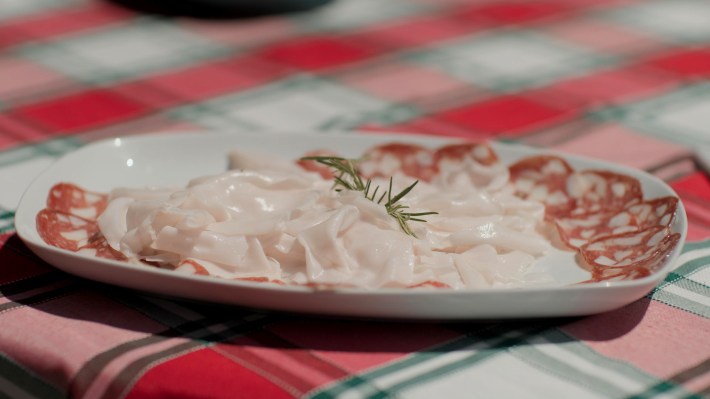
The result is a translucent, creamy substance that melts on the tongue like savory butter. At Picteau, it is often served draped over warm crostini, allowing the heat of the bread to release the complex aromas of the marble-aged herbs.
Reserve a Table at Picteau Bistro →
Beyond the Plate: Wine Windows and Local Traditions
Tucci’s journey through Florence is as much about the "how" as the "what." He famously highlights the buchette del vino, or wine windows. These tiny, arched openings in the stone walls of noble Florentine palaces date back to the 16th century. Originally designed to allow wealthy families to sell wine directly to the public without opening a full shop (and to avoid taxes), they became a lifeline during the bubonic plague to maintain social distancing.
Today, these windows are seeing a vibrant revival, particularly in the Sant’Ambrogio area. You simply ring a bell or knock, and a hand appears through the tiny hole to take your euros and return with a plastic cup of chilled Rosé or Chianti. It is a whimsical, historical way to experience the city's "street" culture.
This tradition is a testament to the 'Cucina Povera' philosophy that Stanley Tucci so admires. It is the art of making something magnificent out of very little—whether it’s using 500-year-old windows to sell wine, or using day-old bread to thicken a tomato soup. The culinary identity of Florence is built on these strict rules that have been maintained for over 700 years, ensuring that while the world changes, the flavor of a Florentine afternoon remains constant.
FAQ
Where exactly did Stanley Tucci eat lampredotto in Florence? Tucci recommends Tripperia Pollini located in Piazza Sant'Ambrogio. It is a traditional street stall where the tripe is served in a bun dipped in broth.
What are the wine windows Stanley Tucci visits? Known as buchette del vino, these are historical openings in palace walls. While several have reopened recently, Tucci explores those in the Sant’Ambrogio and Mercato Centrale districts, which are now used to serve wine and even gelato to passersby.
Is the food in Florence safe for those who don't like organ meats? Absolutely. While Tucci highlights tripe and tongue, Florence is equally famous for its Bistecca alla Fiorentina (t-bone steak), handmade pasta like pappardelle cinghiale (wild boar), and exceptional vegetarian dishes like ribollita.
Share Your Florentine Discovery
Have you followed the Tucci trail to Florence, or do you have a hidden trattoria that feels like home? Florence is a city that reveals itself in layers, and every traveler finds a different "soul" in its streets. Leave a comment below with your favorite food spot in Florence, or subscribe to our newsletter for more immersive culinary guides through Italy.