"Chuu!"
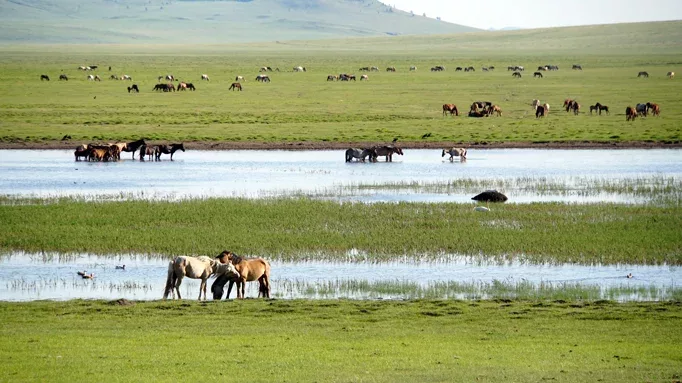
The command is sharp, cutting through the thin, frigid air of the Mongolian steppe like a whip. Beneath the rider, a small, barrel-chested horse—descended from the same sturdy stock that once carried the armies of Genghis Khan—responds instantly, galloping across the yellowing grass. To the untrained eye, this vast expanse appears empty, a silent sea of earth and sky. But to the nomadic families who call it home, this land is a complex map of seasonal grazing, ancestral spirits, and delicate survival.
Roughly 1 million people—nearly one-third of Mongolia’s 3.5 million population—continue to live a nomadic lifestyle across a territory twice the size of Texas. It is one of the last great pastoral cultures on Earth, yet it faces an existential crossroads. Climate change, urban migration, and the brutal "dzud" (extreme winters) are pushing many herders toward the capital, Ulaanbaatar. This raises a pressing question for the conscious traveler: Can tourism save Mongolia’s ancient nomadic traditions, or will it merely turn them into a museum exhibit?
The Economic Lifeline: Why Tourism Matters in 2025
Tourism supports Mongolian nomadic traditions by providing economic diversification through authentic homestays and cultural workshops, helping herders remain resilient against climate challenges like 'dzud' winters. In the past, a bad winter could wipe out a family's entire wealth—their livestock—in a single season. Today, tourism acts as a stabilizing economic buffer.
This isn't just about survival; it's about the "Middle Ground." For the younger generation, the income generated from hosting travelers provides a way to bridge two worlds. It funds university educations in the city while allowing them to return to the steppe during the summer to maintain their seasonal ties to the land. They are no longer forced to choose between poverty on the steppe or anonymity in the city; they are becoming "digital nomads" in the truest sense—balancing the ancient with the unavoidable new.
As we look toward 2025, accessibility is changing the game. United Airlines’ new direct route via Tokyo is set to bring a fresh wave of international visitors. The challenge for Mongolia is ensuring this growth remains sustainable and that the wealth trickles down to the families providing the hospitality.
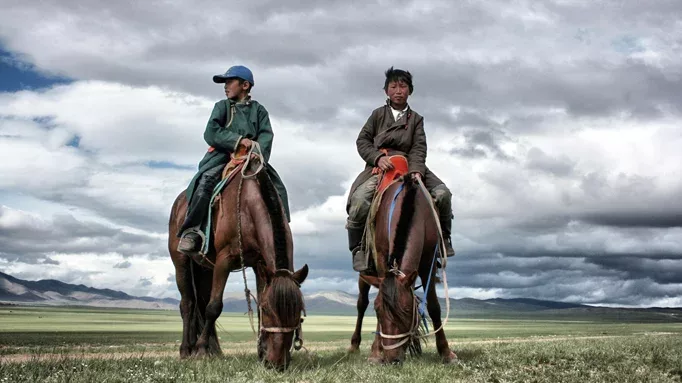
Cultural Snapshot: The 'Dzud' The dzud is a uniquely Mongolian climatic phenomenon where a summer drought is followed by a severe winter. The ground freezes so hard that livestock cannot reach the grass beneath the snow, leading to mass starvation of herds. Tourism income provides families with the cash reserves needed to buy supplemental fodder, effectively saving their traditional way of life.
Case Study: The Eagle Hunter Cultural Center in Bayan-Ölgii
In the far western province of Bayan-Ölgii, the Altai Mountains provide a dramatic backdrop for one of the world's most spectacular traditions: Kazakh eagle hunting. For over 3,500 years, hunters have partnered with golden eagles to hunt fox and hare.
The Eagle Hunter Cultural Center in Bayan-Ölgii serves as a vital hub for preserving this Kazakh falconry tradition while supporting wildlife conservation and local eagle populations. It’s a prime example of how tourism can offer more than just a photo op. The center provides year-round impact, offering workshops and a marketplace for intricate local textiles, ensuring that artisans—primarily women—benefit from the influx of visitors even when it isn't festival season.
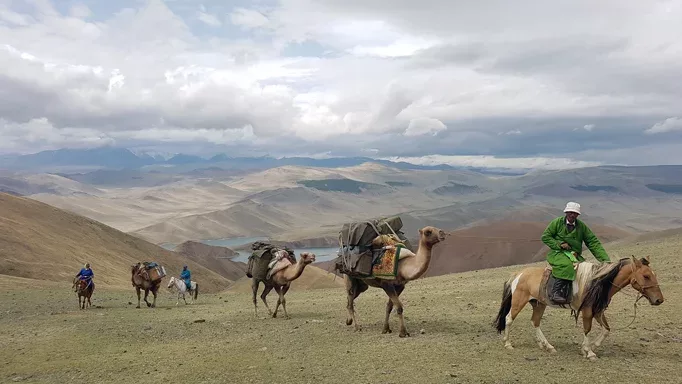
By professionalizing the tradition through the center, the community ensures that eagle hunting remains a respected and viable profession for the youth, rather than a dying art.
Wildlife and Wilderness: Success at Hustai National Park
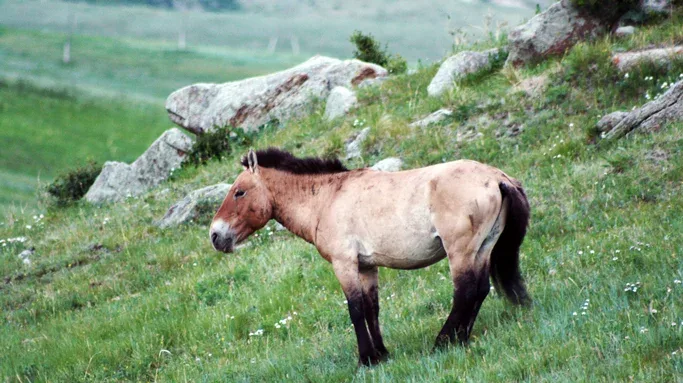
The preservation of nomadic culture is inextricably linked to the health of the steppe itself. You cannot have nomads without a thriving ecosystem. Hustai National Park has become the gold standard for this symbiosis. As of 2025, the park has successfully increased the population of the once-extinct Przewalski's horse (known locally as Takhi) to 311 individuals through nomadic community collaboration.
Nomadic herders living on the park's periphery act as informal guardians. In exchange for respecting the park's boundaries and preventing overgrazing, these communities benefit from tourism infrastructure and employment as rangers and guides. It is a delicate balance, showing that nomadic grazing and wildlife conservation are not mutually exclusive but are, in fact, two sides of the same coin.
The Responsible Traveler’s Protocol: How to Visit Without Changing What You Love
To travel responsibly in Mongolia, visitors should stay with local nomadic families via ethical tour operators, ensure fair compensation for hospitality, and respect the fragile steppe environment. This isn't your standard hotel stay; it is an invitation into a family's life.
Ethical Homestay Expectations
Living in a traditional 'ger' (yurt) is a masterclass in minimalism and community.
- Participate, Don't Just Watch: Offer to help with milking the goats or gathering 'argal' (dried dung for fuel). It builds a bridge faster than any translator can.
- The Gift of Food: You will likely be offered 'aaruul' (dried curd) or 'suutei tsai' (salted milk tea). Even if the taste is unfamiliar, accept it with your right hand as a sign of respect.
- Fair Pay: Ensure your tour operator uses a "community-based" model where the majority of your fee goes directly to the host family.
Leave No Trace in the Land of the Blue Sky
The steppe is a fragile ecosystem where a single tire track can remain visible for decades.
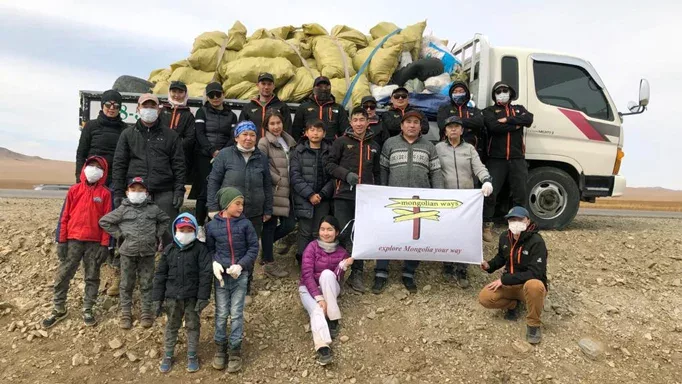
- Waste Management: There are no trash cans on the steppe. Everything you pack in, you must pack out.
- Water Scarcity: Water is a sacred resource. Avoid using chemical soaps in rivers or streams.
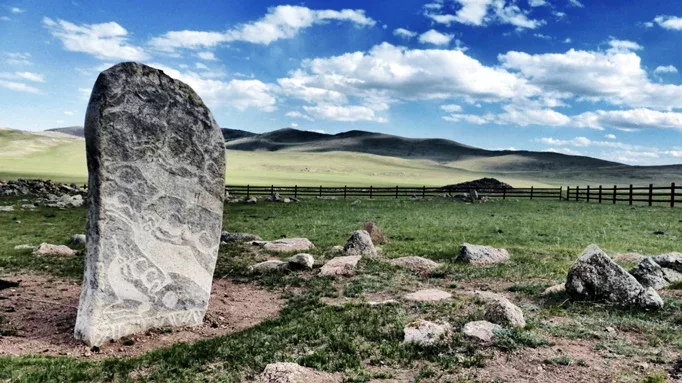
- Respect the Antiquities: Mongolia is scattered with ancient Deer Stones and burial mounds.
Planning Your 2025/2026 Nomadic Adventure
If you're planning a trip for the upcoming seasons, timing is everything. While the July Naadam Festival is the most famous time to visit, the "shoulder seasons" of May, June, and September offer a more intimate look at nomadic life without the crowds.
Essential Logistics
- Connectivity: Pick up a Unitel or Mobicom eSIM at the airport in Ulaanbaatar. Coverage is surprisingly good in many provincial centers, though expect total silence in the deep backcountry.
- Currency: Exchange your money for Tugriks (MNT). While cards are accepted in the capital, the steppe runs on cash.
- Transport: Choosing your vehicle is the most important logistical decision you'll make.
| Feature | Toyota Land Cruiser | Russian UAZ Furgon |
|---|---|---|
| Comfort | High (AC, soft suspension) | Low (Bumpy, no AC) |
| Reliability | High, but hard to fix in remote areas | Legendary; can be fixed with a hammer |
| Vibe | Modern Expedition | Authentic Soviet Nostalgia |
| Best For | Families and long distances | Budget travelers and "off-roading" purists |
Sustainable Travel Tip: Opt for a local driver and guide rather than a self-drive rental. Not only does this support the local economy, but navigating the trackless steppe requires a lifetime of local knowledge.
FAQ
Is it culturally appropriate to stay in a nomad's ger? Yes, but it should be done through an organized homestay or an ethical tour operator. Traditional Mongolian culture is famously hospitable, but the modern influx of tourists requires a structured approach to ensure the family is compensated fairly for their time and resources.
What is the best way to ensure my money stays in the local community? Look for tour operators that explicitly mention "Community-Based Tourism" (CBT). Ask if they have direct contracts with the herding families and what percentage of the tour cost goes directly to the hosts.
How do I handle the lack of facilities (bathrooms/showers) on the steppe? Embrace the "Nomadic Spa." This usually involves a bowl of warm water and a washcloth. Most gers do not have indoor plumbing; you will use a designated outdoor pit latrine. It’s part of the low-impact lifestyle that keeps the steppe beautiful.
The future of Mongolia’s nomadic traditions doesn't depend on keeping the world out; it depends on how we, as travelers, choose to enter. By choosing local, staying respectful, and traveling with a light footprint, we become partners in the preservation of the "Land of the Blue Sky."