I’ve stood on the edge of the Grand Canyon and navigated the dunes of the Sahara, but nothing quite prepares you for the moment the earth simply gives up in Western Kazakhstan. The Ustyurt Plateau doesn't just end; it collapses into a prehistoric dreamscape of blinding white limestone and teal-colored salt flats. This is Mangystau—a region where the Caspian Sea meets a desert that was, millions of years ago, the floor of the Tethys Ocean. The desert doesn't just hold silence here; it swallows noise whole.
Getting to this frontier is the first hurdle of the expedition. To begin your own Kazakhstan desert expedition, you’ll need to fly into Aktau International Airport (SCO). It’s surprisingly accessible, offering direct six-hour flights from London and frequent domestic hops from the bustling hubs of Almaty and Astana. Once you touch down in Aktau, you’re at the gateway to the abyss.
Quick Facts: Mangystau at a Glance
| Category | Details |
|---|---|
| Best Way to Reach | Fly to Aktau (SCO) via Almaty, Astana, or London. |
| Peak Season | May–June or September–October. |
| Top Landmarks | Bozjyra Canyon, Torysh (Valley of Balls), Sor Tuzbair. |
| Elevation Low | 134 meters (440 feet) below sea level. |
| Adventure Cost | $30 (shared day trip) to $4,000+ (luxury 10-day tour). |
| Transport Required | High-clearance 4x4 with an experienced driver. |
Planning Your Expedition
Timing is everything in the desert. If you head into the Ustyurt in July, the heat will cook you faster than a roadside kebab. Conversely, the winter winds here are brutal enough to strip paint. The sweet spot—the absolute best time to visit Mangystau—is late spring or autumn. Specifically, September to October offers that crisp desert air and manageable temperatures, avoiding the extreme summer mercury spikes.
When packing, think "self-sufficiency." This isn't a place for a rental sedan. You need a high-clearance 4x4, preferably a Toyota Land Cruiser or a modified Russian UAZ, stocked with extra fuel, at least five liters of water per person per day, and a satellite phone. There are no gas stations where we're going.
Aktau: The Caspian Gateway
Most travelers treat Aktau as a mere pitstop, but that’s a mistake. Forget the "Brutalist" Soviet stereotypes; the city has a pulse. I spent my first evening walking the seaside promenade, where the locals blast rock music from passing cars and the coffee culture is surprisingly sophisticated.
Aktau serves as your strategic base camp. Use the 2giz navigation app (essential for Kazakhstan) to find local supply shops in the micro-districts. Before heading into the wild, indulge in some local sturgeon or beshbarmak at a seaside restaurant. You’ll miss the fresh greens once you’re eating canned rations in the dust.
Into the Abyss: The Landmarks of the Ustyurt Plateau
The true Mangystau Kazakhstan travel guide starts once you leave the asphalt behind. The Ustyurt Plateau is a geographical anomaly, featuring dramatic depressions that drop approximately 440 feet (134 meters) below sea level. It is a land of giants.
Bozjyra: The Crown Jewel
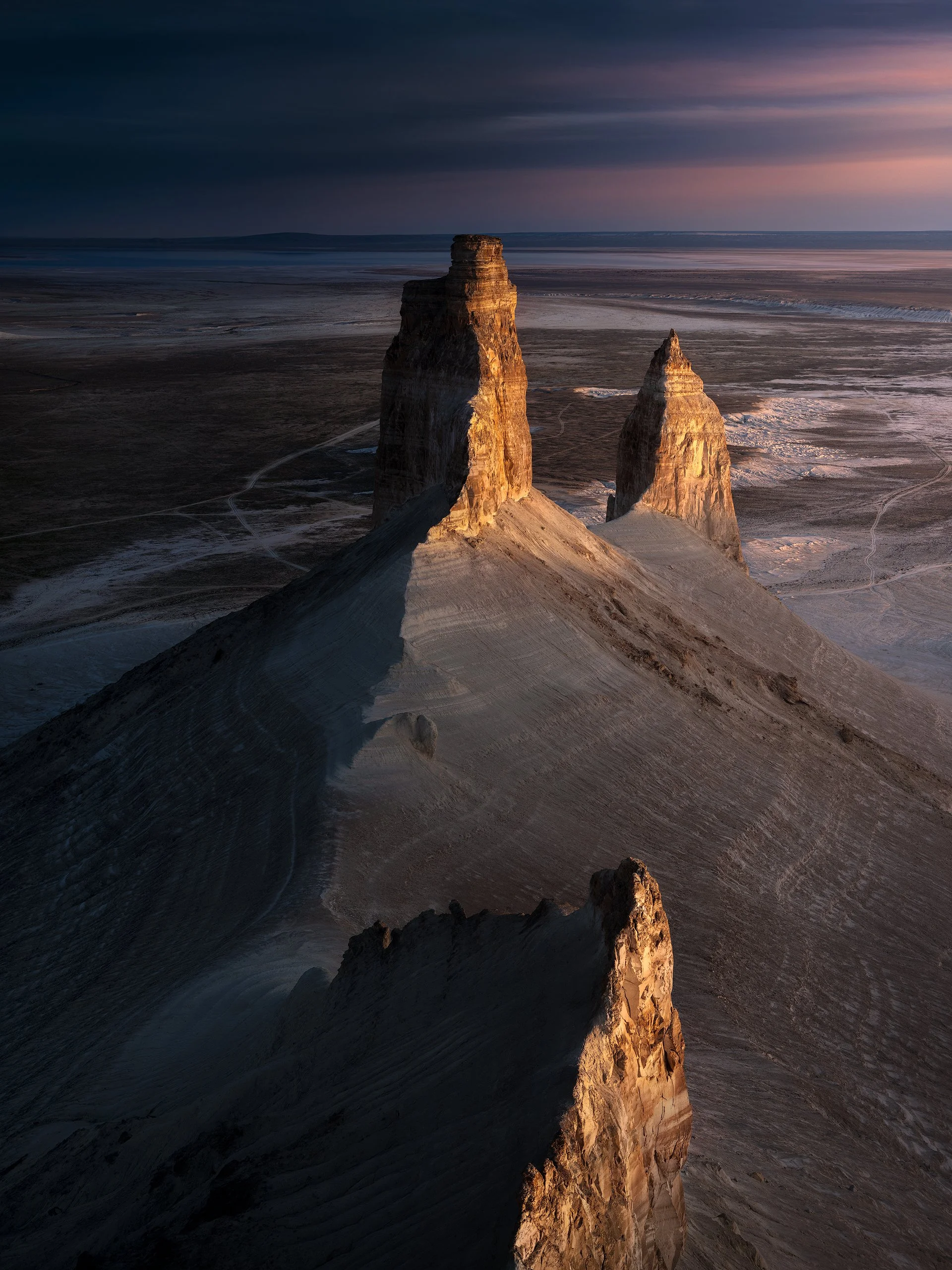
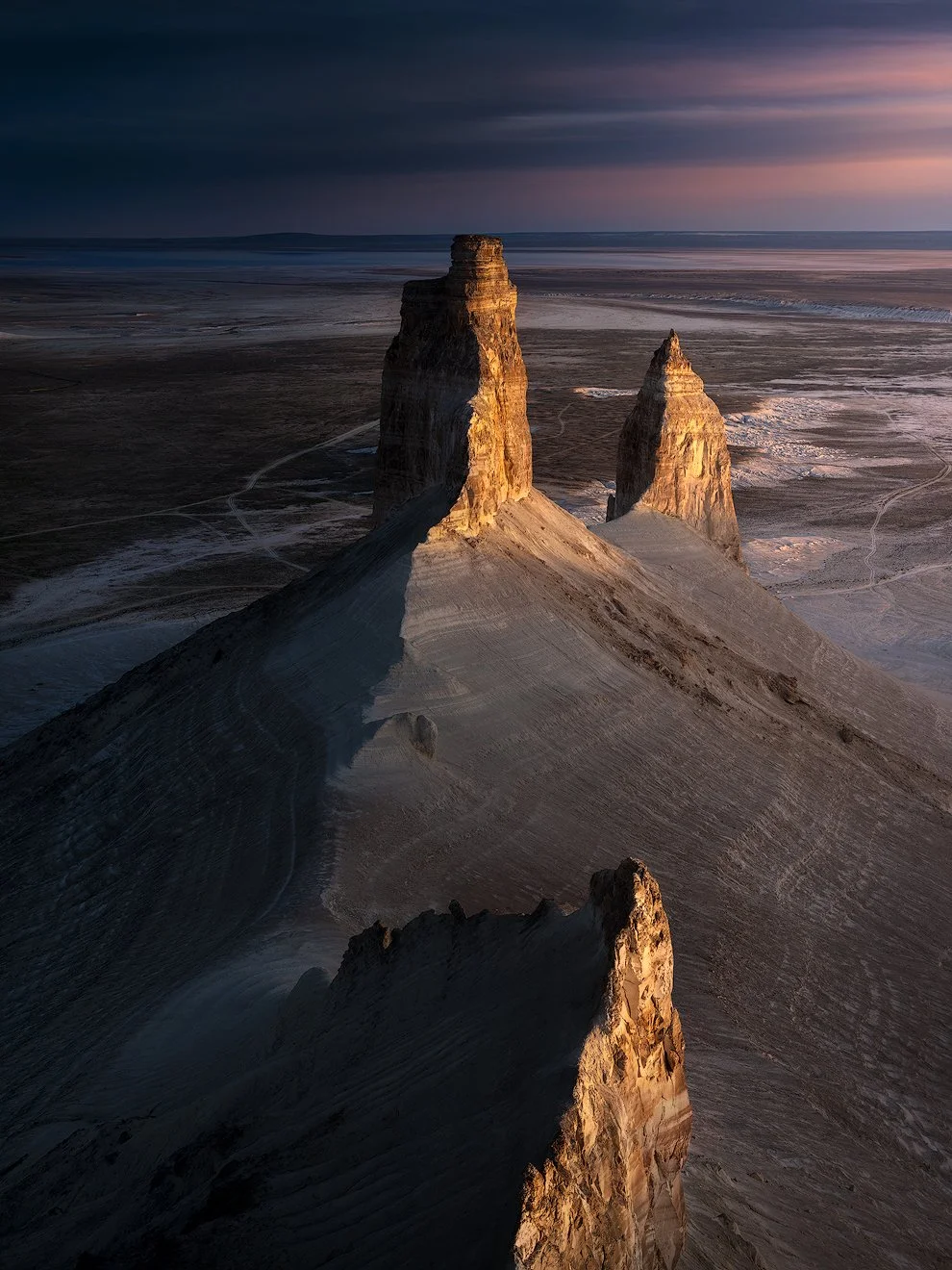
If there is one reason to endure the bone-shaking tracks of the desert, it is Bozjyra Canyon. Often called the "Crown Jewel" of the region, it’s a vast amphitheater of white chalk. The most iconic features are the limestone "fangs"—two massive pillars that rise like the teeth of a prehistoric predator from the canyon floor. Standing on the "Mars Panorama" lookout, you feel less like a tourist and more like an astronaut who took a wrong turn at the moon.
Torysh: The Valley of Balls
Geology turns weird at Torysh. Imagine thousands of giant stone spheres, some the size of a car, scattered across the desert floor. Local legends speak of invading hordes turned to stone, but the scientific reality—concretion—is just as fascinating. These stones formed around a nucleus in the seabed millions of years ago, only to be excavated by millennia of wind and rain.
The Salt Marshes of Sor Tuzbair
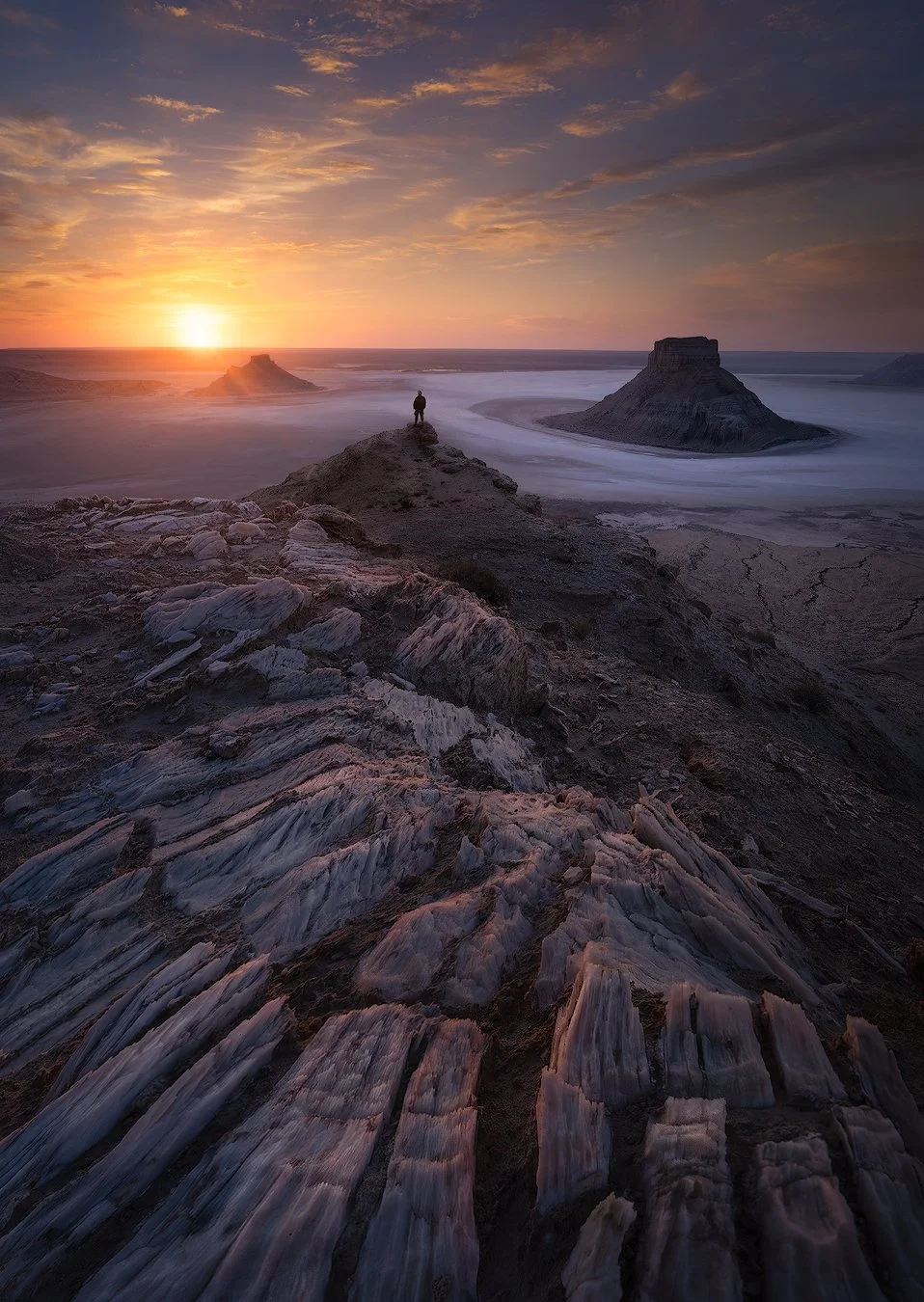
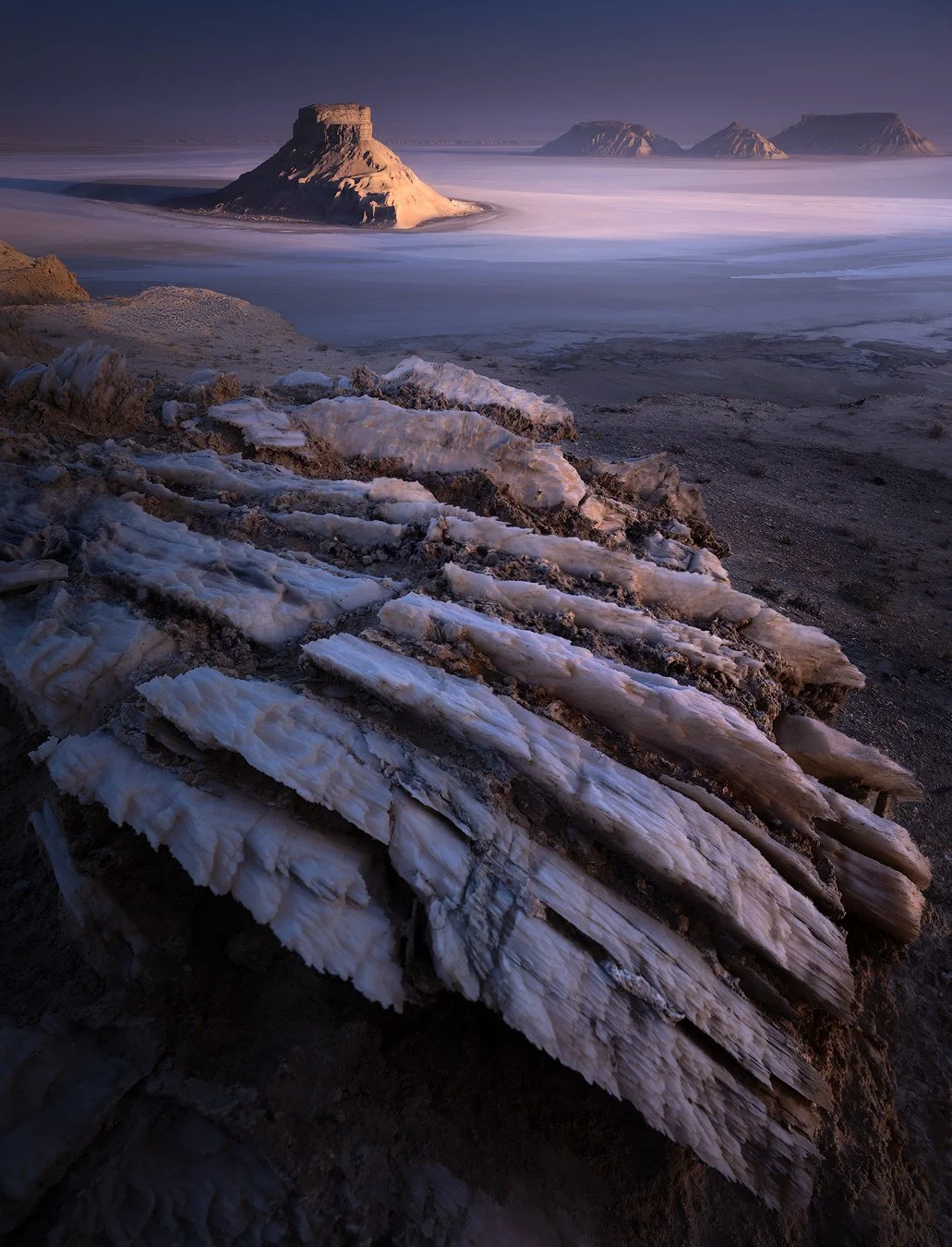
For pure, unadulterated color, Sor Tuzbair is unbeatable. When it rains (which is rare), the salt flats turn into a perfect mirror, reflecting the sky so vividly that you lose all sense of the horizon. Even dry, the contrast between the teal-tinted brine and the blinding white cliffs is a sensory overload. This is also where you truly feel the scale of the depression, standing over 100 meters below the level of the world's oceans.
Kyzylkup: The Tiramisu Canyon
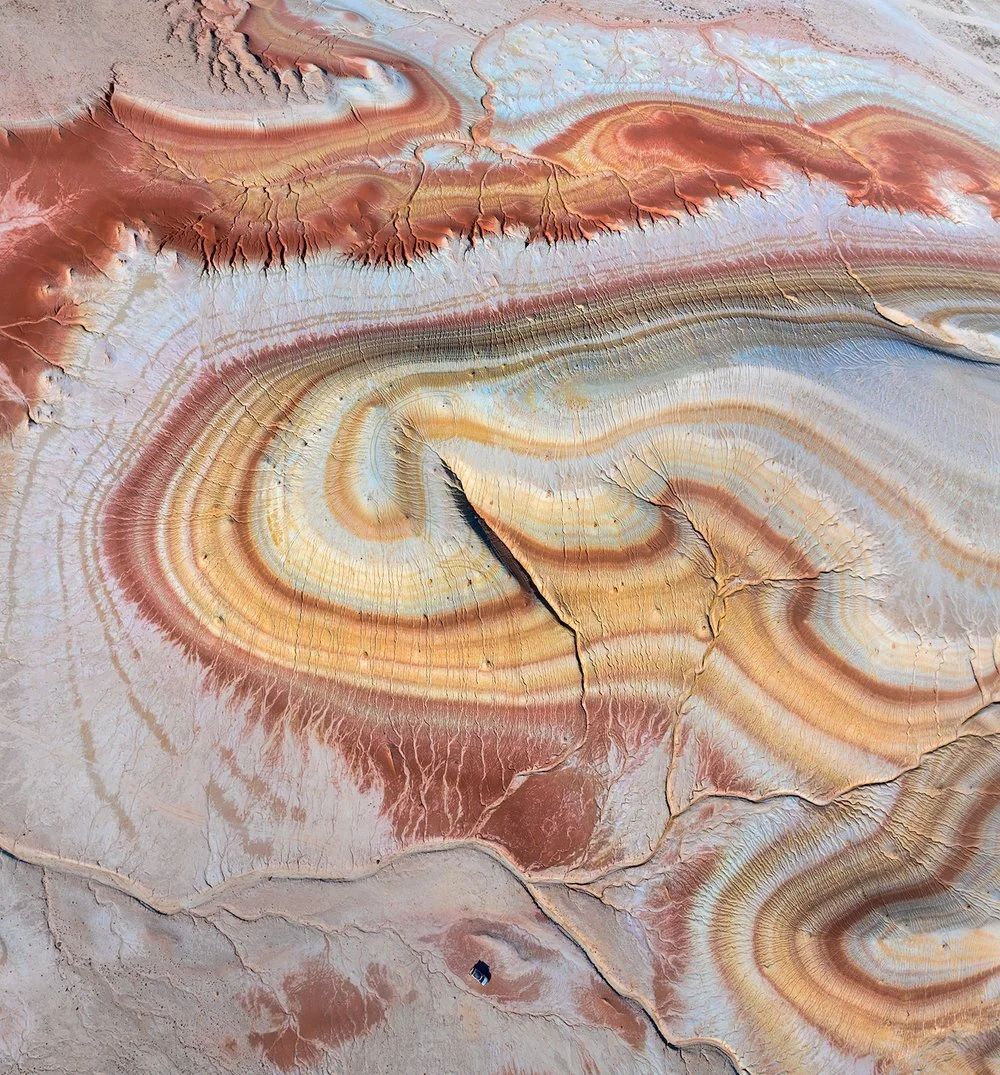
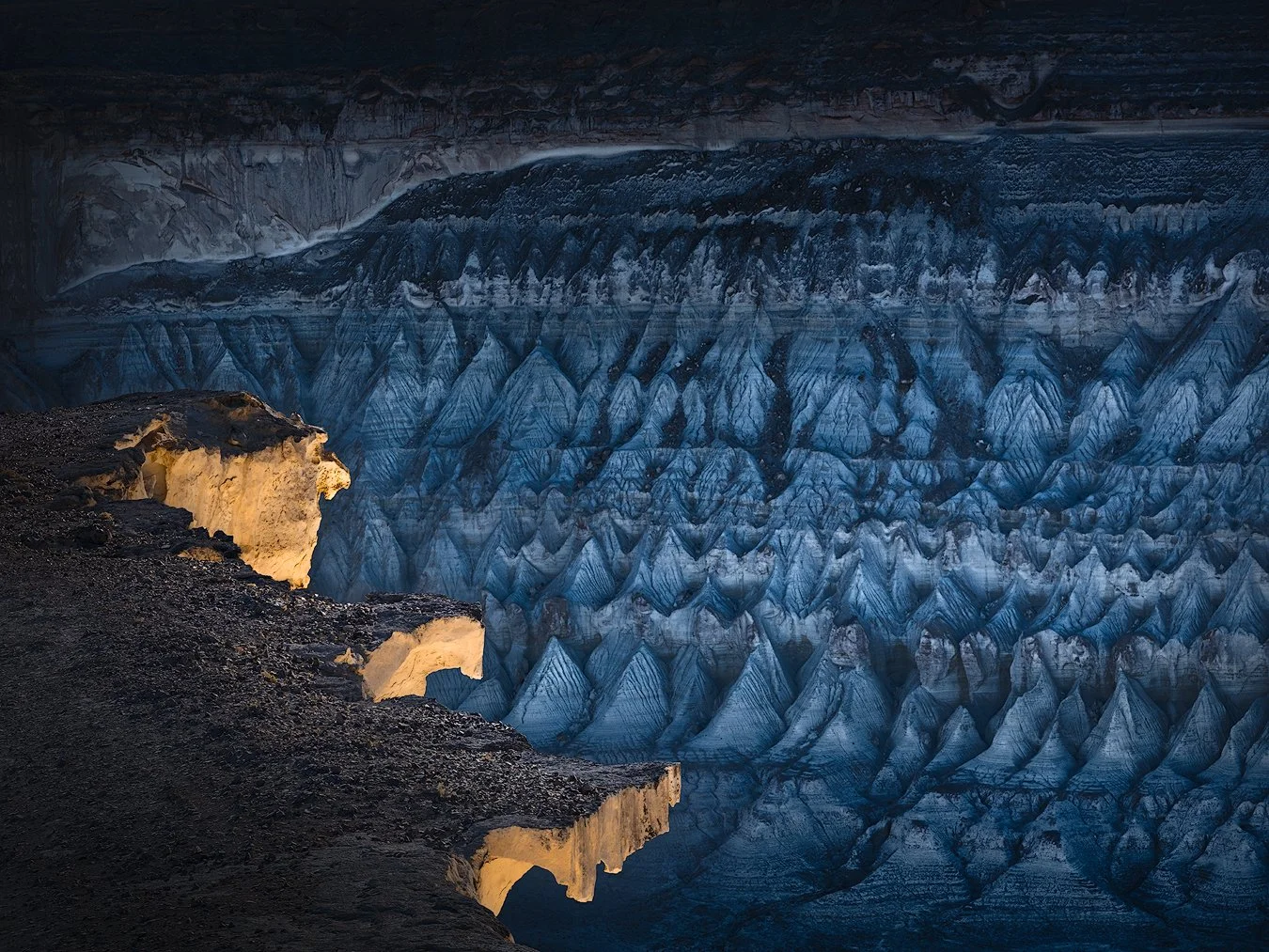
Locally known as Kyzylkup, this area is nicknamed "Tiramisu Canyon" for its distinct, layered geology. The sediments here are striped with ochre, red, and cream, looking like a giant, wind-sculpted cake. It’s a high-contrast dream for any photographer, especially during the "golden hour" when the reds seem to catch fire.
The Cost of Adventure: From Budget to Luxury
Adventure in Mangystau is a "choose your own hardship" scenario. Logistics are the main driver of cost. Because of the technical driving required and the total lack of infrastructure, you generally have three tiers:
- The Shared Day Trip ($30 - $70 USD): Best for solo travelers on a budget. These usually depart from Aktau and hit one or two major sites. You’ll be in a packed van, but it’s the most affordable entry point.
- Private 4x4 Expedition ($200 - $500 USD per day): This is the sweet spot. You hire a professional driver/guide and a dedicated vehicle. This allows you to camp overnight at the sites, which is the only way to see the stars (and they are spectacular).
- Premium Photography Expeditions ($4,000+ USD): These are all-inclusive 10-day journeys led by world-class photographers. They include high-end gear, catered meals, and scouted locations for the perfect light.
Pro-Tip: If you can swing it, skip the hotels and opt for a Yurt Camp or wild camping. There is nothing like waking up at 5:00 AM to the sound of the wind whipping through the Bozjyra fangs.
Photography and Drone Tips
Capturing the "White Bones" of Mangystau requires more than just pointing and clicking. The limestone is incredibly reflective. During midday, it will blow out your highlights and leave you with flat, lifeless shots.
- Circular Polarizer: Non-negotiable. You need it to manage the glare off the salt flats and the limestone.
- Drone Management: Kazakhstan is relatively drone-friendly, but the wind in the Ustyurt is a drone-killer. I’ve seen DJI Mavics get swatted out of the sky by sudden gusts. Always check your wind speeds and keep your bird close.
- Astrophotography: With zero light pollution, the Milky Way is visible to the naked eye. Bring a sturdy tripod (and weight it down against the wind) and a fast wide-angle lens.
Practicalities & Safety
Let’s be real: Mangystau is unforgiving. There are no roads—only tracks. If your vehicle breaks down and you don't have a satellite communicator or a local driver who knows the "secret" wells, you’re in trouble.
- Navigating Without Roads: This is why local drivers are non-negotiable for first-timers. The tracks often branch off into dozens of directions, and what looks like a solid salt flat can easily turn into "salt-mush" that will swallow a 4x4 to its axles.
- Water & Fuel: Always carry 20% more than you think you need. The desert is a high-wind environment, which dehydrates you faster than you realize.
- Connectivity: Don't expect 4G once you leave the city limits. Download your maps for offline use, but rely on your guide's instinct.
FAQ
Q: Do I need a visa for Kazakhstan? A: Most Western travelers (US, UK, EU, Canada) can enter Kazakhstan visa-free for up to 30 days. Always check the latest regulations before booking.
Q: Can I drive myself in a rental car? A: I wouldn't recommend it. Most rental agencies in Aktau won't let their cars go deep into the Ustyurt. The "roads" are brutal, and recovery costs are astronomical. Hire a pro.
Q: Is it safe for solo female travelers? A: Yes. Kazakhstan is generally very safe. However, for a desert expedition, joining a group tour or hiring a reputable guide is advised for logistical safety.
The wild canyons of Mangystau are a reminder that the world still has secrets. It’s not an easy trip, and you’ll likely return to Aktau chalk-dusted and exhausted. But when you’re standing in the middle of a dry sea, watching the sun dip behind limestone towers that have stood for millennia, you'll realize it's one of the few places left on Earth that still feels truly wild.