There is a specific kind of silence that exists only along the crest of the Blue Ridge Mountains. It is not the absence of sound, but rather a layered composition of rustling oak leaves, the distant call of a red-tailed hawk, and the rhythmic hum of tires on asphalt. This is Shenandoah National Park—197,439 acres of protected wilderness that serves as a testament to the power of ecological reclamation. Rising above the Virginia Piedmont to the east and the Shenandoah Valley to the west, the park is defined by the 105-mile Skyline Drive, a road that doesn’t just pass through the landscape but dances along its very spine.
Whether you are seeking the contemplative solitude of the Appalachian Trail or the adrenaline of a granite rock scramble, Shenandoah offers a sanctuary that feels worlds away from the nearby bustle of the nation’s capital. To truly experience this park is to slow down to its 35-mph speed limit and let the history of these ancient hills unfold overlook by overlook.
Quick Facts
- Total Area: 197,439 acres.
- The Drive: 105 miles of Skyline Drive with 75+ scenic overlooks.
- Hiking: Over 500 miles of trails, including 101 miles of the Appalachian Trail.
- Peak Elevation: Hawksbill Mountain at 4,051 feet.
- Access: Four primary entrance stations (Front Royal, Thornton Gap, Swift Run Gap, Rockfish Gap).
- Permits: A day-use permit is required for hiking Old Rag Mountain (March 1 – Oct 31).
Planning Your Arrival: Gateways and Logistics
Navigating Shenandoah is remarkably intuitive thanks to its linear design. The park is essentially a long, narrow ribbon of mountain peaks. Most visitors arrive from the Washington D.C. area—a mere 70-mile drive—making it one of the most accessible national parks in the eastern United States. Entry costs $30 per vehicle, valid for seven consecutive days, though the America the Beautiful pass is, as always, your best investment for federal lands.
The park is divided into three districts (North, Central, and South), accessible via four distinct gatehouses. Choosing your entry point depends largely on which section of the park you intend to explore.
Entrance Stations at a Glance
| Entrance Station | Milepost | Connecting Route | Best For |
|---|---|---|---|
| Front Royal | Mile 0 | Rt. 340 near I-66 | Northern District; Proximity to D.C. |
| Thornton Gap | Mile 31.5 | Rt. 211 | Central District; Mary’s Rock & Luray Caverns |
| Swift Run Gap | Mile 65.5 | Rt. 33 | Central/South; Access from Harrisonburg |
| Rockfish Gap | Mile 105 | Rt. 250 near I-64 | Southern District; Connecting to Blue Ridge Pkwy |
Timing Your Trip: Seasons of the Blue Ridge
Timing is everything in the Blue Ridge. While the park is technically open year-round, the experience shifts dramatically with the tilt of the earth's axis.
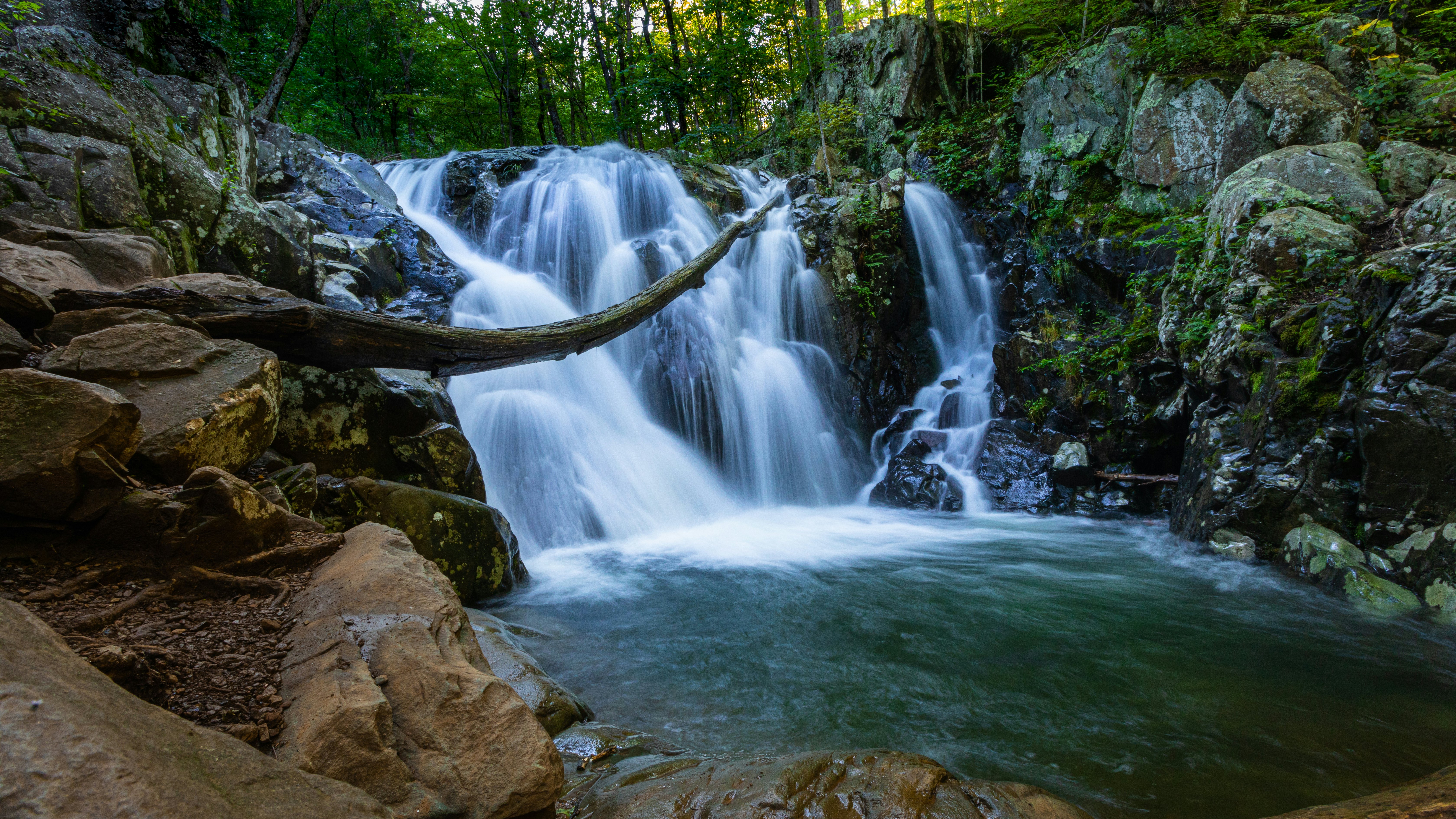
Spring is a season of rebirth and rushing water. As the snow melts and the "Big Springs" recharge, waterfalls like Overall Run and Dark Hollow Falls reach their thunderous peak. By late April, wildflowers—including trillium and wild azaleas—blanket the forest floor.
Summer provides a welcome respite from the humid heat of the Virginia lowlands. Temperatures on the ridgeline rarely exceed the mid-70s, making it the perfect season for camping at Big Meadows or Loft Mountain.
Fall, however, is Shenandoah’s "Grand Finale." The best time to visit Shenandoah National Park for fall colors is typically mid-to-late October. During this window, the oaks, maples, and hickories transform the mountains into a tapestry of burnt orange, deep crimson, and brilliant gold. Be warned: October brings over 300,000 visitors, a staggering leap from the 12,000 who brave the quiet, skeletal beauty of January.
Seasonal Weather Averages
| Season | Avg High (°F) | Avg Low (°F) | Avg Precip (in) |
|---|---|---|---|
| Spring | 54°F | 35°F | 3.8" |
| Summer | 73°F | 55°F | 4.5" |
| Fall | 58°F | 39°F | 3.9" |
| Winter | 36°F | 20°F | 3.1" |
The Skyline Drive Roadmap: Mile-by-Mile Highlights
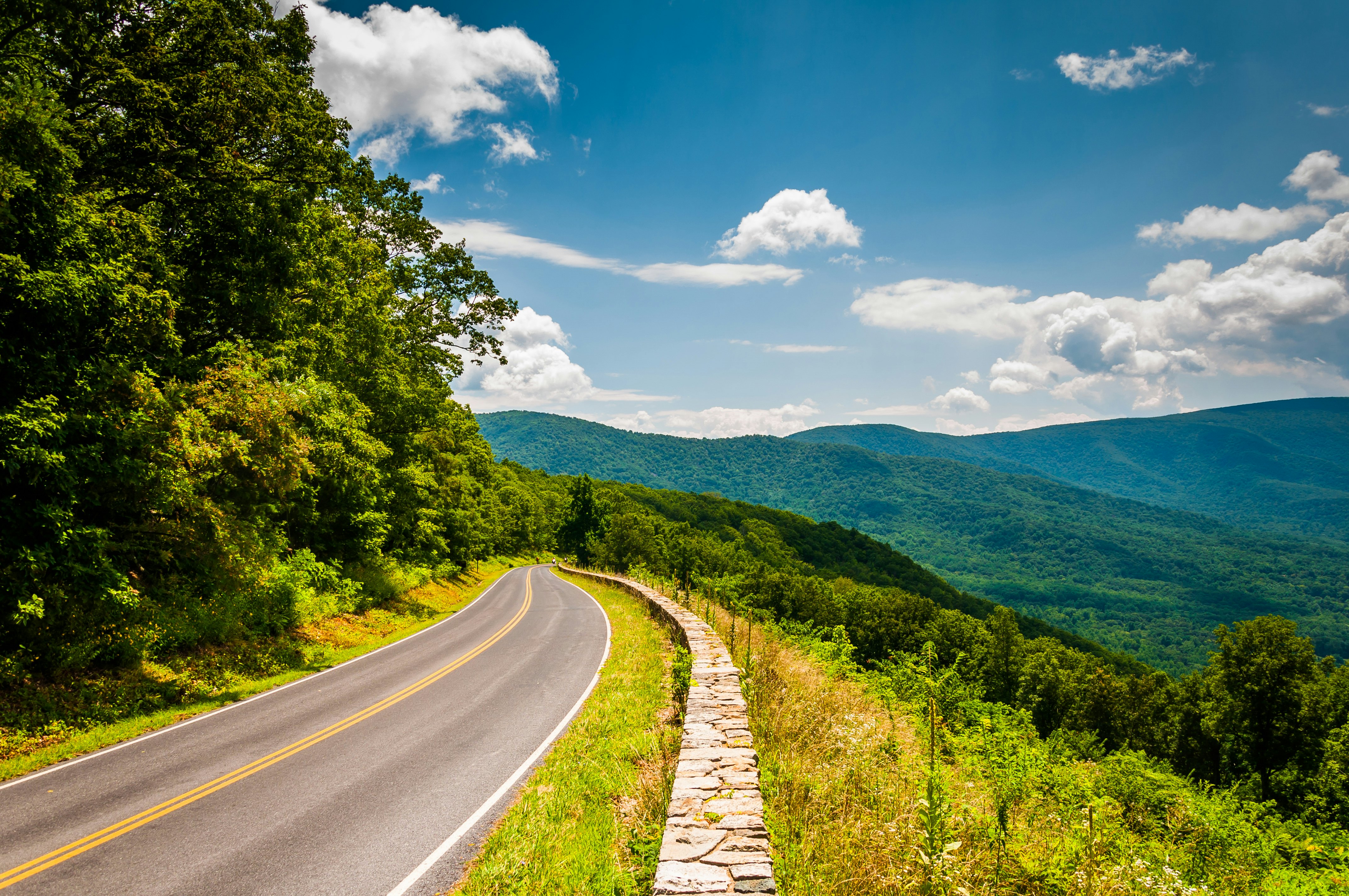
Skyline Drive is the heartbeat of the park. Engineered in the 1930s by the Civilian Conservation Corps (CCC), the road was designed to provide "the greatest scenic beauty" while minimizing environmental impact. It takes approximately three hours to drive the full 105 miles without stopping, but to do so would be to miss the point entirely.
- The North District (Mile 0 to 31.5): Start at the Dickey Ridge Visitor Center (Mile 4.6). The views here offer an immediate introduction to the Shenandoah Valley. This section is generally quieter and provides excellent opportunities for early-morning wildlife spotting.
- The Central District (Mile 31.5 to 65.5): This is the park’s crown jewel. It contains the highest concentration of facilities, including Skyland and Big Meadows. Don't miss the Marys Rock Tunnel (Mile 32.2), a 670-foot passage blasted through solid granite in 1932.
- The South District (Mile 65.5 to 105): Characterized by vast, panoramic views and thinner crowds. Loft Mountain (Mile 79.5) sits atop a high plateau, offering what many consider the most spectacular sunset views in the entire park.
Hiking Shenandoah: From Easy Strolls to the Crown Jewel
With over 500 miles of trails, the park offers something for every level of fitness.
The Old Rag Challenge
Old Rag Mountain is arguably the most famous hike in the mid-Atlantic. It is a grueling 9-mile circuit that involves a legitimate rock scramble—navigating tight crevices and sliding over granite boulders.
Pro Tip: Old Rag Permits To prevent overcrowding and protect the fragile alpine environment, a day-use permit is required to hike Old Rag Mountain between March 1 and October 31. These must be purchased online via Recreation.gov before you arrive. They cost $1 and are not sold at the park entrance.
Essential Trails for Your Itinerary
- Hawksbill Summit (Mile 45.5): A steep 1.6-mile out-and-back trail leads you to the highest point in the park (4,051 feet). The summit platform offers a 360-degree view that is unparalleled.
- The Limberlost Trail (Mile 43): This 1.3-mile circuit is fully accessible, featuring a crushed greenstone gravel path that winds through ancient hemlocks and mountain laurel.
- Dark Hollow Falls (Mile 50.7): A 1.4-mile round trip that leads to a stunning 70-foot cascading waterfall. It’s short but steep on the return—pace yourself.
- The Appalachian Trail: You don’t have to be a "thru-hiker" to enjoy the AT. There are 101 miles of the world-famous trail within the park, often paralleling Skyline Drive, allowing for easy "sample" hikes of 2 or 3 miles.
Beyond the Overlooks: History and Hidden Gems
Shenandoah is a "recycled" park. Before 1935, this land was home to over 400 families, scattered across hollows and ridges. Today, you can still find the stone foundations of former homesteads and the apple orchards they left behind.
One of the most significant historical sites is Rapidan Camp. Accessible via a guided van tour or a 4-mile hike, this was the summer retreat of President Herbert Hoover. Built in 1929, it served as the predecessor to Camp David. The restored "Brown House" offers a fascinating glimpse into presidential life during the Great Depression.
Wildlife Watch
The park is one of the best places in the Eastern U.S. to see Black Bears. With an estimated population of several hundred, sightings are common, especially near Big Meadows. You might also spot white-tailed deer, wild turkeys, and—if you’re incredibly lucky—the rare, endemic Shenandoah salamander, which lives only on the peaks of three mountains in the park.

Nearby Detours
If you have an extra afternoon, descend the mountains at Thornton Gap to visit Luray Caverns. This National Natural Landmark features the world's only "Stalacpipe Organ" and some of the most intricate limestone formations in the country.

Where to Stay and Dine
To experience the park’s true rhythm, I highly recommend staying "on top."
- In-Park Lodging: Skyland (Mile 41.7) offers the highest elevation lodging with rustic rooms and cabins. Big Meadows Lodge (Mile 51) is a historic structure built with native stone and chestnut timber.
- Camping: There are five campgrounds. Big Meadows is the most central, while Loft Mountain offers the best views. Most require reservations during peak season via Recreation.gov.
- Dining: No trip to Shenandoah is complete without a slice of the Blackberry Ice Cream Pie at the Skyland or Big Meadows dining rooms. It is a local tradition that dates back decades.
FAQ
Is Skyline Drive open year-round? Generally, yes. However, the road frequently closes due to snow, ice, or heavy fog during the winter months. Always check the park’s alert page or call the recorded information line (540-999-3500) before heading out in winter.
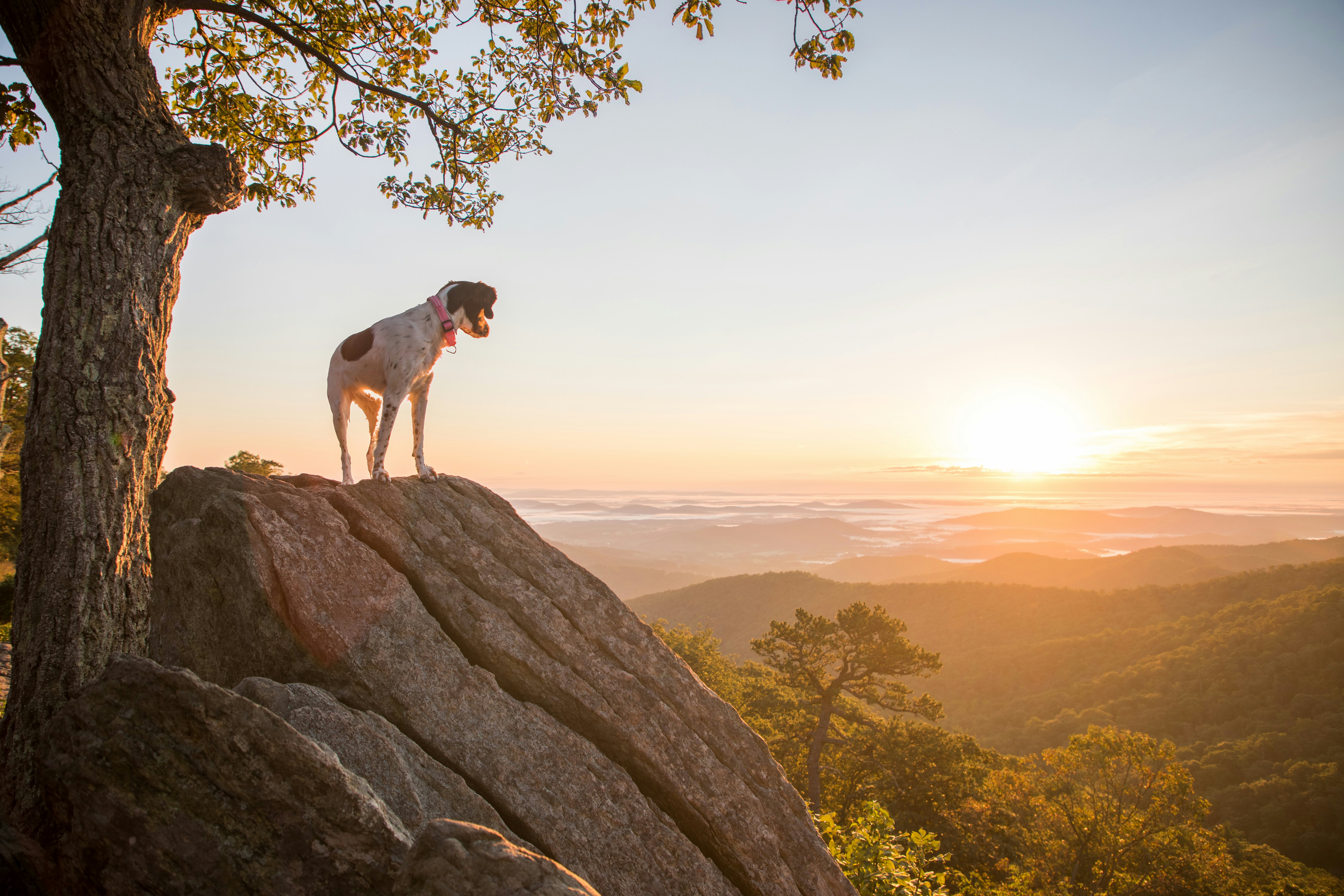
Can I bring my dog on the trails? Shenandoah is one of the most pet-friendly national parks in the country. Dogs are allowed on over 480 miles of trails, provided they are on a leash no longer than six feet. Note that pets are prohibited on a few specific trails, including Old Rag and Dark Hollow Falls, for safety reasons.
How do I get an Old Rag permit? Permits are released 30 days in advance on Recreation.gov, with a second batch released five days in advance. They are $1 per person. Print your confirmation or save it to your phone, as cell service at the trailhead is non-existent.
Are there EV charging stations inside the park? Yes, level 2 charging stations are available for guest use at Skyland, Big Meadows Lodge, and the Harry F. Byrd, Sr. Visitor Center.
Shenandoah National Park is more than just a scenic drive; it is a monument to the resilience of nature and the foresight of those who sought to preserve it. Whether you spend your days chasing waterfalls or simply sitting on a stone wall watching the valley mist burn off at dawn, the Blue Ridge has a way of staying with you long after you’ve descended back to the lowlands.