Quick Facts
- The Pioneer: Pelumi Nubi, a 28-year-old British-Nigerian PhD student and travel content creator.
- The Feat: First Black woman to drive solo from London to Lagos.
- The Timeline: January 31, 2024, to April 7, 2024 (74 days).
- The Distance: Over 6,000 miles (approx. 10,000 kilometers).
- The Route: 16 countries, including the UK, France, Spain, Morocco, Mauritania, Senegal, Gambia, Guinea-Bissau, Guinea, Sierra Leone, Liberia, Ivory Coast, Ghana, Togo, Benin, and Nigeria.
- The Vehicle: A 2011 Peugeot 107, nicknamed "Lumi," modified for overlanding.
- Previous Experience: 80 countries visited; 2,500-mile solo road trip across Namibia.
“Where is the driver?” That was the question Pelumi Nubi heard most often as she rolled her tiny, purple-wrapped Peugeot 107 through border crossings across West Africa. The guards would peer into the window, eyes searching for a husband, a brother, or a hired driver. When they realized the petite woman in the driver's seat was the sole occupant, the disbelief usually dissolved into awe.
On April 7, 2024, that disbelief turned into a national celebration. After 74 days on the road, Pelumi Nubi became the first Black woman to drive solo from London to Lagos. As an editor who has spent years covering expeditions that involve rugged 4x4s and massive budgets, what strikes me most about Pelumi’s journey isn't just the distance—it’s the sheer audacity of her "use what you have" mindset. She didn't wait for a Land Rover Defender or a corporate sponsorship. She took a city car, a PhD student’s budget, and a deep-seated desire to connect her two homes, and she changed the face of overlanding forever.
The Historic Milestone: Breaking Barriers on Four Wheels
Pelumi’s arrival in Lagos wasn't just a personal victory; it was a geopolitical statement. For decades, the London-to-Lagos overland route has been a "bucket list" challenge for adventure seekers, but it has historically been dominated by male travelers and well-equipped teams. By completing this 6,000-mile trek solo, Nubi shattered the stereotype that West African travel is too dangerous or complex for a lone woman, let alone a Black woman driving a hatchback.
The statistics of the expedition are staggering when you consider the vehicle used:
- Countries Traversed: 16
- Nights Spent Camping in Car: Over 50% of the journey
- Average Daily Driving: 8 to 12 hours
- Total Days: 74
"I wanted to show that the world is more accessible than we are led to believe," Nubi told me in the spirit of her post-trip reflections. Her journey was about more than miles; it was about reclaiming the narrative of African travel, moving past the headlines of conflict and focusing on the hospitality, the landscapes, and the "muscle of self-confidence" required to navigate the unknown.
The Catalyst: Why a Ph.D. Student Chose the Open Road
Pelumi Nubi was born in Lagos and moved to London at age ten. For her, the two cities represented the pillars of her identity, but they were always separated by a 6.5-hour flight. She wanted to feel the distance, to see how the land changed between the Thames and the Gulf of Guinea.
The spark for this specific trip came from two places. First, she saw Kunle Adeyanju, a Nigerian man who completed the London-to-Lagos journey on a motorbike in 2022. While she found him inspiring, she noticed a glaring lack of women—particularly Black women—in the overlanding community. Second, she was already a seasoned traveler. Pelumi hadn't just "visited" 80 countries; she had immersed herself in them, including a grueling 2,500-mile road trip through the deserts of Namibia that served as her proof-of-concept for the Lagos expedition.
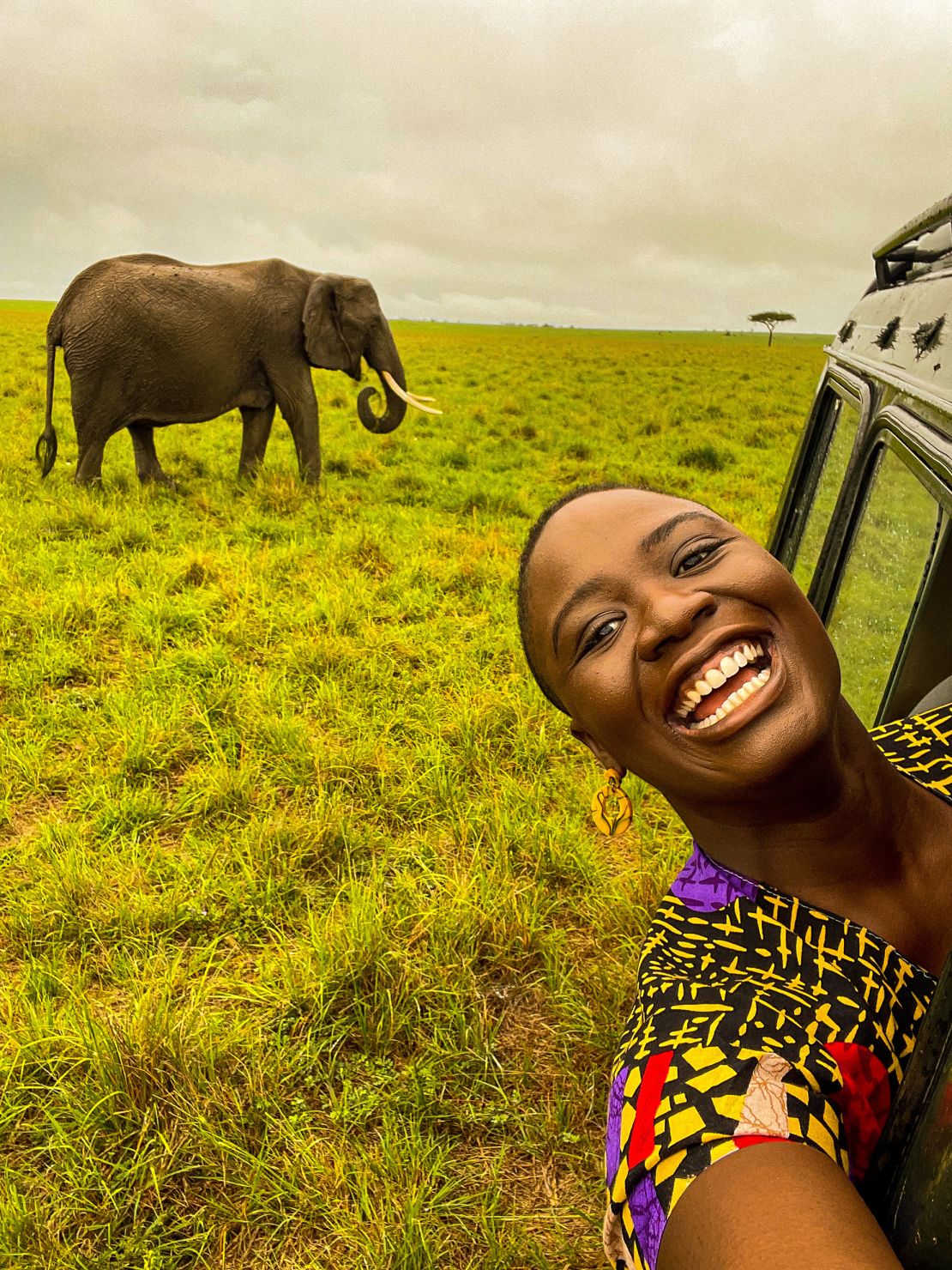
"Travel is a form of education that no university can provide," she often says. For Nubi, the road was a laboratory where she could test her resilience. She wasn't just running away from her PhD studies; she was running toward a version of herself that could handle anything the Sahara or a West African border post could throw at her.
The Vehicle: Customizing 'Lumi' the Peugeot 107
If you saw a Peugeot 107 in a London supermarket parking lot, you’d think it was the perfect car for a quick grocery run—not a transcontinental expedition. But Pelumi saw potential in her car, "Lumi." Her choice of vehicle was a deliberate middle finger to the "gear-heavy" culture of overlanding.
"People told me I needed a big 4x4, a winch, and triple-digit horsepower. I wanted to prove that you can start exactly where you are with what you have." — Pelumi Nubi
To turn a tiny hatchback into a home, Pelumi performed several key modifications:
- The Sleeping Quarter: She removed the passenger seat and installed a custom-built wooden platform that allowed her to lie flat, turning the car into a micro-camper.
- The Kitchen: A portable stove and a small storage system for dry goods were tucked into the rear.
- Power & Tech: Solar panels and portable power banks kept her navigation and filming equipment charged.
- Self-Reliance: She took a crash course in basic mechanics, learning how to change tires, check fluids, and handle minor engine issues—skills that would prove vital.
Wild camping in a Peugeot 107 requires a different mindset than camping in a tent. It requires stealth and hyper-awareness. Pelumi spent over half her nights sleeping in the car, often parked near gas stations or in small villages where she had sought permission from local elders.
The Route: Traversing Europe and West Africa
The journey was a masterclass in geographic diversity. It began in the familiar, damp streets of London, crossing the English Channel into the heart of Europe.
The European Leg: A False Sense of Security
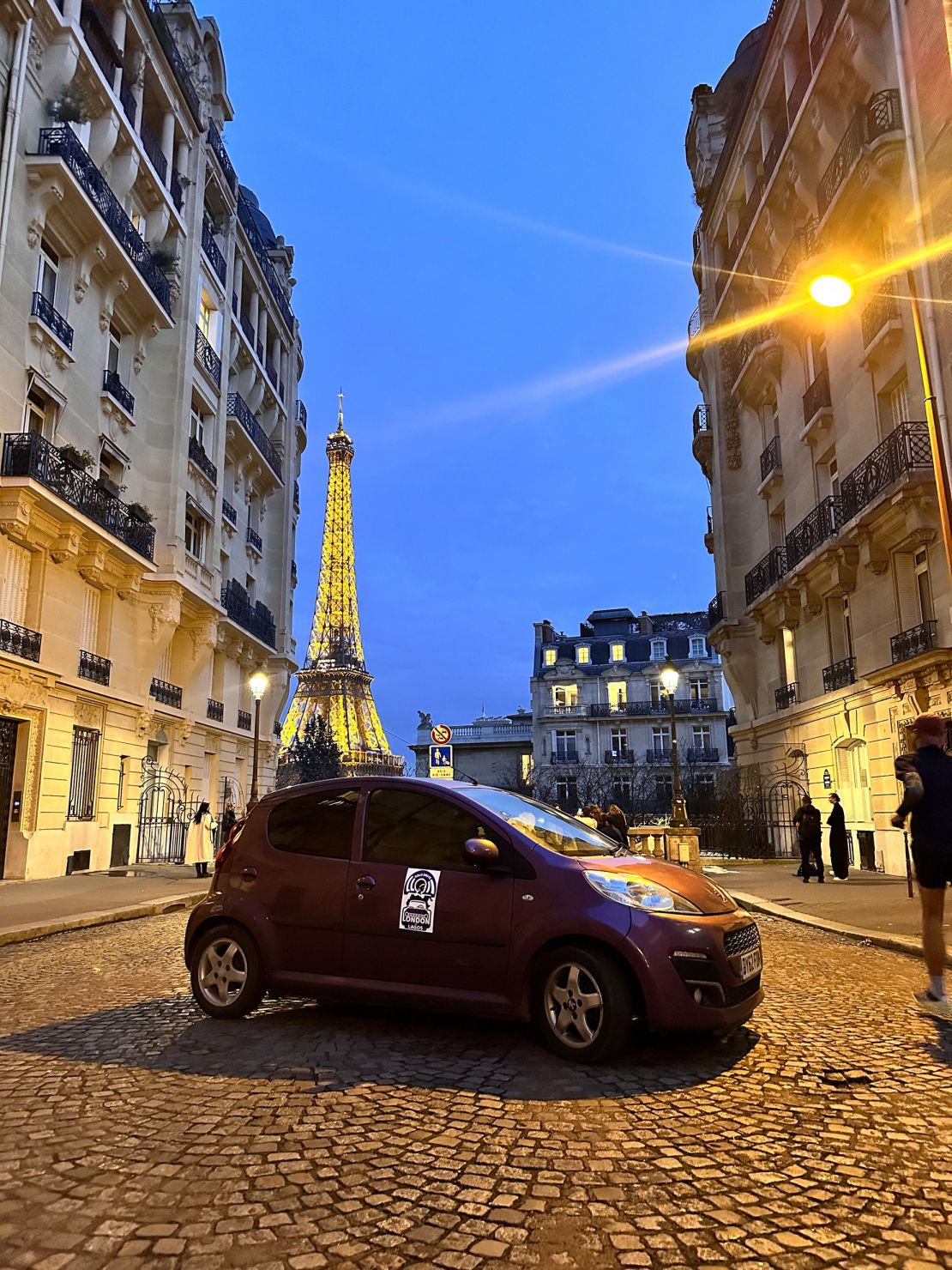
The drive through France and Spain served as a "trial run." The roads were smooth, the borders were invisible (thanks to the Schengen Area), and the biggest challenge was simply adjusting to the long hours behind the wheel. It was a time for Pelumi to find her rhythm with Lumi, testing the car's fuel efficiency and her own mental stamina as she moved south toward the Mediterranean.
The Gateway: Morocco and the Sahara
Everything changed once she crossed the Strait of Gibraltar. Morocco provided the first real taste of the "off-the-beaten-path" adventure she craved. From the winding roads of the Atlas Mountains to the vast, meditative stretches of the Western Sahara, the scenery became more epic and the logistics more complex.
In Mauritania, the "Snake of the Desert"—the world’s longest iron ore train—became a backdrop for her drive. She visited ancient libraries tucked away in desert oases, experiencing a side of the Sahara that most tourists never see. The drive here was "meditative," a long stretch of sand and sky where the only companion was the hum of the Peugeot's small engine.
West African Highlights
As she moved into Senegal and Guinea, the landscape shifted from arid desert to lush tropical greenery. Each country offered a new "peak experience":
- Senegal: The vibrant energy of Dakar and the stunning coastline.
- Sierra Leone: Resting at River Number 2 Beach, often cited as one of the most beautiful beaches in Africa.
- Gambia: Navigating the river crossings and the immense warmth of the local communities.
Overcoming Adversity: The Ivory Coast Accident and Border Hurdles
No expedition of this scale is without its "dark night of the soul." For Pelumi, that moment came in Ivory Coast. In the town of Daloa, she was involved in a severe collision with a parked truck. The front of Lumi was crushed, and Pelumi was hospitalized.
For many, this would have been the end. But the "muscle of self-confidence" she had built over the previous 60 days kicked in. While recovering, she oversaw the repairs of her car. The resilience she showed during this period turned her journey from a travel vlog into a story of human endurance.
Beyond the physical crash, the "administrative friction" was a constant battle. In Liberia, she faced 48-hour delays at the border due to bureaucratic red tape. These moments highlighted the challenges of intra-African travel—a cause Pelumi has now championed, calling for more seamless borders to encourage tourism within the continent.
| Challenge Type | Location | Impact | Resolution |
|---|---|---|---|
| Mechanical/Accident | Ivory Coast | Car totaled (front end), Hospitalized | Local repairs and 2-week recovery |
| Administrative | Liberia/Sierra Leone Border | 48-hour delay | Persistent negotiation and community support |
| Environmental | Mauritania | Sandstorms and extreme heat | Early morning driving and car maintenance |
The Homecoming: From Traveler to Tourism Ambassador
The final leg through Benin and into Nigeria was a victory lap. As she approached the border, news of her journey had gone viral. She wasn't just a traveler anymore; she was a national hero.
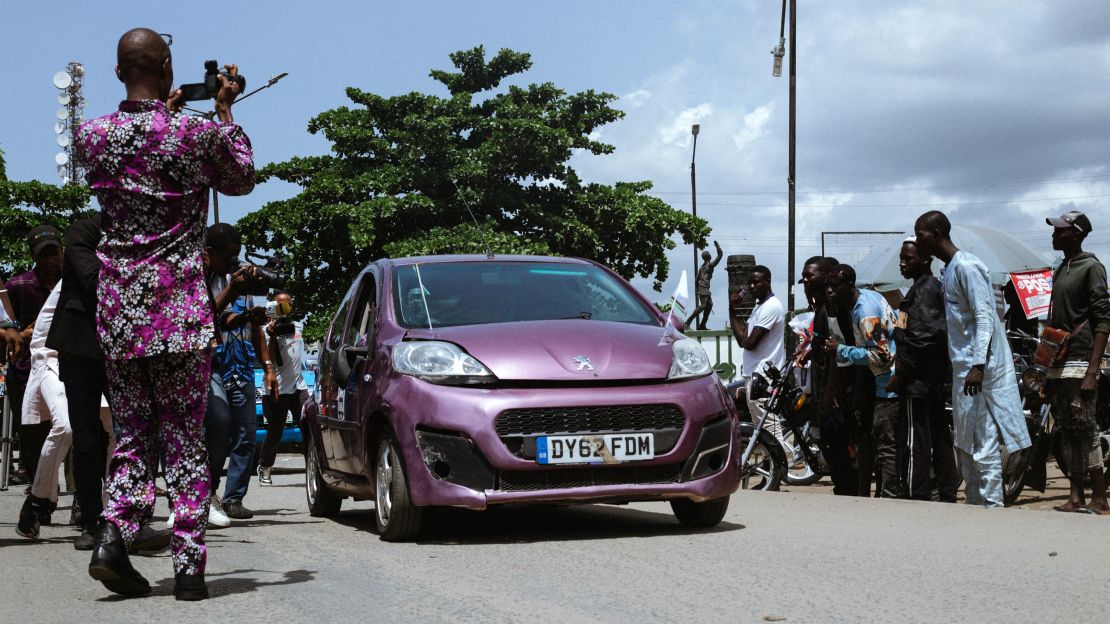
On April 7, 2024, Pelumi Nubi crossed the border into Lagos. She was met by a motorcade, traditional dancers, and a massive crowd of supporters, including government officials and her emotional family. The Governor of Lagos State was so moved by her achievement that he appointed her as a Lagos Tourism Ambassador and gifted her a new car and a home—a fitting reward for a woman who had spent months living out of a hatchback.
Pelumi’s journey hasn't ended in Lagos. She has already founded Oremi Travels, a platform aimed at making travel more accessible and providing resources for others looking to explore the continent. Her next dream? A solo drive from Lagos to South Africa.
As an editor, I see hundreds of "firsts." But Pelumi Nubi’s London-to-Lagos drive is different. It wasn't about being the fastest or the most technical. It was about a woman who looked at a map, looked at her small car, and decided that the only thing standing between her and her goal was the first turn of the key.
FAQ
1. How much did the trip cost? While Pelumi hasn't released a final line-item budget, she self-funded the majority of the trip using savings from her work as a PhD researcher and content creator. By camping in her car and cooking her own meals, she significantly reduced the costs typical of a 74-day international trip.
2. Was it safe for a woman to drive solo through West Africa? Pelumi emphasized that while she encountered administrative delays and one accident, she felt overwhelmingly welcomed by local communities. She practiced "smart travel"—only driving during daylight hours, staying in touch with a support team via satellite, and seeking local advice at every stop.
3. What happened to the Peugeot 107 (Lumi) after the trip? Despite the heavy damage in Ivory Coast, Lumi was repaired and successfully driven into Lagos. The car has become a symbol of the journey and is expected to be preserved as a piece of Nigerian travel history.
Start Your Own Adventure
You don't need to drive 6,000 miles to find your own "Lagos." Whether it's a weekend road trip or a solo hike, the key is to start with what you have.