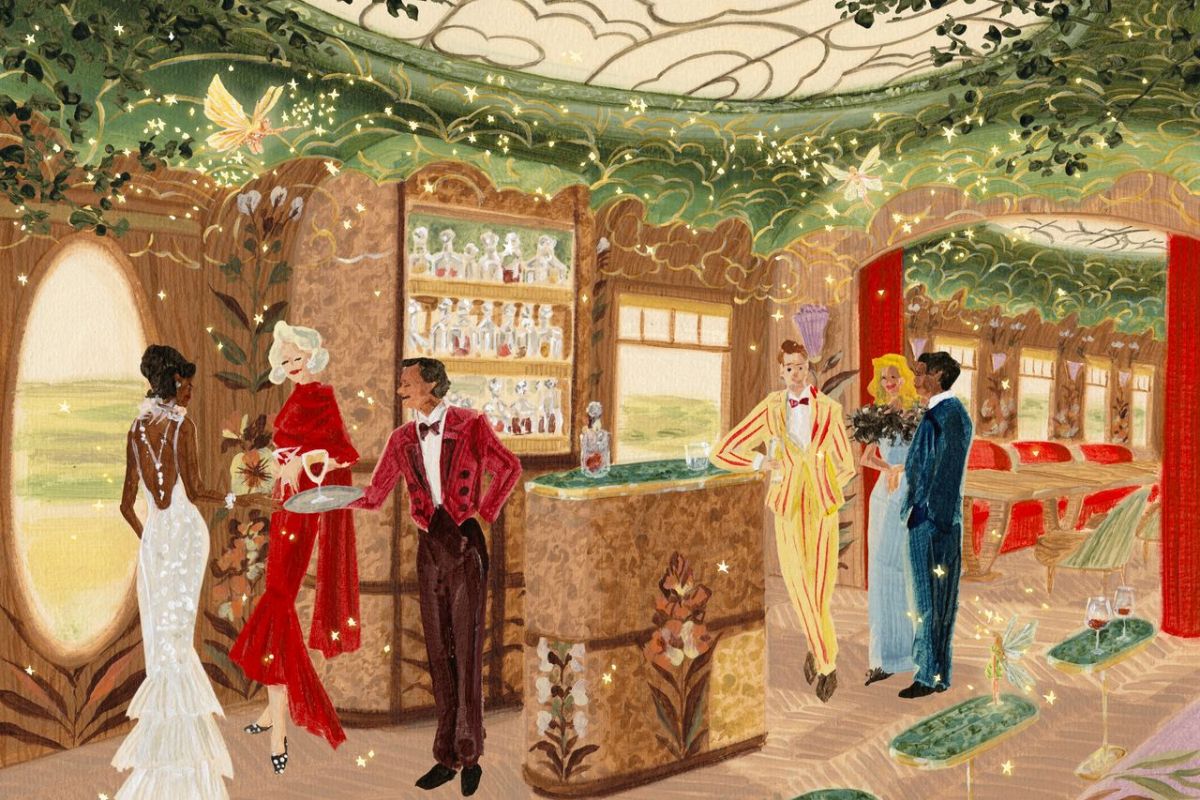
“Are you from the past or from the future?” A passenger once asked travel writer Monisha Rajesh as she boarded a sleeper train. For decades, the answer seemed to be the former. To board a night train was to retreat into a sepia-toned memory of the 20th century—a world of heavy wool blankets, rhythmic clanking, and the smell of filter coffee in plastic cups.
But stand on a platform in Berlin or Paris today, and the answer has decisively shifted. As the sleek, dark-blue carriages of Austria’s Nightjet or the rebranded European Sleeper pull into the station, they represent the vanguard of a modern mobility revolution. European night trains are experiencing a massive revival driven by a demand for sustainable travel, the aggressive expansion of state-backed services, and new private operators launching routes between major capitals. We are no longer just romanticizing the past; we are engineering a more thoughtful, carbon-conscious future.
Quick Facts: The 2026 Sleeper Surge
- Carbon Efficiency: Rail travel emits roughly 97% less CO2 per passenger than short-haul flights under 1,000 kilometers.
- The 2026 Expansion: Major new routes include Paris to Berlin (launching March 2026) and Brussels/Amsterdam to Milan (June 2026).
- Starting Costs: Budget tickets for seats start at approximately €29, while basic sleeper berths (couchettes) begin around €80.
- The "Moving Hotel" Edge: Travelers save the cost of one night’s accommodation while crossing entire borders during their REM cycle.
The Great Rail Renaissance: Why We’re Choosing the Track Over the Tarmac
For the better part of twenty years, the European night train was on life support. Low-cost carriers like Ryanair and EasyJet turned the sky into a bus route, making it cheaper and faster to fly from London to Venice than to take the scenic route. However, the tide has turned. The shift from "travel as a chore" to "travel as an experience" is now a measurable market force.
The primary catalyst is, unsurprisingly, the climate crisis. The flight-shame (flygskam) movement that originated in Scandinavia has matured into a Continent-wide preference for "slow travel." When you consider that a flight from London to Berlin generates about 150kg of CO2 per passenger, while the equivalent train journey generates just a fraction of that, the moral and logistical math becomes hard to ignore.
But it isn’t just about the planet. It’s about the "hollow time" of aviation. The modern airport experience—security queues, liquid restrictions, and the soul-crushing transit from city center to remote tarmac—is an exercise in stress. Conversely, the sleeper train offers "productive sleep." You board in the heart of one city, enjoy a glass of wine as the lights of the suburbs fade, and wake up to the "teaser trailer" of your destination: the sudden revelation of the Alps at sunrise or the orange-tiled roofs of the French Riviera.
Waking Up in a New World: The 'Moving Hotel' Experience
The allure of the rail lies in its sensory richness. Unlike the sanitized, pressurized cabin of an Airbus, a train is a living thing. There is the rhythmic swaying that acts as a natural sedative and the nostalgic wood-paneled interiors of the older rolling stock—now being rapidly replaced by the "Mini-Suites" of the new generation.
The night train is effectively a "moving hotel." This concept pivots the emotional allure into practical cost-saving logic. If a mid-range hotel in Amsterdam costs €180 per night, and a flight costs €100, the €150 sleeper berth suddenly looks like a bargain. You aren't just buying a ticket; you are buying a bed, a breakfast, and a morning arrival that drops you exactly where you need to be.
There is also a unique community found in the dining car. On the route from Berlin to Budapest, I’ve shared tables with students, diplomats, and retirees, all brought together by the shared pace of the journey. Whether it’s sharing Turkish kebabs or sampling Austrian Grüner Veltliner as the Hungarian plains roll by, the train facilitates a type of human connection that is impossible at 35,000 feet.
Mapping the Future: Major New Routes Launching in 2026
The year 2026 is set to be a landmark for European rail connectivity. Following years of negotiation over "track access" and rolling stock shortages, several highly anticipated lines are finally coming to fruition.
| Route | Launch Date | Operator | Starting Price |
|---|---|---|---|
| Paris to Berlin | March 2026 | European Sleeper | €49 (Seat) / €89 (Berth) |
| Brussels/Amsterdam to Milan | June 2026 | European Sleeper | €59 (Seat) / €99 (Berth) |
| Prague to Copenhagen | May 2026 | ČD (ComfortJet) | €39 (Seat) / €75 (Berth) |
| Basel to Malmö/Copenhagen | April 2026 | ÖBB Nightjet | €29 (Seat) / €80 (Berth) |
| Munich to Przemyśl (Poland) | Late 2025 | EuroNight | €34 (Seat) / €70 (Berth) |
The Central European Corridor
A particularly exciting development is the expansion of the Central European network. New EuroNight connections are linking Munich and Budapest to Przemyśl on the Polish-Ukrainian border. This isn't just for tourism; it's a vital artery for regional connectivity. Meanwhile, Austria’s Koralmbahn expansion will see the journey from Graz to Klagenfurt drop from 3 hours to a mere 45 minutes, creating a high-speed "shuttle" effect for night trains transiting toward Italy.
Scandinavian Links
The North is also getting a boost. The new ComfortJet service linking Prague, Berlin, and Copenhagen represents the next generation of rail travel, featuring high-speed capabilities and noise-insulated "silent zones." For those coming from Switzerland, the Basel-to-Copenhagen route provides a seamless link between the heart of the Alps and the Baltic coast.
The 2026 Budget & Booking Masterclass
Navigating the revival of rail travel requires a different tactical approach than booking a flight. The market has shifted from a state-run monopoly toward a competitive landscape of private operators and "premium" tiers.
Accommodation Options
To maximize your budget and comfort, you need to understand the hierarchy of the carriage:
- Seats: The most economical option. Best for short hops or those with an iron constitution. Prices start at ~€29.
- Couchettes (4-6 berths): The "hostel on wheels." These are padded benches that convert into bunks. They are communal but secure, with prices typically starting at ~€80.
- Mini-Cabins: A new innovation from ÖBB Nightjet. These are solo pods (similar to Japanese capsule hotels) that offer privacy and locker space for a fraction of the cost of a private cabin.
- Deluxe Sleepers: The "luxury rail" experience. These feature 1-3 beds, a private sink, and in many new models, an en-suite shower and toilet.
Pro Booking Tips
- The 90-Day Rule: Unlike airlines, many rail operators open bookings exactly 60 to 120 days in advance. Prices rise sharply as the departure date approaches.
- The Interrail Secret: If you plan on taking more than two long-distance trips, an Interrail (for Europeans) or Eurail (for non-Europeans) pass is often the "secret weapon." You only pay a small reservation fee for the sleeper berth rather than the full ticket price.
- Booking Direct: Always book through the operator’s website (e.g., Nightjet.com or EuropeanSleeper.eu) rather than third-party aggregators to ensure you get real-time cabin availability and easy refund options.
Explore Interrail Passes for 2026 →
Beyond 2026: The 100-City Network Vision
The ultimate goal for rail advocates and private operators like Nox Mobility is the creation of a contiguous "Metro Network" for the entire continent. The vision for 2035 is an integrated grid of private sleepers that link Lisbon to Warsaw and Stockholm to Rome with the same ease we currently associate with the London Underground.
We are witnessing the end of the "Flight Only" era. As infrastructure improves and the true cost of aviation is reflected in carbon taxes, the night train is reclaiming its rightful place as the most civilized way to traverse the map. It invites us to slow down, to look out the window, and to remember that the journey is not just a gap between destinations—it is the destination itself.
FAQ
Are night trains safe for solo travelers? Absolutely. Most modern sleepers offer female-only couchette compartments and lockable cabin doors from the inside. Conductors are present in every carriage throughout the night to assist passengers and check tickets.
Is breakfast included in the ticket price? It depends on the class. In sleeper cabins and most couchettes, a continental breakfast (bread, jam, coffee/tea) is included. For those in standard seats, snacks and drinks are usually available for purchase in the dining or bistro car.
Can I bring a bicycle on a 2026 sleeper train? The new 2026 routes, particularly those operated by European Sleeper and the new Nightjet generations, have dedicated "multi-purpose" areas for bikes. However, spaces are extremely limited and must be reserved well in advance.
Planning Your 2026 Journey?
The revival of the sleeper train is about more than just getting from point A to point B; it’s about rediscovering the romance of the European landscape. Whether you’re dreaming of a sunrise over the Alps or a midnight departure from the heart of Paris, the tracks are ready for you.