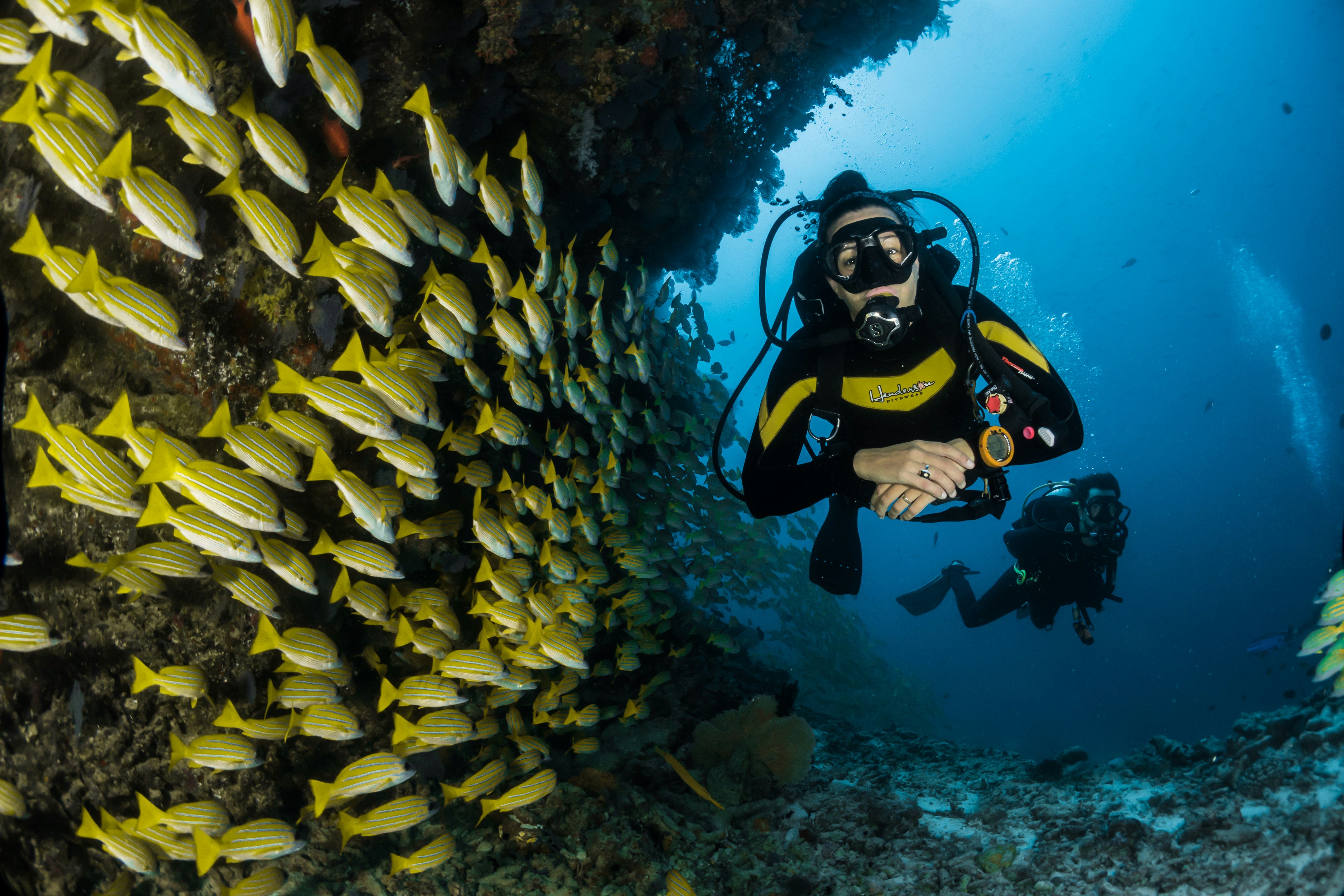
The silence of the deep is unlike any silence you find on land. Above the surface, "quiet" is often just a lower volume of chaos—distant traffic, the hum of a refrigerator, the relentless internal monologue of a mind trying to outrun its own history. But forty feet down, as the pressure of the ocean wraps around your ribs like a firm, cool bandage, the noise stops. Not just the external noise, but the biological noise. For years, I carried my trauma in my shoulders and a perpetually tight jaw, a physical manifestation of a "fight-or-flight" response that never learned how to turn off. It wasn't until I started holding my breath and sinking into the blue that I realized the water wasn't just a playground; it was a biological reset button.
Freediving heals body trauma by triggering the Mammalian Dive Response (MDR), a primitive reflex that lowers the heart rate and shifts the nervous system from a sympathetic (stress) state to a parasympathetic (rest-and-digest) state. This process creates a "physiological pause," allowing the brain to process stored tension and reconnect with physical sensations in a safe, meditative environment. Beyond the depth and the data, freediving helps practitioners reclaim their bodies from objectification, shifting the focus from how the body performs to how it feels.
The Science of the 'Physiological Pause'
When you submerge your face in water, your body undergoes a radical transformation. This is the Mammalian Dive Response (MDR), an evolutionary inheritance we share with whales and seals. The moment the trigeminal nerve in your face senses water, your heart rate drops (bradycardia), and blood shifts from your extremities to your vital organs (peripheral vasoconstriction).
In the context of trauma recovery, this isn't just a cool biology trick; it’s a bypass for the amygdala. Trauma often keeps the nervous system trapped in a loop of hyper-vigilance. On land, meditation can be frustrating because the brain keeps screaming "danger." In the water, the MDR forces a biological calm that the mind eventually has no choice but to follow.
A qualitative study involving over 120 freedivers highlighted this exact phenomenon. Practitioners identified breath-holding and the resulting "physiological pause" as critical mechanisms for achieving nervous system regulation and somatic integration. They weren't just diving; they were training their bodies to recognize that "intensity" does not always mean "danger."
| Feature | Fight-or-Flight (Trauma State) | Mammalian Dive Response (Healing State) |
|---|---|---|
| Heart Rate | Elevated, erratic | Significantly lowered (Bradycardia) |
| Breathing | Shallow, chest-dominant | Suspended (Apnea) or deep, diaphragmatic |
| Blood Flow | To limbs for escape/fighting | To heart and brain (Oxygen conservation) |
| Nervous System | Sympathetic dominance | Parasympathetic dominance |
| Mental State | Hyper-vigilant, scattered | Focused, "Flow" state, interoceptive |
From Object to Vessel: Reclaiming the Body
For many of us, trauma turns the body into an object—something to be managed, fixed, or even ignored. We treat our bodies like tools for performance rather than vessels for experience. In my early days of expeditions, I was guilty of this too; my body was just a machine to get me to the summit or the end of the trail.
Freediving flips that script. To dive deep, you cannot bully your body into submission. If you tense up, you consume oxygen faster. If you fight the pressure, you risk injury. Healing happens when you move from external performance (how deep am I?) to internal presence (how does my diaphragm feel right now?).
By prioritizing interoceptive awareness—the ability to sense internal signals—over depth metrics, divers can move away from the objectification of their physical selves. You begin to experience your body as a safe space rather than a source of betrayal. Case studies of divers transitioning from competitive circuits to restorative practices suggest that this shift significantly increases the efficacy of burnout recovery and trauma processing.
How Trauma Shows Up in the Water
Trauma doesn't stay on the boat; it follows you down. As an editor and diver, I’ve seen how somatic "breadcrumbs" of past dysregulation manifest during a dive. Recognizing these isn't a sign of failure; it’s the first step toward healing.
Marcus’s Tip: If you find yourself hitting a "wall" at a certain depth, don't look at your technique first. Look at your tension. Your body might be trying to protect you from a perceived threat that isn't actually in the water.
Somatic Checklist: Signs of Dysregulation
- CO2 Intolerance: Feeling a panicked urge to breathe far before your physiological limit is reached.
- The "Clutch": Involuntary tension in the throat, jaw, or shoulders during the descent.
- Early Turns: A sudden, inexplicable need to return to the surface despite having plenty of oxygen.
- Dissociation: Feeling "foggy" or like you’re on autopilot rather than being present in the movement.
- The Inner Script: A flood of self-critical thoughts or "I can't do this" loops during the breath-hold.
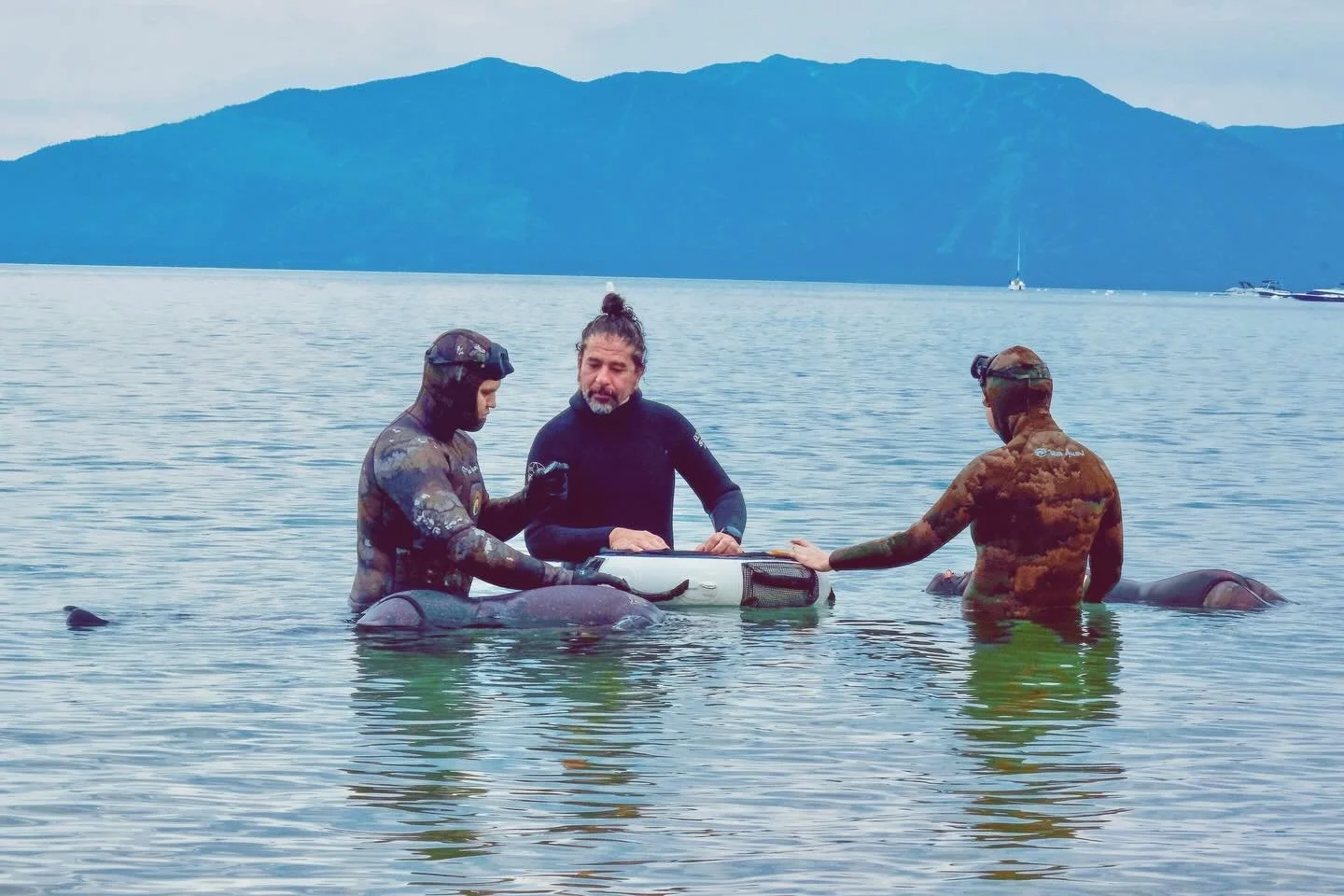
Interoception: Your Inner Dive Watch
Interoception is often called our "eighth sense." It’s the brain’s ability to map the internal state of the body—everything from heartbeat to gut feelings. Chronic trauma often dulls this sense; we become "numb" to survive. Freediving is essentially a high-intensity training camp for interoceptive recalibration.
When you’re thirty feet down, you are hyper-aware of the slight contraction of your diaphragm or the pulse in your neck. Research indicates that 89% of experienced divers report improved stress management in their daily lives because of this training. By learning to sit with the discomfort of a breath-hold, you teach your brain to move from a state of "reaction" to a state of "response." You learn that a sensation is just information, not necessarily an emergency.
The Dive Buddy as a Safety Anchor
In the trauma-informed world, we talk a lot about Polyvagal Theory—the idea that our sense of safety is deeply tied to social connection. One of the golden rules of freediving is: Never dive alone.
This safety protocol creates a unique relational environment. Your buddy isn't there to judge your depth or your form; they are there to hold the space for your safety. They are your "anchor." When you surface and look into your buddy’s eyes, and they give you that signal, it reinforces a sense of connection without threat. This is "co-regulation" in its purest form.
- Softened Jaw: Watching your buddy remain calm helps your own nervous system mirror that calm.
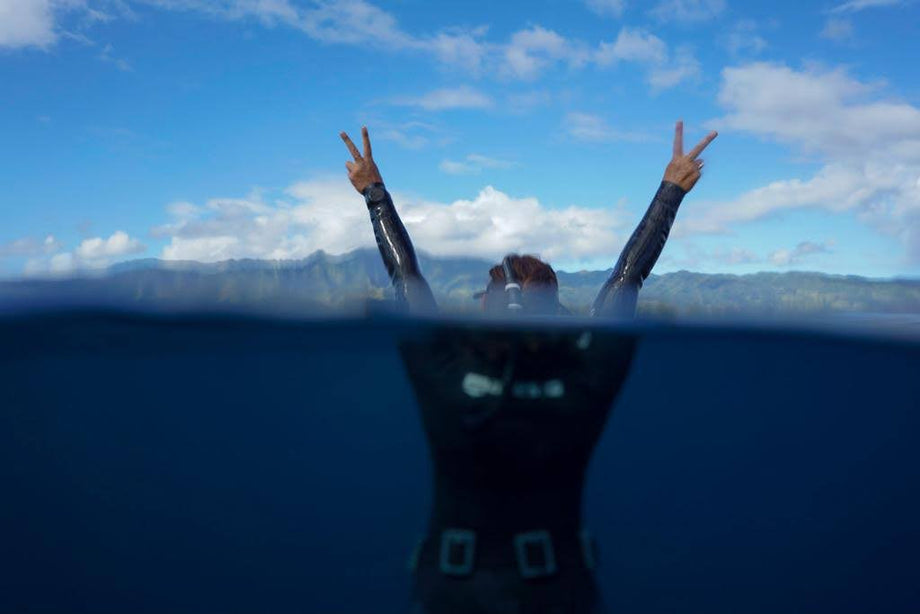
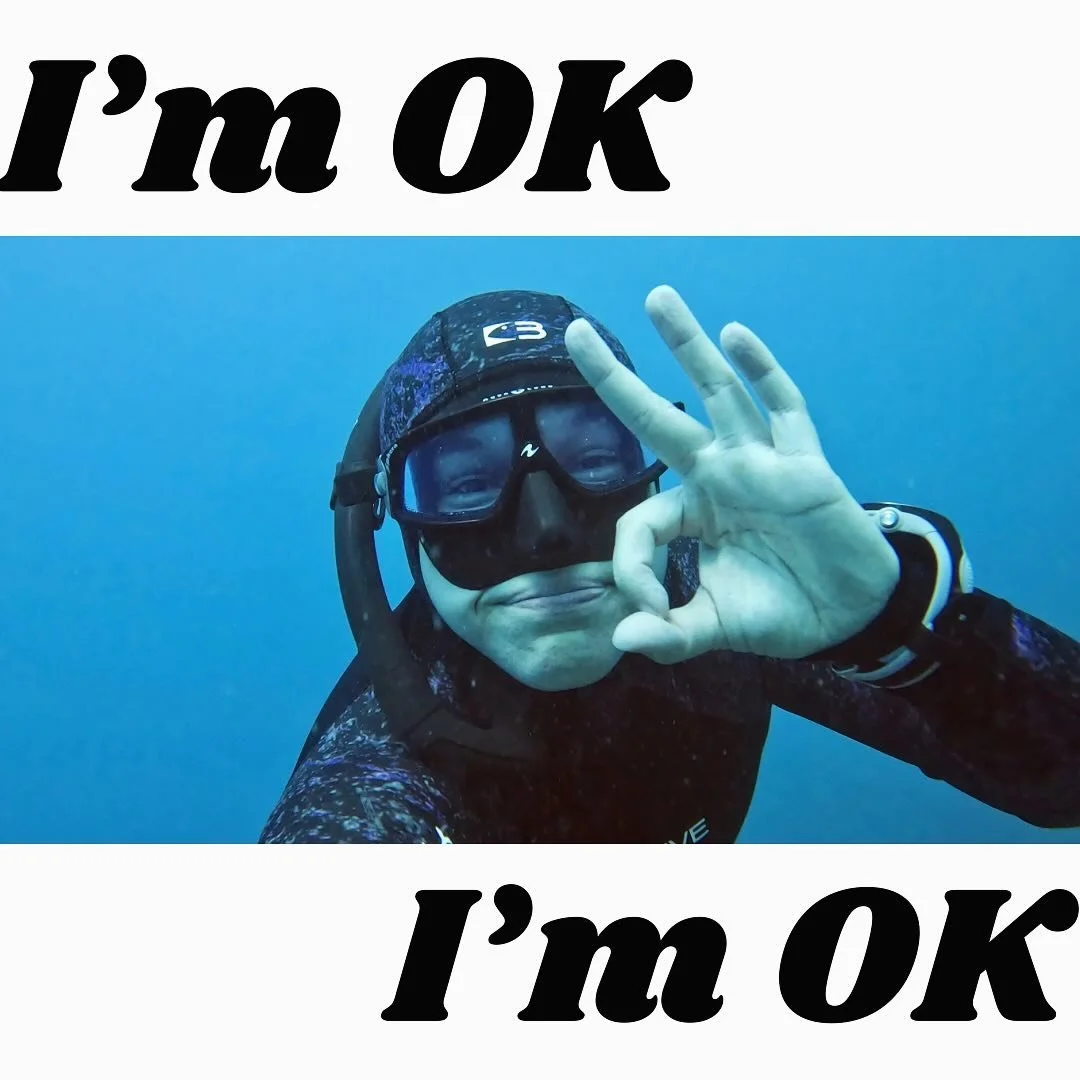
- The 'I’m OK' Signal: This simple gesture is a powerful communicative anchor, affirming that you are safe and present.
- Presence over Protocol: A good dive buddy senses your tension before you even start the dive, providing a mirror for your internal state.
Integration: Releasing the '20-Year Breath'
There is a moment at the end of a deep dive—after the surface protocol is finished and the adrenaline fades—where a profound release occurs. I call it the "20-year breath." It’s the exhale that feels like it’s carrying decades of stored tension out of your lungs.
This is the biological reset in action. By repeatedly entering the dive response and returning safely, you are teaching your nervous system that it is possible to be under pressure and still be okay. This regulated state eventually follows you back to land. You might find you’re less irritable in traffic, more present with your family, or finally able to sleep through the night. The water doesn't erase the trauma, but it changes your relationship to the body that carries it.
FAQ
Q: Do I need to be a good swimmer to use freediving for healing? A: You should be comfortable in the water, but "athletic" swimming isn't the goal. Restorative freediving is about relaxation and internal awareness. Many people find that starting with "static apnea" (breath-holding while floating face down in a pool) is the best way to begin the somatic work.
Q: Is breath-holding dangerous for someone with high anxiety? A: It can be triggering if done without guidance. However, when practiced with a trauma-informed instructor, the controlled nature of the breath-hold actually helps desensitize the "panic" response. It’s about building "CO2 tolerance" mentally as much as physically.
Q: How often do I need to dive to see results in my nervous system? A: Consistency is key, but even a single session can provide a "reset." Many divers find that one dedicated "restorative" session a week significantly improves their baseline stress levels on land.
Ready to Dive In?
If you’re tired of the "noise" and ready to explore the silence of your own biology, I can’t recommend freediving enough. It’s not about the depth on your dive watch; it’s about the depth of the connection you build with yourself.
Find a Certified Freediving Instructor Near You →
Stay safe, breathe deep, and I'll see you in the blue.