Quick Facts: Planning Your Rwandan Pilgrimage
| Feature | Details |
|---|---|
| Gorilla Permit Cost | $1,500 per person (Directly funds conservation) |
| Best Time to Visit | June–September (Long Dry) and December–February (Short Dry) |
| Key Destinations | Volcanoes National Park, Akagera National Park, Nyungwe Forest |
| Fitness Level | Moderate to High (Trekking can last 2–6 hours in steep terrain) |
| Hamilton’s Highlight | Connecting with ancestral roots and wildlife stillness |
The roar of the Mercedes-AMG F1 engine is a sound that defines Lewis Hamilton’s life. It is a symphony of precision, speed, and high-octane pressure. But during a transformative summer sabbatical, that mechanical scream was replaced by something far more profound: the low, guttural hoot of a silverback and the rhythmic rustle of bamboo in the Rwandan mist. Hamilton, a seven-time World Champion known for his advocacy and conscious lifestyle, didn't just go on a vacation; he went on a pilgrimage. He traveled to Rwanda to explore his ancestral roots and witness mountain gorillas in their natural habitat at Volcanoes National Park, seeking a meaningful cultural and wildlife experience that transcends the boundaries of sport.
The Soulful Sabbatical: Why Lewis Hamilton Chose Rwanda
For a man who spends his life at 200 miles per hour, the appeal of "The Land of a Thousand Hills" lies in its forced deceleration. Hamilton’s journey through Africa was an intentional effort to reconnect with the continent and his own heritage. Rwanda, with its harrowing history and miraculous restoration, served as the emotional centerpiece of his trip.
"I’m fully transformed," Hamilton shared with his millions of followers. "My spirit is different. I feel like I’ve been re-centered, and I’ve never felt more at peace."
This wasn't mere celebrity "voluntourism." Hamilton’s visit highlighted a growing trend in high-end travel: the search for stillness. In Rwanda, he found a country that has turned its greatest tragedies into a blueprint for conservation and community resilience. By choosing to trek for gorillas, he spotlighted one of the most successful conservation stories on the planet—a story where luxury travel directly facilitates the survival of a species.
The Heart of the Experience: Gorilla Trekking in Volcanoes National Park
If you are wondering where you can see mountain gorillas in Rwanda, the answer lies in the northwestern corner of the country: Volcanoes National Park (Parc National des Volcans). This park is part of the Virunga Massif, a dramatic chain of dormant volcanoes that straddles the borders of Rwanda, Uganda, and the Democratic Republic of Congo.
Volcanoes National Park is currently home to approximately one-third of the world’s remaining mountain gorilla population. Through decades of rigorous protection and the pioneering work of Dian Fossey, the population is slowly rebounding. Today, there are 12 habituated gorilla families available for sustainable tourism, ensuring that human interaction is strictly controlled and beneficial to the animals.
Trekking here is a lesson in presence. You don’t just "see" the gorillas; you enter their world. Led by expert trackers, you navigate through dense, primordial rainforest, often cloaked in the eponymous mist that gives the region its ethereal quality. When you finally encounter a family—perhaps the Susa group or the Sabinyo group—the world shrinks. You are required to sit very still, often just meters away from a 400-pound silverback. It is this "stillness," as Hamilton noted, that provides the most profound clarity.
The Ultimate 7-Day Luxury Rwanda Safari Itinerary
To truly experience Rwanda the "Hamilton way," one must look beyond the gorillas to the diverse ecosystems that make this country a microcosm of African beauty. A typical 7-day luxury Rwanda safari includes gorilla trekking in Volcanoes National Park, golden monkey tracking, savannah game drives in Akagera National Park, and high-end eco-lodge accommodations.
Day 1-2: The Gateway and the Ascent
Your journey begins in Kigali, perhaps the cleanest and most organized city in Africa. A visit to the Kigali Genocide Memorial is an essential, albeit somber, start to understanding the Rwandan spirit of Umuganda (coming together). From here, a private helicopter or a scenic 3-hour drive takes you toward the peaks of the Virungas. You’ll check into an eco-lodge that blurs the line between luxury and landscape, preparing your body and mind for the altitude.
Day 3-4: Primates in the Mist
The core of the itinerary involves the gorilla encounter. After an early morning briefing, you’ll head into the volcanic rainforest. The experience is visceral—the smell of crushed vegetation, the damp earth, and the sudden, heart-stopping sight of a juvenile gorilla swinging from a branch. On Day 4, many travelers opt for golden monkey tracking, observing these fast-moving, "Old World" monkeys in the bamboo forests, providing a lighter but equally enchanting primate experience.
Day 5-6: The Savannah Reborn
Rwanda is not just about rainforests. A flight to Akagera National Park reveals a stunning transformation. Once decimated by conflict, Akagera is now a thriving "Big Five" destination thanks to the efforts of African Parks. Here, you swap the jungle for savannah wetlands. You’ll see lions, rhinos, and elephants against a backdrop of rolling hills and shimmering lakes, proving that Rwanda offers a comprehensive safari circuit.
Day 7: The Canopy of Nyungwe
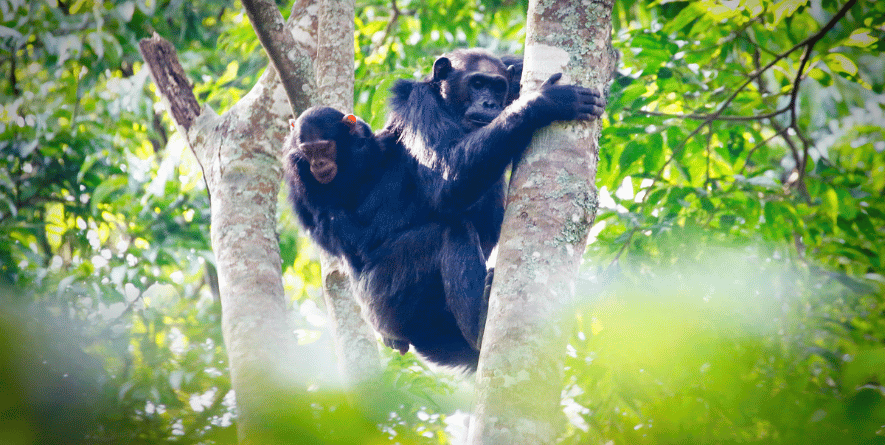
The final leg of the journey takes you south to Nyungwe Forest National Park, one of the oldest rainforests in Africa. This is the domain of chimpanzees and 12 other primate species. A highlight is the canopy walk—a suspension bridge 70 meters above the forest floor, offering a bird's-eye view of the ancient montane forest.
Planning Your Expedition: Permits, Costs, and Seasons
Embarking on a Rwandan safari is a significant investment, both financially and emotionally. As a sustainable travel editor, I often emphasize that the high cost of entry is what keeps this ecosystem intact.
The $1,500 Conservation Permit
The gorilla permit is the most expensive in the world. However, 10% of this revenue goes directly to the communities surrounding the park, funding schools, clinics, and infrastructure. This creates a "conservation economy" where locals are incentivized to protect the gorillas rather than poach them.
Budgeting for the Journey
- The Luxury Tier ($8,000 - $15,000+ per person): Includes private helicopter transfers, stays at world-renowned lodges like Bisate or Singita Kwitonda, and bespoke private guiding.
- The Mid-Range Tier ($4,000 - $7,000 per person): Features boutique eco-lodges, land transfers in 4x4 vehicles, and a mix of trekking and savannah activities.
- The "Budget" Tier ($2,500 - $3,500 per person): Involves staying in guesthouses outside the park and focusing primarily on the gorilla trek itself.
When to Go
While Rwanda is a year-round destination, the dry seasons (June to September) are ideal for trekking, as the trails are less slippery. However, the "short rains" in November can offer stunning photography opportunities with clearer air and lush, vibrant greens.
Conservation & Respectful Tourism: Traveling the 'Hamilton Way'
Lewis Hamilton’s trip wasn't just about the wildlife; it was about the ethics of travel. To travel responsibly in Rwanda means engaging with the culture and choosing accommodations that prioritize the planet.
For a truly immersive experience, I recommend visiting the Iby’Iwacu Cultural Village. Many of the performers here are former poachers who have been retrained as cultural ambassadors. Your visit provides them with a sustainable livelihood that protects the very animals they once hunted.
When it comes to where you sleep, Rwanda has set a global gold standard for "tread-lightly" luxury.
- Bisate Lodge: Located in an eroded volcanic cone, this lodge is a leader in reforestation, having planted tens of thousands of indigenous trees.
- Sabyinyo Silverback Lodge: Rwanda’s first ever community-owned lodge, where the proceeds directly benefit the SACOLA community trust.
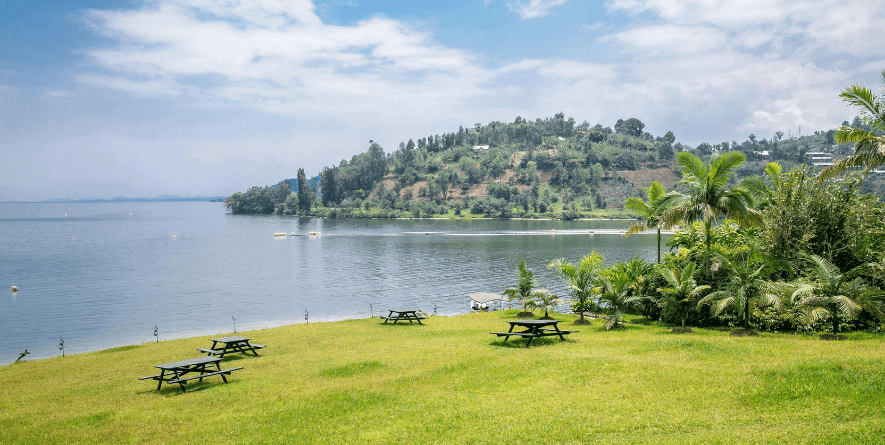
Ending your journey with a few days of reflection at Lake Kivu is the perfect way to process the intensity of the trek. The lake’s still, emerald waters and car-free islands offer a serene space to integrate the lessons of the jungle into your daily life.
FAQ
Is gorilla trekking safe? Absolutely. The gorillas are habituated, meaning they are accustomed to human presence. Professional rangers and trackers accompany every group, ensuring both your safety and the well-being of the gorillas. Strict health protocols are in place (such as wearing masks) to prevent the transmission of human illnesses to the primates.
What is the minimum age for trekking? The minimum age for gorilla trekking in Rwanda is 15 years old. This is strictly enforced to ensure the safety of the children and the gorillas.
What should I pack for a Rwanda safari? Layering is key. Pack moisture-wicking clothes, sturdy waterproof hiking boots with good grip, long trousers to protect against stinging nettles, and garden gloves for gripping vegetation during the climb. Don't forget a high-quality raincoat, even in the dry season.
Start Your Rwandan Journey
Lewis Hamilton’s journey to Rwanda reminds us that the most valuable thing we can find while traveling isn't a souvenir, but a shift in perspective. Whether you are seeking your own ancestral roots or simply a moment of profound connection with the natural world, Rwanda offers an experience that stays with you long after the mist has cleared.
The mountains are calling, and the silverbacks are waiting. Are you ready to trade the fast lane for the forest floor?