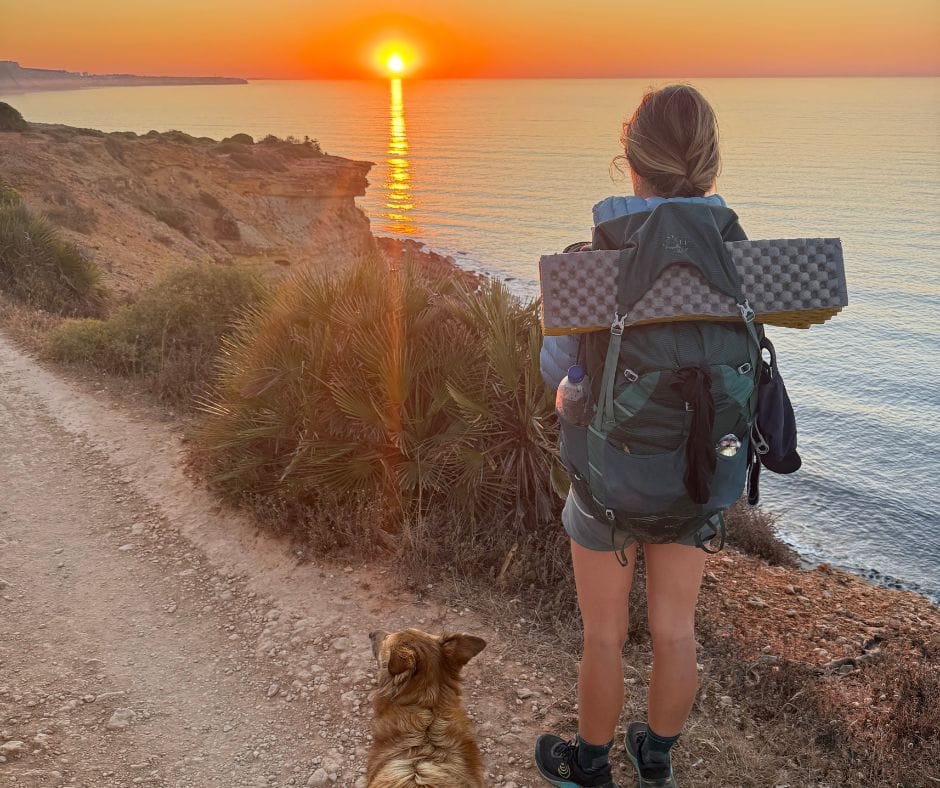
I remember standing on a crumbling cliff edge near Almograve, the salt spray from the Atlantic blurring my sunglasses, and thinking: Why did I wait so long to find this? For years, like many of you, I’d heard the siren call of the Camino de Santiago. But as the French Way became more of a crowded social conveyor belt and less of a wilderness retreat, I went looking for something more primal. I found it in the Rota Vicentina’s Fisherman’s Trail.
The Fisherman’s Trail is the "Camino of the Sea," but it’s stripped of the religious pageantry and the 5:00 AM bunk-bed scrambles. Stretching along Portugal’s rugged southwestern coast, it offers a more secluded and nature-centric experience than the Camino de Santiago. You get 140 miles of dramatic Atlantic cliffs, shifting sand dunes, and authentic Portuguese fishing culture without the massive crowds. It’s not just a walk; it’s a constant, visceral conversation with the ocean.
The Fisherman’s Trail vs. The Camino de Santiago
Before you lace up your boots, you need to know what you’re trading. If the Camino is a communal pilgrimage through history, the Fisherman’s Trail is a solitary expedition through geology.
| Feature | Fisherman’s Trail (Rota Vicentina) | Camino de Santiago (French Way) |
|---|---|---|
| Primary Scenery | Coastal cliffs, beaches, dunes | Farmland, rolling hills, cathedrals |
| Crowd Levels | Low to Moderate (Isolated) | High (Very social) |
| Terrain | Soft sand, narrow clifftop paths | Gravel, pavement, dirt tracks |
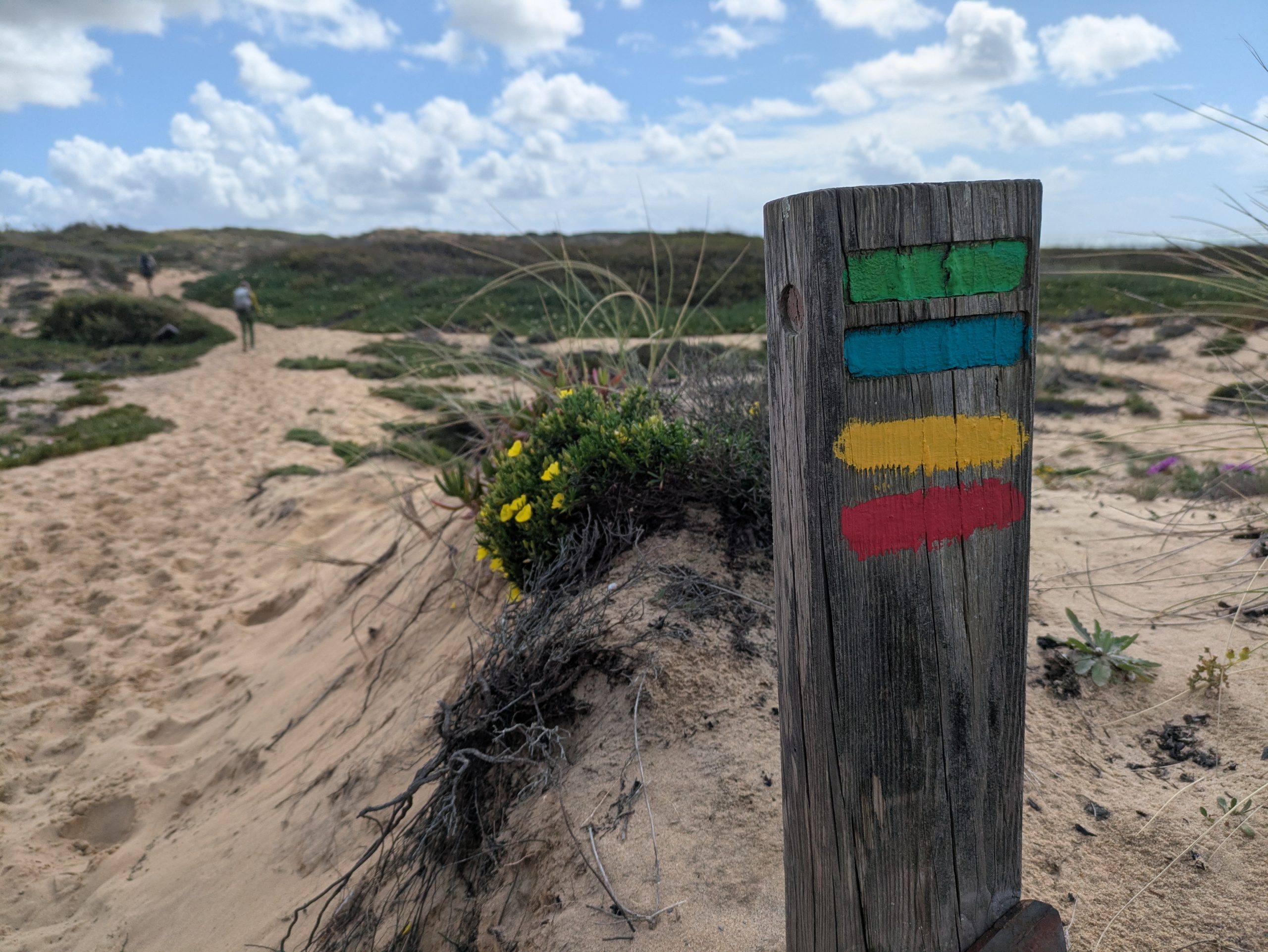
| Waymarking | Blue and green stripes (Excellent) | Yellow arrows (Iconic/Ubiquitous) |
| Accommodations | Guesthouses, small hotels (Boutique) | Albergues, hostels (Communal) |
| Vibe | Wild, rugged, elemental | Spiritual, historic, social |
The "Seclusion Factor" here is the real winner. On the Camino, you’re rarely alone. On the Fisherman’s Trail, there were hours where the only other living things I saw were white storks nesting on sea stacks—the only place in the world where they do that.
Essential Stats and Logistics
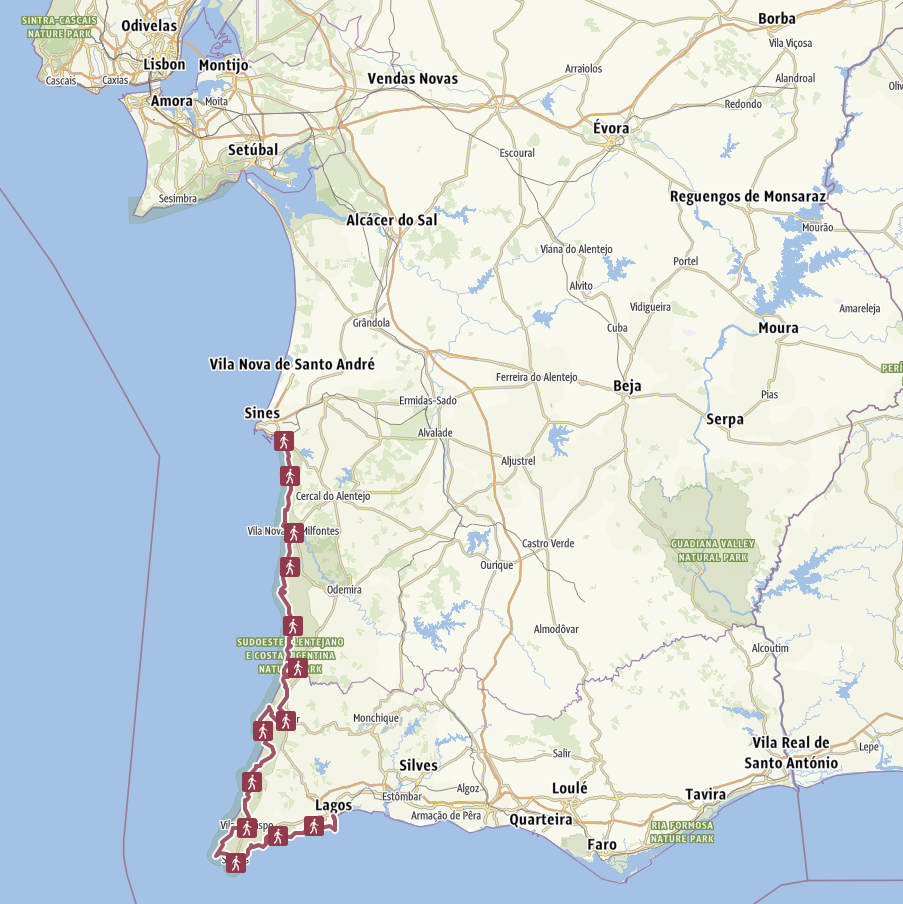
Let’s talk numbers, because "winging it" on this trail can lead to some very cold nights. The full Fisherman’s Trail spans 226 kilometers (approximately 140 miles) divided into 13 official stages. Most hikers, myself included, take about 12 days to complete the full route from Porto Covo to Lagos.
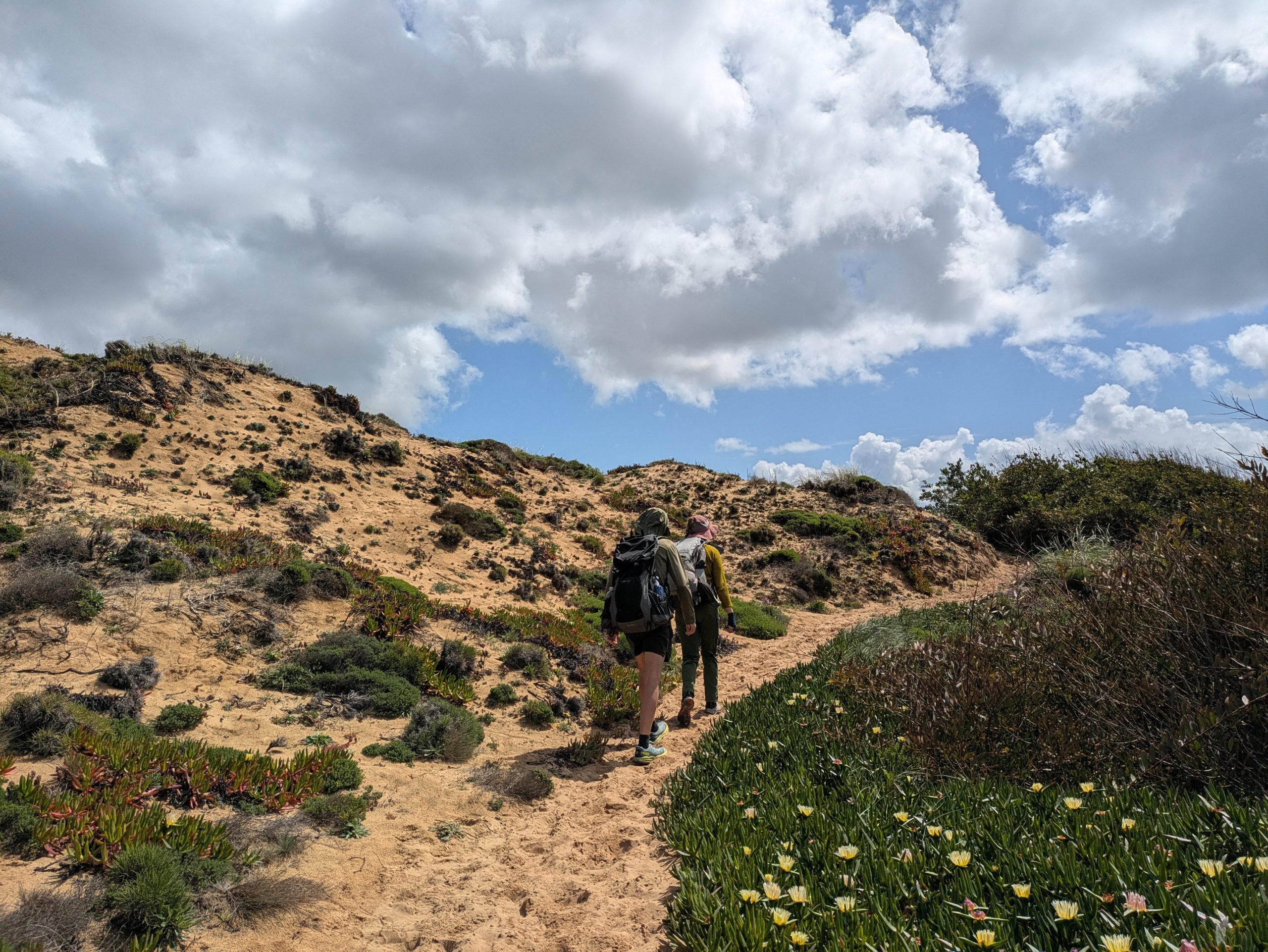
How difficult is the Fisherman's Trail? Don't let the lack of mountains fool you. While the elevation changes are manageable, the trail is physically demanding because of the "Sand Factor." Roughly 60% of the path consists of soft, deep dunes. Walking 20km on sand is like walking 35km on hard ground; your calves will burn, and your pace will drop.
Pro Tip: Do not overestimate your daily mileage. If you usually smash 25km a day on the Camino, aim for 15-18km here until you get your "sand legs."
There is one hard rule you cannot ignore: The 90-day rule. Because the trail passes through a protected Natural Park with small fishing villages, accommodation capacity is extremely limited. You must book your stays at least 3 months (90 days) in advance if you’re hiking during the peak shoulder seasons.
When to Go: Timing Your Trek
Timing is everything when the Atlantic is your neighbor. The best time to hike the Fisherman’s Trail is during the shoulder seasons of Spring (April-May) and Fall (September-October).
- Spring: This is my personal favorite. The clifftops are a riot of wildflowers, the weather is cool enough for long days of hiking, and the storks are active.
- Fall: The water is warmer if you fancy a dip in the hidden coves, and the summer heat has dissipated into a comfortable breeze.
Avoid July and August at all costs. The Alentejo heat can be lethal, there is almost zero shade on the cliffs, and the few available beds are taken by vacationing locals. Similarly, winter can be beautiful but fierce—Atlantic storms can make clifftop walking dangerous.
The Itinerary: From Porto Covo to Lagos
The trail is generally broken down into three distinct "vibes" as you move south.
Section 1: The Alentejo Heart (Porto Covo to Zambujeira do Mar)
This is where you earn your stripes. Starting in the whitewashed village of Porto Covo, you’re immediately thrust into the dunes. This section is heavy on the sand but rewards you with the most dramatic, untouched coastal scenery.
- Highlight: Stopping in Cavaleiro for Arroz peixe e camarão (fish and shrimp rice) after a long day of fighting the wind.
- The Vibe: Pure, unadulterated wilderness.
Section 2: Entering the Algarve (Odeceixe to Aljezur)
As you cross the river at Odeceixe, the landscape begins to change. The cliffs become darker, more jagged, and you start to see the influence of the Algarve’s Moorish history.
- Highlight: Aljezur, a town split between a historic hilltop castle and a vibrant surfing valley. The energy here is infectious—a mix of old-world Portugal and modern adventure seekers.

Section 3: The End of the World (Vila do Bispo to Lagos)
The final stretch takes you toward Cabo de São Vicente, the southwesternmost point of Europe. Once known as "The End of the World," the red sandstone cliffs here are monolithic.
- Highlight: Watching the sunset at the lighthouse before the final push toward the turquoise waters and sea arches of Ponta da Piedade in Lagos.
Survival Guide: What to Pack
Your gear list for the Fisherman’s Trail should look different than a mountain trek.
1. Footwear: The Sand Battle Leave the heavy, stiff leather boots at home. You want lightweight trail runners or breathable hiking shoes. Because the sand is pervasive, many hikers swear by gaiters to keep the grit out.
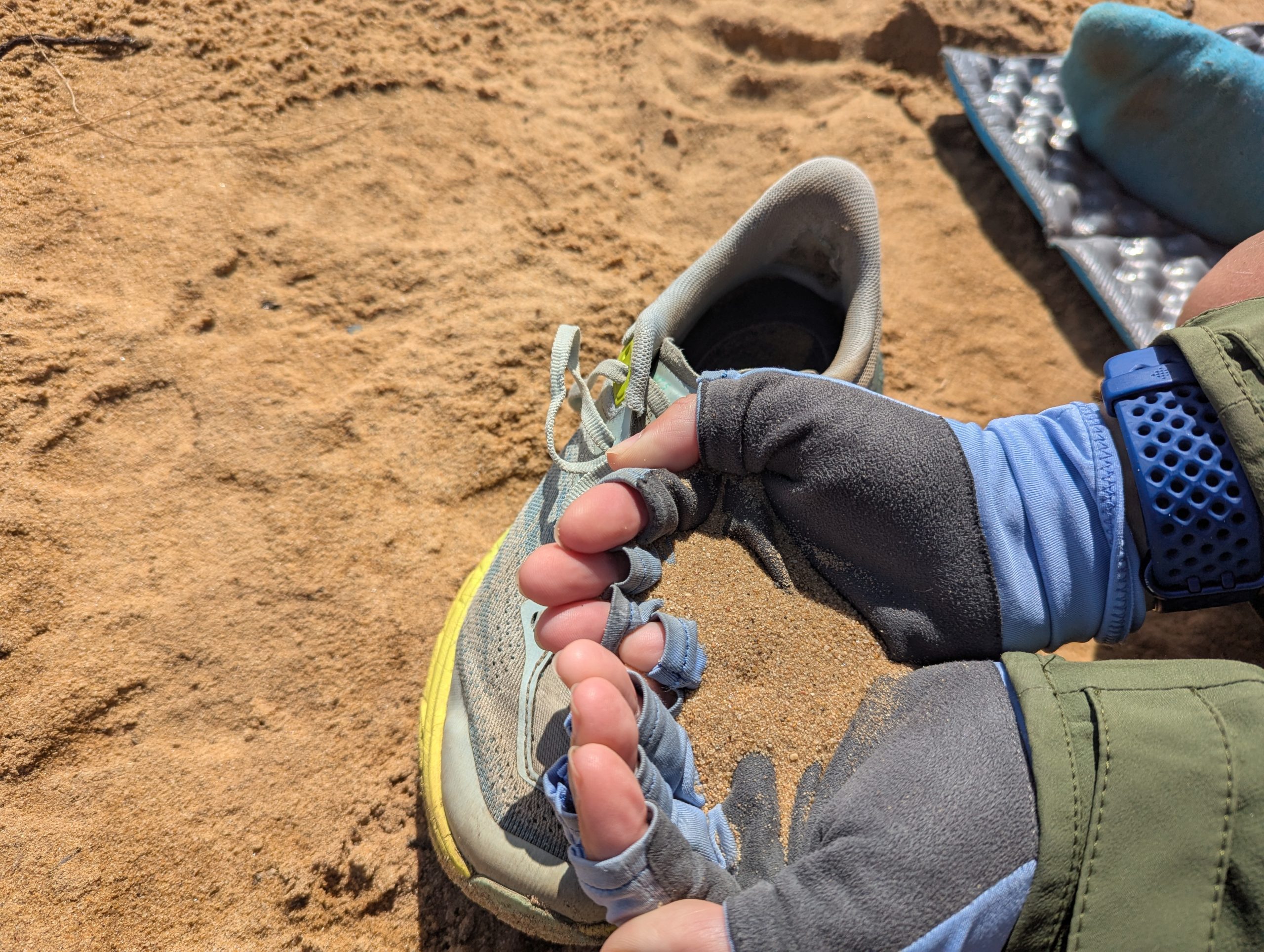
2. Hydration and Sun Protection There are long stretches between villages with no water taps. I carry a 3-liter reservoir and a secondary bottle with electrolytes. Also, a wide-brimmed hat with a chin strap is non-negotiable—the Atlantic wind will try to steal it every ten minutes.
3. Luggage Transfers If you want to focus on the views rather than the weight on your back, local services like Vicentina Transfers will move your bag from guesthouse to guesthouse for about €15 per stage. It’s a game-changer for enjoying the sand sections.
Accommodation Hacks
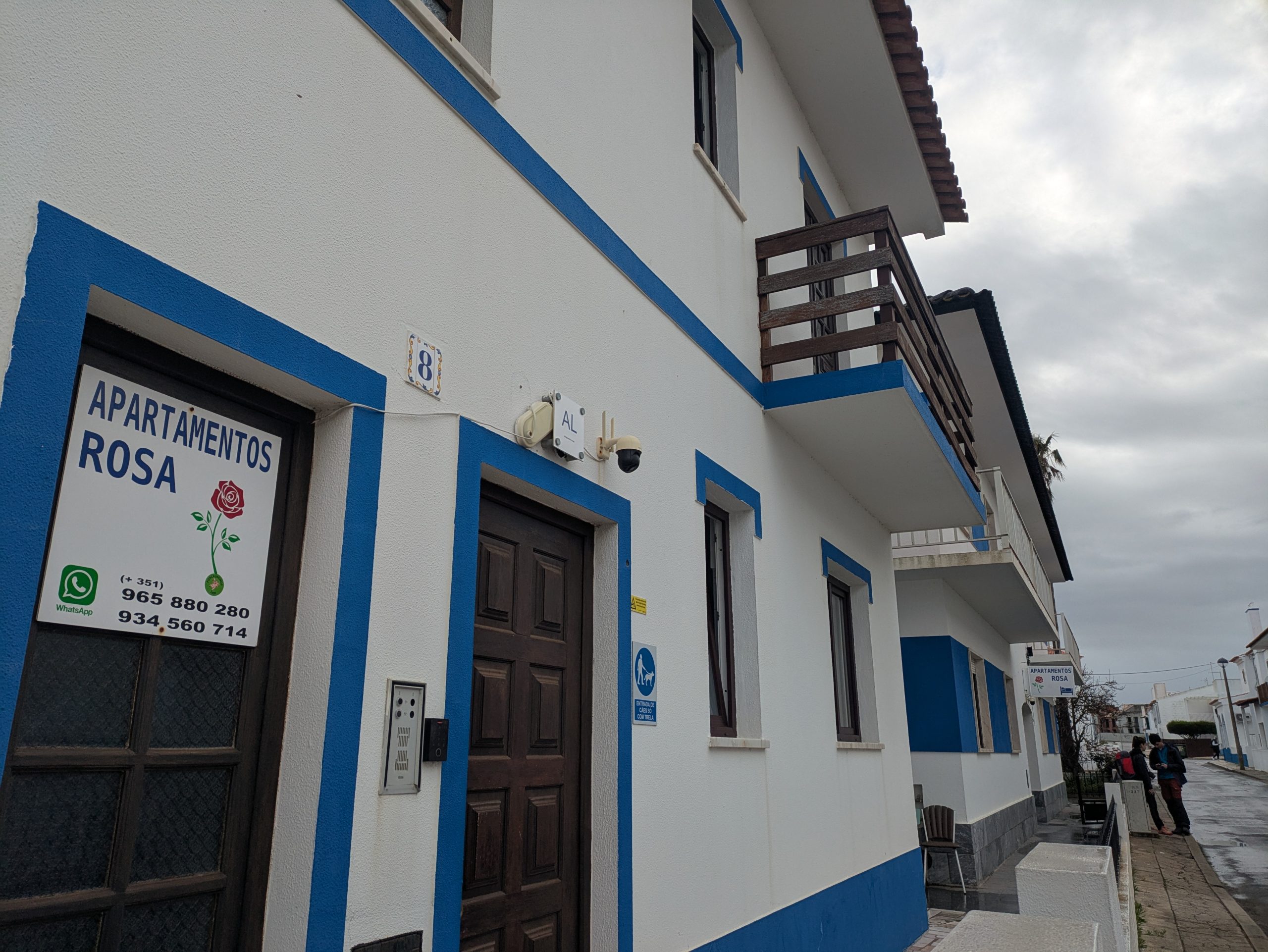
Unlike the Camino’s albergues (pilgrim hostels), the Rota Vicentina relies on local tourism infrastructure. This means the quality is generally much higher, but the "hiker culture" is a bit more distributed.
- Eco-Farms: If you want a rest day that feels like a dream, look for "Turismo Rural" spots.
- The Luxury Option: If your budget allows, stay at Craveiral Farmhouse near Zambujeira do Mar. It’s an incredible eco-lodge that perfectly captures the "rugged luxury" of the region.
- Wild Camping: Be warned—wild camping is strictly prohibited within the Natural Park to protect the fragile ecosystem. Stick to the guesthouses and campsites; the locals are protective of their land, and for good reason.
FAQ
Do I need a permit or a "Pilgrim's Passport"? No. Unlike the Camino, there is no official "credential" required to hike the Fisherman’s Trail. You simply show up and walk. However, I recommend downloading the Rota Vicentina app for offline maps.
Can I hike it with a dog? While dogs are allowed on the trail, it’s tough. The heat, the lack of water, and the sharp rocks can be hard on paws. Also, many guesthouses do not allow pets, so you’d need to plan meticulously.
Is the trail well-marked? Extremely. The blue and green stripes are everywhere—on rocks, posts, and walls. If you haven't seen a marker in 200 meters, you’ve probably followed a fisherman's path down to a cliff edge instead of the main trail.
Conclusion: The Atlantic is Calling
The Fisherman’s Trail isn't just an alternative to the Camino; for many modern hikers, it’s an upgrade. It swaps the crowded "yellow arrow" path for a wild, salt-stained journey that demands more of your body but gives more to your soul. You’ll finish with sand in your shoes, sun on your face, and a profound respect for the power of the Atlantic.
If you’re tired of the crowds and looking for a trek that feels like a true expedition, head to Porto Covo. The cliffs are waiting.