As we look toward 2025, the definition of a "premier beach" has undergone a significant recalibration. Modern luxury is increasingly defined by silence rather than service, and exclusivity is measured by the length of the hike required to reach the shoreline. Our latest data indicates a 20% surge in demand for "off-the-grid" seclusion, with travelers actively bypassing the sun-lounger grids of the French Riviera in favor of the rugged, boat-access-only coves of the Ionian and Adriatic seas.
Greece and Italy continue to dominate the high-end coastal market, collectively accounting for 35% of our top-rated European destinations for the upcoming season. However, there is a burgeoning interest in the "Cold Caribbean" of Northern Europe—regions where the Gulf Stream meets pristine white sands, offering a different kind of aesthetic value.
Comparison: UNESCO Heritage vs. Secluded Hidden Gems
Before diving into the full list, it is essential to distinguish between the historically significant landmarks and the modern-day retreats of the quiet traveler.
| Category | Beach Name | Location | Access Difficulty | Best For |
|---|---|---|---|---|
| UNESCO | Cala Goloritzé | Sardinia, Italy | Difficult (Hike/Boat) | Geological Wonder |
| UNESCO | Durdle Door | Dorset, England | Moderate | Iconic Landscapes |
| UNESCO | Giant’s Causeway | N. Ireland | Easy/Moderate | Hexagonal Basalt Columns |
| Hidden Gem | Fteri Beach | Kefalonia, Greece | Difficult (Boat Only) | Pure Isolation |
| Hidden Gem | Nugal Beach | Makarska, Croatia | Moderate (40m Hike) | Cliffside Serenity |
The 'Off-the-Grid' Hidden Gems: Avoiding the 2025 Crowds
The most sophisticated travelers in 2025 are those willing to work for their views. The "effort-to-reward" ratio is the new metric for coastal excellence.
1. Île de Porquerolles, France Best for: Vehicle-free tranquility Located off the coast of Hyères, this island is a sanctuary of eucalyptus and pine. Being car-free, the air quality and silence are unparalleled. Plage de Notre Dame is the crown jewel here, offering a shimmering crescent of azure that feels a world away from the crowded mainland. Where to Stay: Hotel Le Mas du Langoustier for an authentic, secluded Provencal experience.
2. Fteri Beach, Kefalonia, Greece Best for: Total seclusion Fteri remains one of the few places in Greece where you can genuinely feel alone. With no road access, you must either hire a water taxi from Zola or embark on a rigorous 60-minute trek. The reward is a blindingly white pebble beach set against neon-blue water. Where to Stay: F Zeen Retreat, located on the south coast, offers the perfect wellness-focused base.
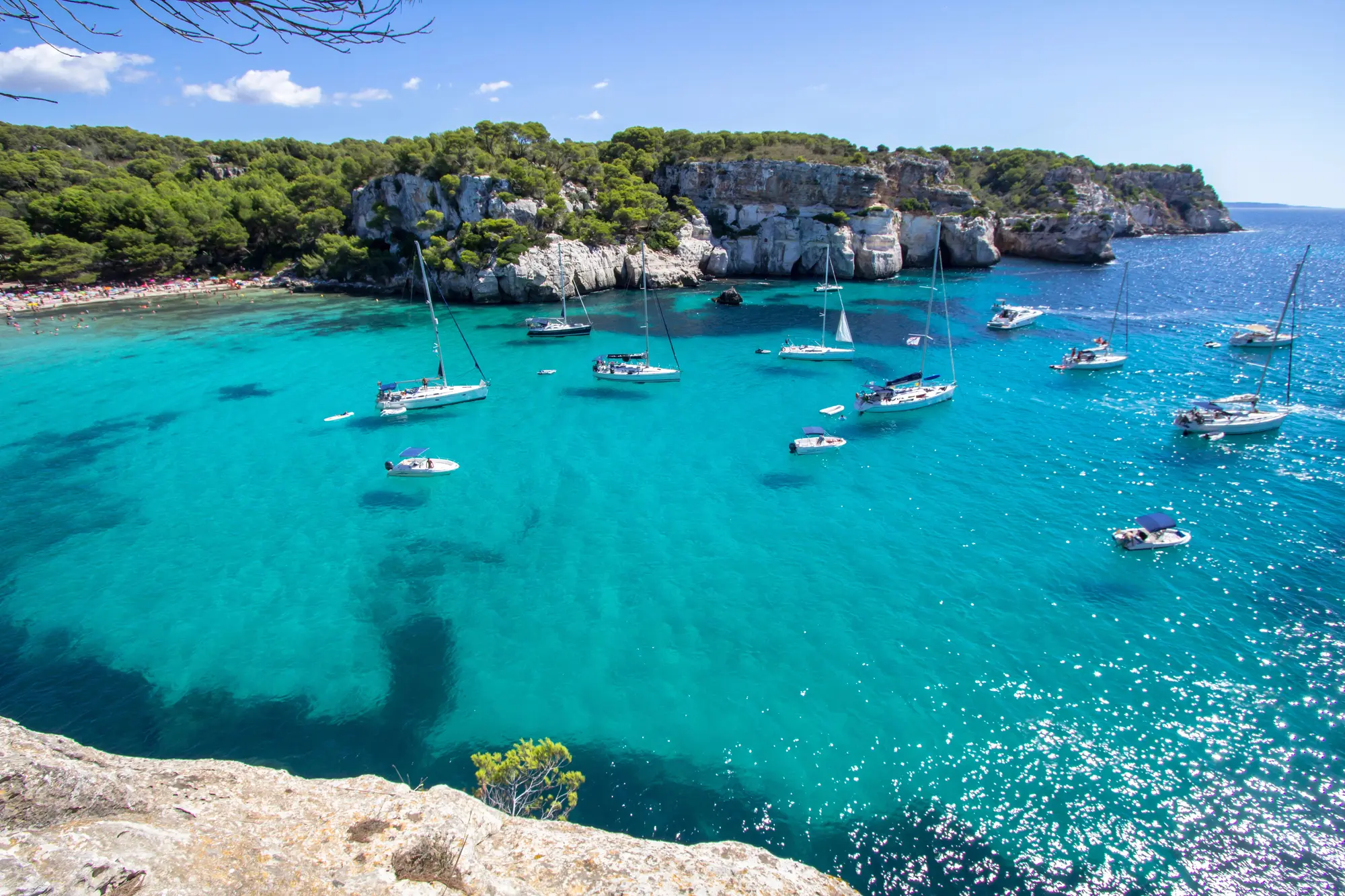
3. Cala Macarella, Menorca, Spain Best for: Pine-scented swimming While Menorca is no secret, Cala Macarella requires a 20-minute hike through a fragrant pine forest that acts as a natural filter for the masses. The water clarity is such that boats appear to be hovering in mid-air.
4. Nugal Beach, Croatia Best for: Dramatic cliffside views Tucked beneath the Biokovo mountain range, Nugal is accessible via a 40-minute walk through a forest. It features a stunning 30-foot seasonal waterfall that tumbles from the cliffs directly toward the pebbled shore during the shoulder seasons. Where to Stay: Aminess Khalani Beach Hotel in nearby Makarska.
5. Cape Greco, Cyprus Best for: Sea caves and cliff diving A rugged headland where the land crumbles into the sea. The "Blue Lagoon" here is exceptional for snorkeling, though the "beaches" are more about flat limestone platforms and secret sea caves.
6. Plage de Saleccia, Corsica, France Best for: Untamed wildness A mile of silver sand and desert-like dunes, accessible only by a 4x4 vehicle or a boat from Saint-Florent. It remains one of the most untouched stretches in the Mediterranean.
7. Praia da Ursa, Portugal Best for: Dramatic Atlantic sunsets Located near Cabo da Roca, the westernmost point of mainland Europe, this beach requires a steep descent but offers some of the most prehistoric-looking rock stacks on the continent.
Unique & Geological Wonders
For those seeking the "Most Unique Beach in Europe," the answer lies in the volcanic history of the Mediterranean and the North Atlantic.
8. Sarakiniko Beach, Milos, Greece Best for: Otherworldly photography Sarakiniko is effectively a lunar landscape transported to the Aegean. The sun-bleached, bone-white volcanic rocks have been smoothed by wind and salt into undulating waves, contrasting sharply against the deep cobalt sea. There is no sand here—only smooth stone and the feeling of walking on another planet. Where to Stay: Milos Cove for brutalist-luxe architecture that mirrors the landscape.
9. Reynisfjara, Iceland Best for: Gothic atmosphere With sand as black as caviar and towering basalt columns known as Gardar, this is not a beach for swimming, but for witnessing the raw power of the Atlantic. The "sneaker waves" here are legendary; caution is advised.
10. Diamond Beach, Iceland Best for: Glacial beauty On the South Coast, chunks of ancient glacial ice wash up on the black volcanic sands of Breiðamerkursandur, glistening like diamonds in the sun. It is a hauntingly beautiful reminder of the shifting climate.
11. Paleochori Beach, Milos, Greece Best for: Geothermal experiences The cliffs here are a kaleidoscope of red, yellow, and green due to the high mineral content. Because of the volcanic activity, the sand is literally hot to the touch in places. Local tavernas even offer "sand-pit cooking," where stews are slow-cooked overnight in the geothermal heat of the beach.
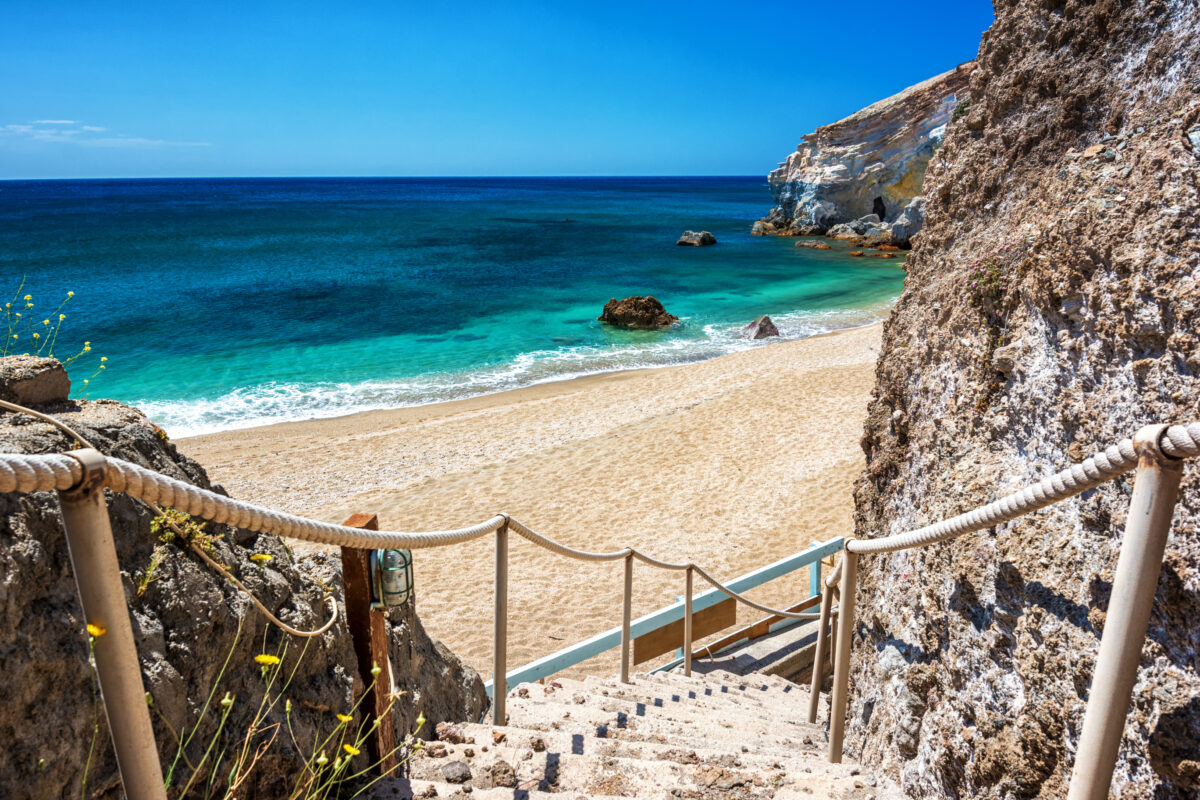
12. Zlatni Rat, Croatia Best for: Shifting sands The "Golden Horn" on Brač island is famous for its tip that physically changes direction based on the prevailing sea currents and wind—a living, breathing geographical feature.
13. Scala dei Turchi, Sicily, Italy Best for: Limestone terraces A blindingly white marl cliff that has eroded into a natural staircase. It’s a favorite for locals who cover themselves in the mineral-rich clay for a DIY spa treatment.
UNESCO World Heritage Coastal Sites
These are the sites recognized not just for their beauty, but for their universal value to humanity.
14. Cala Goloritzé, Sardinia, Italy Best for: Limestone architecture Created by a landslide in 1962, this beach is famous for its 143-meter limestone pinnacle that soars over the cove. It is a National Monument of Italy and a UNESCO-protected site, meaning no boats with engines can dock here—preserving its crystalline silence. Where to Stay: Su Gologone for a deep dive into Sardinian culture.
15. Durdle Door, Dorset, England Best for: Prehistoric geology The iconic limestone arch on the Jurassic Coast is a marvel of 140 million years of erosion. The water quality is consistently rated as excellent, though the English Channel remains brisk even in August.
16. Giant’s Causeway, Northern Ireland Best for: Folklore and geometry While more of a coastal formation than a traditional beach, the 40,000 interlocking basalt columns are a UNESCO masterpiece. The "Grand Causeway" offers a walking experience unlike any other on earth.
Mediterranean Classics: Italy & Greece Deep-Dive
Sometimes, the classics remain classics for a reason. These beaches offer the quintessential European summer experience.
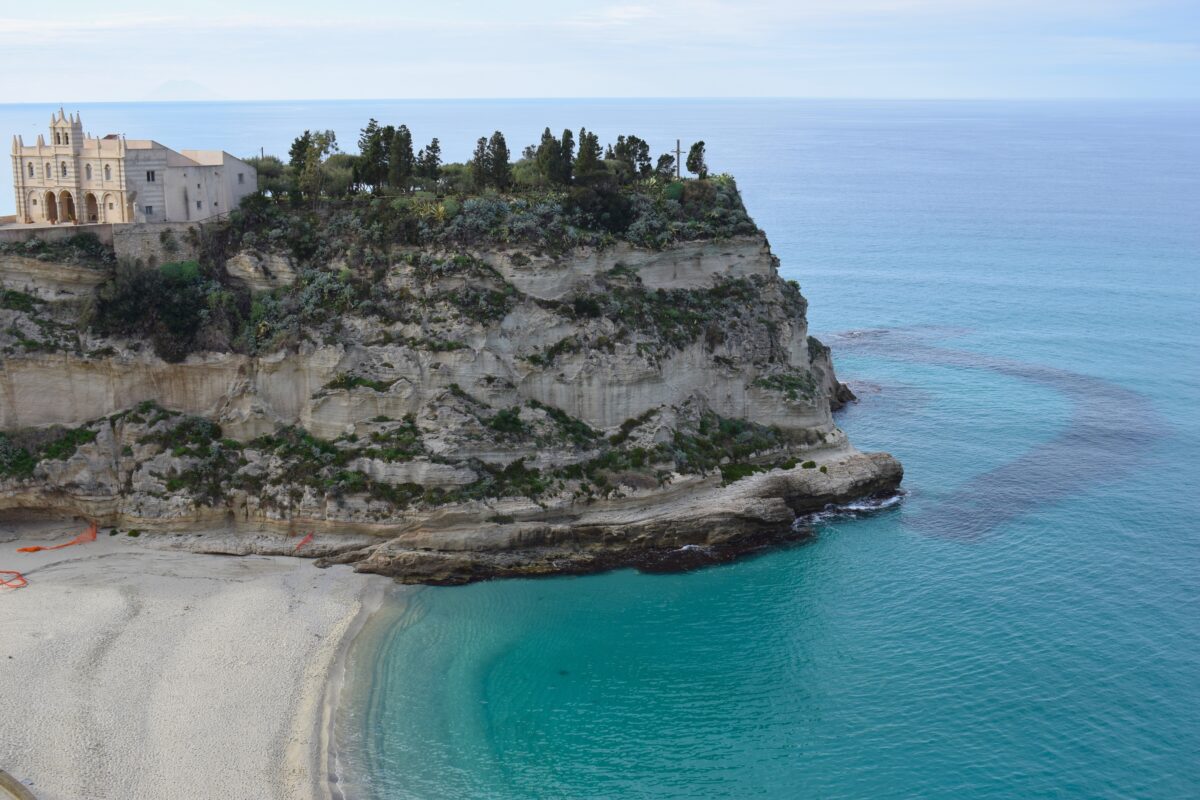
17. Rotonda Beach, Tropea, Italy Best for: Old Town views Sitting at the foot of a 150-foot cliff topped with the historic "Santa Maria dell'Isola" sanctuary, Rotonda Beach offers the perfect juxtaposition of turquoise water and ancient Calabrian architecture.
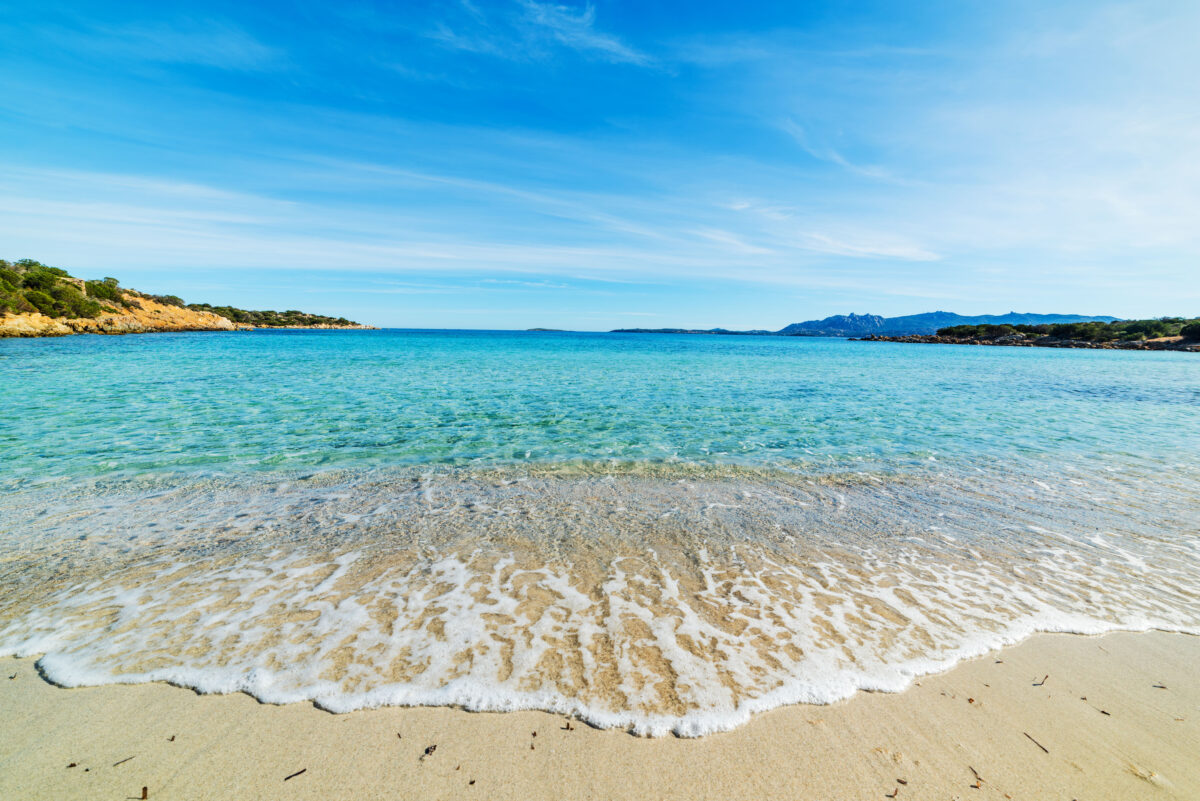
18. Cala Cipolla, Sardinia, Italy Best for: Snorkeling A small, sheltered cove framed by granite rocks and ancient juniper trees. The water is shallow and exceptionally clear, making it a haven for Mediterranean sea life.
19. Spiaggia del Relitto, Maddalena Archipelago, Italy Best for: Shallow lagoons Located on the island of Caprera, this beach features the remains of an old wooden shipwreck. The water depth remains waist-high for dozens of meters, creating a natural swimming pool effect.
20. Elafonisi Beach, Crete, Greece Best for: Pink sands The crushed shells of tiny crustaceans give the shoreline a distinct pastel-pink hue. It is a sprawling lagoon system where the water rarely reaches above the knee.
21. Navagio Beach (Shipwreck), Zakynthos, Greece Best for: Iconic vistas While access to the sand itself is often restricted due to cliff stability, the view from the monastery platform above remains the most photographed coastal scene in Europe.
22. Balos Lagoon, Crete, Greece Best for: Wild panoramas Accessible via a rocky dirt road or a ferry from Kissamos, Balos is a confluence of white sand and vivid turquoise waters that looks more like the Maldives than the Mediterranean.
23. Myrtos Beach, Kefalonia, Greece Best for: Electric blue water Between two mountains (Agia Dynati and Kalon Oros), Myrtos is famous for its marble pebbles that turn the water an almost artificial shade of electric blue.
24. Spiaggia dei Conigli, Lampedusa, Italy Best for: African-Mediterranean fusion Consistently ranked as one of the best in the world, "Rabbit Beach" offers shallow, crystal-clear water and is a vital nesting site for loggerhead sea turtles.
25. Oludeniz, Turkey Best for: Paragliding views The "Blue Lagoon" of Turkey is a protected national nature reserve where the water remains calm even during storms.
Northern Europe’s Surprising Shores
Northern Europe is the "dark horse" of 2025 travel. With rising temperatures in the south, the temperate climates of the North are seeing a luxury renaissance.
26. Porthcurno Beach, Cornwall, England Best for: The 'English Caribbean' With soft white sand and high granite cliffs, Porthcurno looks like a tropical paradise. It is also home to the Minack Theatre, an open-air amphitheater carved into the cliffside. Where to Stay: The Old Coastguard in nearby Mousehole.
27. Luskentyre Sands, Isle of Harris, Scotland Best for: Solitude and scenery The water here is deceptively tropical in color, though the temperature is a bracing 12-14°C. However, the Gulf Stream keeps the air milder than you’d expect, and the views of the North Harris mountains are unparalleled.
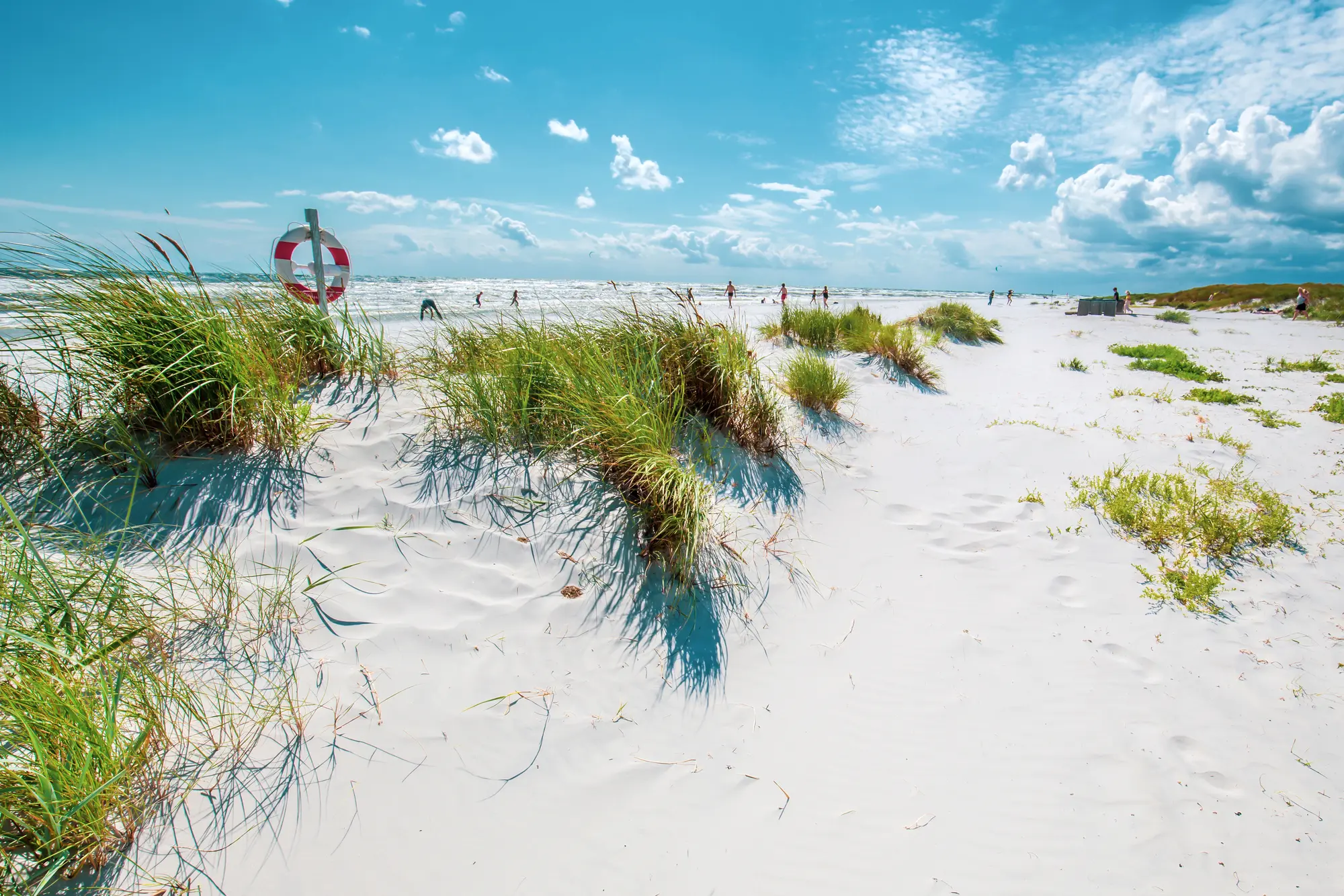
28. Bornholm, Denmark (Dueodde Beach) Best for: Fine-grain sand The sand at Dueodde is so fine and white that it was historically used in hourglasses. The beach is backed by vast pine forests and sand dunes that seem to stretch forever.
29. Tisvilde, Denmark Best for: Danish 'Hygge' A chic getaway for Copenhagen's elite, offering wide sandy beaches and a charming town center filled with organic cafes and boutique hotels.
30. Fårö Island, Sweden Best for: Limestone 'Rauk' formations The island where Ingmar Bergman lived and filmed. The beaches here are defined by massive, eerie limestone stacks and a stark, haunting beauty.
Luxury & Surf Destinations
For those who want a side of adrenaline or high-society people-watching with their ocean breeze.
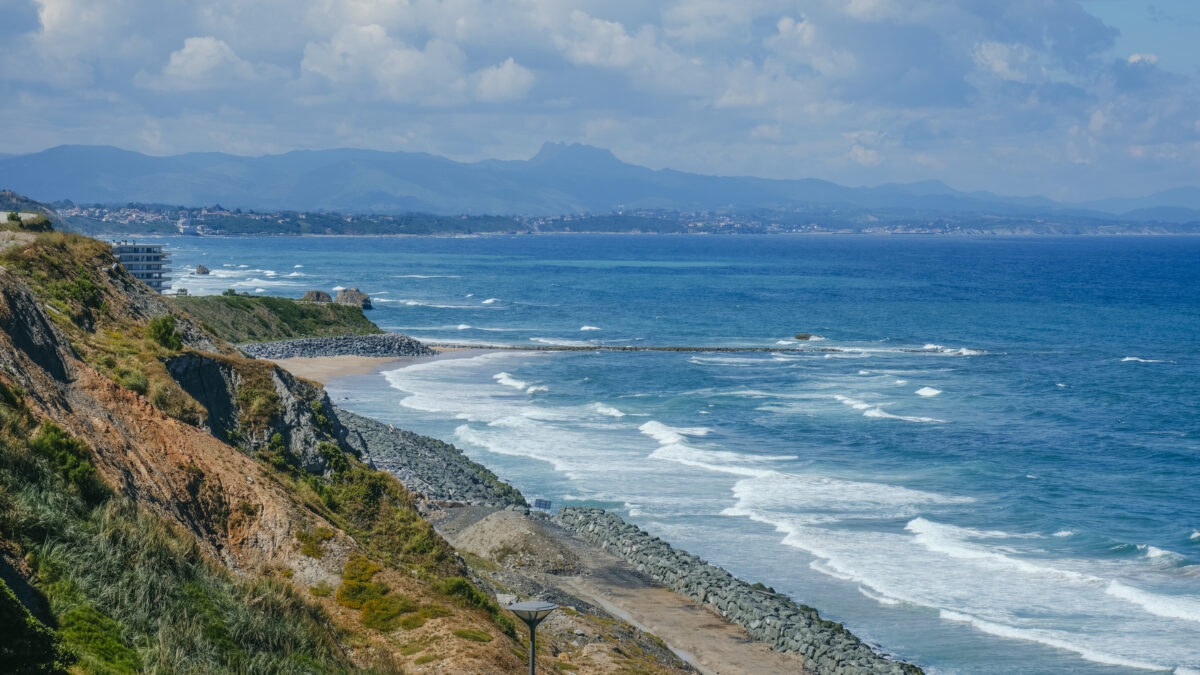
31. Biarritz, France (Côte des Basques) Best for: Sophisticated surfing Biarritz is where European surfing was born. Côte des Basques is framed by grand architecture and offers long, mellow waves perfect for longboarding.
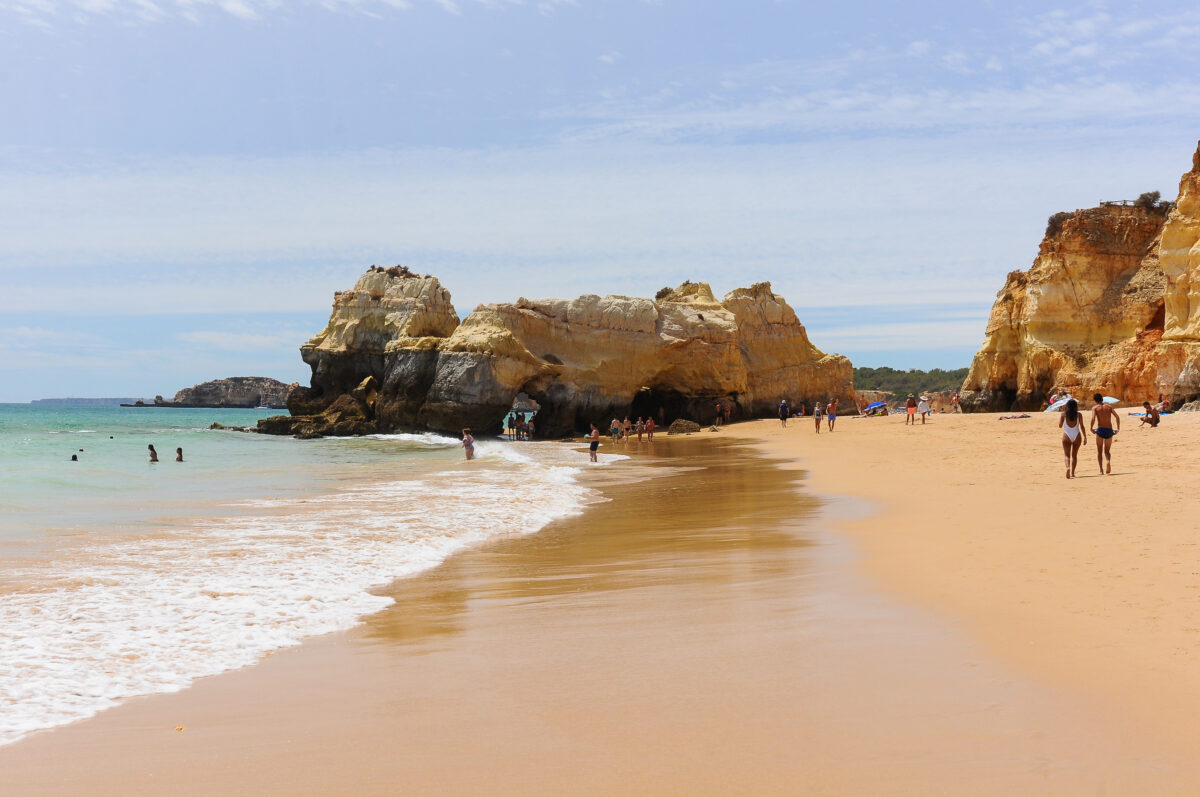
32. Praia da Marinha, Algarve, Portugal Best for: Snorkeling and sea stacks Often used in international advertising for Portugal, this beach features the iconic "M" rock formation and dozens of hidden grottoes accessible only by swimming.
33. Praia dos Três Castelos, Portugal Best for: Low-key luxury While nearby Praia da Rocha is crowded, Três Castelos offers the same dramatic ochre cliffs with significantly more breathing room.
34. Sveti Stefan, Montenegro Best for: Celebrity watching A fortified island village connected to the mainland by a narrow causeway. While the island itself is an Aman resort, the pink-pebble beaches flanking the causeway offer the best views of the Adriatic's most iconic silhouette.
35. Banje Beach, Dubrovnik, Croatia Best for: City-side glamour Just a short walk from the Old Town walls, Banje offers a high-end beach club vibe with an unobstructed view of the Pearl of the Adriatic.
2025 Planning Guide: How to Choose Your Destination
Choosing the right European beach in 2025 requires balancing timing with logistics. If you are targeting Greece or Italy, the "sweet spot" is now the shoulder season—late May to June or September to early October. July and August are increasingly becoming too hot for comfortable exploration.
For Northern Europe, the window is narrower: mid-July to mid-August is your best bet for swimmable water.
Logistics Tip: For secluded spots like Fteri or Cala Goloritzé, do not rely on public transport. Renting a small boat (no license required for lower horsepower in many regions) is the most efficient way to access the 20% of beaches that are truly "off-the-grid."
Compare Flights to Europe 2025 →
FAQ
What is the most unique beach in Europe? Sarakiniko Beach in Milos, Greece, is widely considered the most unique due to its bone-white, lunar volcanic landscape that lacks traditional sand.
Which European beaches are best for avoiding crowds? For total seclusion, look toward Île de Porquerolles in France, which is car-free, or Fteri Beach in Kefalonia, which is only accessible by boat or a 1-hour hike.
What are the best UNESCO-recognized beaches in Europe? Key UNESCO coastal sites include Cala Goloritzé in Sardinia, Durdle Door in England, and the Giant’s Causeway in Northern Ireland.
Are Northern European beaches warm enough for swimming? While the water is colder (averaging 12-16°C), beaches like Luskentyre and Dueodde are perfect for sunbathing and shallow wading during the peak summer months.
James Wright is a Senior Travel Critic with 15 years of experience in luxury hospitality and coastal geography. His 2025 rankings are based on water quality data, accessibility metrics, and traveler sentiment analysis.