There is a specific quality to the light in Madrid during the month of April—a translucent, golden clarity that the great Velázquez once captured on his canvases and that still dances across the granite facades of the Plaza de Oriente today. To arrive in Madrid in the spring is to witness a city shaking off its winter stoicism and erupting into a "vibrant vitality" that feels less like a season and more like a collective celebration. Between April and June, the Castilian air loses its bite, replaced by the scent of blossoming almond trees and the low hum of terraces coming back to life. For the artist, the traveler, and the dreamer, this is the definitive window to experience the Spanish capital before the searing heat of July settles over the Meseta.
The Canvas of Spring: Cherry Blossoms and Hidden Green Spaces
While the world flocks to the cherry blossoms of Kyoto or Washington D.C., Madrid offers a Mediterranean interpretation of spring that is equally soul-stirring. The city’s "Landscape of Light"—the UNESCO-designated corridor comprising the Paseo del Prado and Retiro Park—is the natural starting point. In the Retiro, the air is thick with the fragrance of the Rosaleda (Rose Garden), where over 4,000 bushes begin their ascent toward full bloom.
However, the true artist’s secret lies further afield. For those seeking the ephemeral beauty of the floración, head to Parque Quinta de los Molinos. Here, hundreds of almond trees create a canopy of white and pale pink that feels miles away from the urban bustle. Equally enchanting is El Capricho Park in Alameda de Osuna. This 18th-century romantic garden is a masterpiece of landscape design, featuring a "beehive" house, a cooling pond, and a hidden bunker from the Civil War. It is perhaps the most poetic corner of the city, where the spring foliage frames neoclassical temples in a way that begs to be sketched.
Pro Tip: To capture the best light for photography or painting, head to the Temple of Debod at sunset. The way the spring sky turns a deep violet behind the ancient Egyptian stones, with the domes of the Almudena Cathedral in the distance, is the quintessential Madrid "blue hour" experience.
The Secret Museum Circuit: High-Density Culture in 2026
Madrid is often defined by its "Golden Triangle"—the Prado, the Thyssen-Bornemisza, and the Reina Sofía. While these are essential, the city’s true cultural soul is often found in its intimate, specialized museums. As of 2026, Madrid boasts over 15 specialized museums within a 20-minute walking radius of the city center, making it one of Europe's highest-density cultural hubs.
Moving beyond the grand galleries allows you to step into the private lives of the aristocracy and the Romantics. The Museo del Romanticismo, housed in a late 18th-century palace, offers a lush, immersive look at the art and daily life of the 1800s. Nearby, the Museo Cerralbo remains one of the most important private collections in Spain, its interiors a riot of neo-baroque and rococo splendor that remains largely untouched by time.
| Museum Type | Grand Institutions | Hidden Artistic Gems |
|---|---|---|
| Atmosphere | Vast, monumental, crowded | Intimate, domestic, quiet |
| Focus | National treasures & Art History | Specific eras & Personal collections |
| Example 1 | Museo del Prado: The titans (Goya, Velázquez) | Museo Sorolla: The "Painter of Light's" garden villa |
| Example 2 | Reina Sofía: Modernity & Guernica | Museo Lázaro-Galdiano: An eclectic jewelry box of art |
| 2026 Update | Renovated galleries for better flow | Enhanced digital guides & extended evening hours |
By 2026, the Prado Museum has completed its latest subtle renovation, optimizing the viewing experience for Velázquez’s Las Meninas, but the real joy remains the Museo Lázaro-Galdiano. It houses works by Bosch and Goya in a mansion surrounded by a serene garden—a perfect retreat when the midday sun begins to warm the pavement.
An Artist’s Palette: Where to Eat Like a Local
In Madrid, gastronomy is an extension of the arts. To eat here is to participate in a ritual as old as the city itself. For an authentic taste of history, one must visit Malacatín. This century-old tavern in the Barrio de La Latina is famous for its cocido madrileño, a three-course chickpea-based stew that is the definitive comfort food of the capital. The tiles are aged, the wine is robust, and the service carries the brusque affection of a bygone era.
As the weather warms, the city’s culinary scene moves outdoors. Sacha, tucked away in a quiet northern neighborhood, is where the city’s chefs go to eat. Their terrace is an oasis of green, the perfect setting for their legendary tortilla vaga (a "lazy" omelet served open-faced) and seasonal artichokes that are so tender they feel like a tribute to the spring harvest.
In the Barrio de Las Letras (the Literary Quarter), the tradition of the tapeo thrives. Wander down Calle de Jesús or Calle de las Huertas, where the ghost of Cervantes arguably still lingers. Look for the tascas with zinc bars and sawdust on the floor.
- La Venencia: A sherry-only bar where time stopped in the 1930s. No photos, no shouting, just exceptional Manzanilla and olives.
- Casa Alberto: Founded in 1827, perfect for a vermouth on tap and a plate of callos (tripe) or seasonal white asparagus.
- La Fisna: For those who prefer a modern wine list featuring small Spanish producers and exquisite cheese pairings.
Navigating the 2026 Landscape: Practical Planning
Madrid in 2026 is more accessible than ever. The significant expansion of Metro lines 6 and 11 has improved transit efficiency between the city center and the southern art districts by approximately 25%. This means you can move from the historic center to the contemporary art spaces of Matadero Madrid in record time.
2026 Budget & Logistics
- Daily Budget: For a mid-range experience (boutique stay, two meals out, museum entries), plan for €80-120 per day.
- Madrid City Pass: Starting at €95, this pass is invaluable for 2026 travel, covering the Prado, the Royal Palace, and a 3-day hop-on-hop-off bus that connects the major parks.
- Transport: Use the Tarjeta Multi. The Metro is clean, safe, and incredibly frequent.
- Booking Timeline: For 2026, the secret is out. Secure your tickets for the Prado and the Royal Palace at least 2-3 weeks in advance. If you plan a day trip to Toledo or Segovia via the high-speed AVE train, book a month out to secure the best prices.
Sample Spring Itinerary: 3 Days of Artistic Immersion
Day 1: Royal Heritage & The Austrian District
Start your morning at the Royal Palace, arriving early to catch the soft light on the white Colmenar stone. Afterward, wander through the winding alleys of Madrid de los Austrias. Grab a lunch of bocadillo de calamares near Plaza Mayor, but eat it like a local: standing up at a crowded bar. Spend your afternoon in the Museo del Romanticismo, ending the day with a sunset stroll through the Sabatini Gardens.
Day 2: The Golden Triangle & Retiro Sunset
Dedicate your morning to the Prado Museum. Focus on the "Black Paintings" of Goya—they are more impactful in the cool air of a spring morning. For lunch, head to the nearby Barrio de Las Letras for tapas. In the late afternoon, enter Retiro Park. Rent a rowboat on the lake or simply find a bench near the Crystal Palace (Palacio de Cristal) to watch the sunlight filter through the glass.
Day 3: UNESCO Day Trip
Take the short, 30-minute train journey to Alcalá de Henares, the birthplace of Cervantes, or head to the monumental El Escorial. These sites offer a profound contrast to the city's energy.
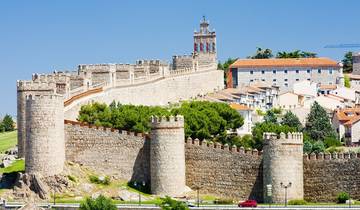
If you choose the route toward Segovia, the transition from urban sophistication to Roman engineering is breathtaking.
FAQ: Your 2026 Madrid Spring Questions Answered
Q: Is April too rainy for a walking tour? A: Madrid is relatively dry, but April can bring "Mil Aguas" (a thousand waters). Usually, these are short, refreshing showers followed by bright sunshine. Always carry a light trench coat or a stylish umbrella.
Q: Can I see the cherry blossoms in late May? A: No, the peak for almond and cherry blossoms is usually late March to mid-April. By late May, the city transitions into the season of roses and lush green chestnuts.
Q: Is the Madrid City Pass worth it in 2026? A: Yes, especially with the 2026 price adjustments. It simplifies the booking process for the "Big Three" museums and includes the airport transfer, which saves both time and stress.
Conclusion: Making Your 2026 Trip Unforgettable
Madrid in the spring is not a destination you simply visit; it is a city you feel. It is found in the clinking of glasses on a terrace in Plaza de Olavide, the scent of damp earth in the Retiro after a brief rain, and the quiet awe of standing before a Goya masterpiece without the summer crowds. As 2026 brings new efficiencies to the city’s infrastructure, the core of Madrid remains unchanged: it is a village disguised as a metropolis, an artist’s studio disguised as a capital.