We’ve all been there: you’re three days into a family road trip, the snacks are running low, and the "Are we there yet?" chorus is reaching a fever pitch. You need a win. Not just a "this will do for an hour" win, but a destination that leaves your kids breathless and gives you a moment to breathe. In my years as a travel editor and a mom of two, I’ve found that nothing saves a vacation quite like a world-class children’s museum. These aren't the "hushed whispers and velvet ropes" museums of our childhoods. These are massive, interactive, and beautifully chaotic spaces where "please touch" is the only rule.
Why These Museums Are Standalone Destinations
If you’re planning a trip around an educational experience, you need to know which spots are truly worth the detour. While many cities have local play centers, a select few in the U.S. have redefined what "play" looks like. The Children's Museum of Indianapolis holds the title of the largest children's museum in the world, a five-story behemoth that could easily take two full days to explore. For the budding scientists, San Francisco’s Exploratorium remains the gold standard, blurring the lines between high art and hard physics. Meanwhile, The Strong National Museum of Play in Rochester is a pilgrimage site for anyone who values the history of how we learn through games—it’s the only museum globally dedicated entirely to the exploration of play.
From 10-story slides in St. Louis to "Spy Academies" in San Antonio, these eight destinations aren't just stops on a trip; they are the reason for the trip itself.
1. The Children’s Museum of Indianapolis, Indiana
Best for: Rising athletes and future paleontologists
Walking into The Children’s Museum of Indianapolis feels a bit like entering a kid-designed city. It’s a staggering 472,900 square feet of pure imagination. The crown jewel for many families is the Dinosphere, where you can get face-to-face with a real T. rex skeleton and watch real paleontologists clean fossils in the lab. But what truly sets this museum apart is the 7.5-acre Riley Children’s Health Sports Legends Experience. It’s an outdoor wonderland where kids can practice their "swish" on basketball courts, run on a mini-track, or learn the physics of a golf swing.
Inside, the spectacle continues with the largest water clock in North America—a mesmerizing 26-foot tall sculpture that uses green-tinted water to track the hours and minutes. With five floors of exhibits, including a working carousel from 1917, it’s a place where value meets variety.
- Quick Stats: World's largest children's museum; 5 floors; features a 7.5-acre outdoor sports campus.
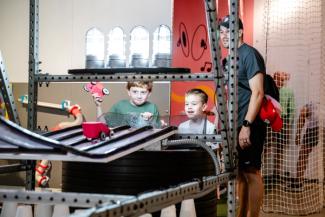
Sophia’s Pro-Tip: This museum is massive. If you have younger kids, bring the stroller—even if they usually walk. You’ll cover miles here. Also, check the daily schedule for "End of Day" celebrations; they often involve music and parades that are the perfect way to burn off that last bit of energy before the car ride home.
2. Exploratorium, San Francisco, California
Best for: Young Einsteins and tech-savvy teens
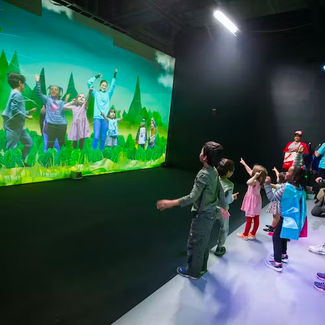
Located on Pier 15 with stunning views of the Bay, the Exploratorium is less of a museum and more of a massive laboratory. It features over 700 interactive exhibits that explore biology, physics, and human perception. This is the place for the kid who is always asking "Why?" or "How does this work?" They can step inside a literal tornado simulator to feel the rush of air or experiment with giant mirrors that play tricks on the eyes.
One of the most famous experiences here is the Tactile Dome, a pitch-black maze where you must rely entirely on your sense of touch to navigate. (Note: This requires a separate reservation and is best for older kids!). The museum also excels at inclusivity, offering multilingual programming in English, Spanish, and Chinese to serve the diverse families visiting the Bay Area.
- Quick Stats: 700+ interactive exhibits; 330,000 square feet of indoor/outdoor space.
3. The Strong National Museum of Play, Rochester, New York
Best for: Gaming geeks and nostalgia seekers
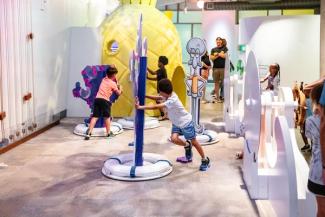
This is the only museum in the world that treats "play" as a serious subject of study—and it is delightful. The Strong houses the National Toy Hall of Fame and the World Video Game Hall of Fame, making it a hit for both kids and parents who want to show their children the original Game Boy or Etch A Sketch.
The museum recently underwent a massive 90,000-square-foot expansion, adding the Hasbro Game Park (where you can walk through a life-sized Candy Land) and an epic ESL Digital Worlds exhibit that explores the history of electronic gaming. If your kids need a sensory break, the year-round indoor butterfly garden is a peaceful, lush escape where hundreds of free-flying butterflies might just land on your shoulder.
- Quick Stats: Over 150,000 square feet; home to the world’s largest collection of toys, dolls, and games.
4. The City Museum, St. Louis, Missouri
Best for: Thrill-seekers and steampunk fans
If Tim Burton and an industrial engineer designed a playground, it would look like The City Museum. Housed in a 600,000-square-foot former shoe warehouse, this museum is a surrealist masterpiece made from reclaimed architectural and industrial objects. There are no maps here—exploration is the point. Kids can scramble through a network of iron tunnels, crawl through a "whale" in the basement, or take a 10-story spiral slide all the way to the ground floor.
The roof is equally wild, featuring a working Ferris wheel and an old school bus hanging off the edge of the building. It’s gritty, it’s exhilarating, and it’s unlike any other museum on this list.
- Quick Stats: 600,000 square feet; features a rooftop Ferris wheel and a 10-story slide.
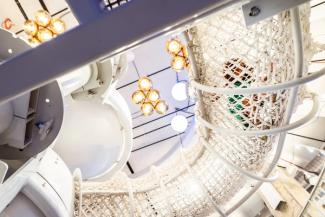
Sophia’s Pro-Tip: Wear long pants and closed-toe shoes! Between the iron tunnels and the giant slides, there is a lot of potential for knee scrapes. Also, parents, if you’re claustrophobic, let the kids do the tunnels while you meet them at the exit—the spaces can get quite tight!
5. Musical Instrument Museum (MIM), Phoenix, Arizona
Best for: Music lovers of all ages
While "Musical Instrument Museum" might sound like a place where you have to be quiet, the MIM is surprisingly loud and interactive. Each guest wears a high-tech headset that automatically plays the music of the instruments you are standing in front of. With 7,500+ instruments from 200 countries, it’s a global journey through sound.
The highlight for families is the Experience Gallery. This is a dedicated space where kids can actually play the instruments they’ve seen, from a Peruvian harp to a massive Javanese gamelan or a therapeutic gong. It’s a sensory-rich environment that encourages kids to express themselves through rhythm and melody.
- Quick Stats: Largest museum of its kind in the world; features instruments from every country on Earth.
6. Children’s Museum & Theatre of Maine, Portland
Best for: Aspiring playwrights and marine biologists
Portland’s gem is located on Thompson’s Point and offers a beautiful blend of art and science. It houses the nation’s oldest continuously operating children’s theater, where kids can take center stage or work the lights and sound in a professional-grade space.
But the museum also pays deep respect to its coastal home. The Illuminate exhibit uses light to teach physics, while the Wabanaki Storytelling exhibit was developed with Maine’s indigenous communities to share traditional stories. For the animal lovers, the 30,000-square-foot campus includes a touch tank where kids can feel the bumpy skin of a sea star or watch local fish swim in a 2,000-gallon aquarium.
- Quick Stats: 30,000-square-foot campus; includes a state-of-the-art theater and aquarium.
7. The DoSeum, San Antonio, Texas
Best for: Prospective spies and roboticists
Everything is bigger in Texas, and The DoSeum is no exception. This San Antonio favorite is focused heavily on STEM (Science, Technology, Engineering, and Math) but masks it all as high-stakes fun. At the Spy Academy, kids receive a "mission" and must use math and logic to crack top-secret codes and complete their objectives.
The museum is also wonderfully bilingual, reflecting the culture of San Antonio with 100+ exhibits in both English and Spanish. Keep an eye out for their rotating exhibits; they often host world-class installations like Pixar’s Inside Out interactive experience, which helps kids explore and identify their emotions through play.
- Quick Stats: 68,000 square feet of indoor space plus 39,000 square feet of outdoor play areas.
8. Marbles Kids Museum, Raleigh, North Carolina
Best for: Future leaders and environmentalists
Marbles Kids Museum is designed around the philosophy that play is the foundation for a successful life. Their Moneypalooza exhibit is a parent favorite, teaching kids about earning, spending, and saving through a colorful, circus-themed playground.
For the eco-conscious family, the Ecosphere is a must-see. It’s a sustainability-minded space where kids can learn about water conservation and renewable energy through hands-on water tables and quizzes. Marbles also boasts Raleigh’s only IMAX theater, making it easy to turn a museum visit into a full-day cinematic event.
- Quick Stats: Largest play-based museum in North Carolina; features a specialized "Kid Grid" for learning about electricity.

Planning Your Visit: Tips for Families
Navigating these massive spaces requires a bit of strategy to avoid the dreaded mid-afternoon meltdown. Here is how to tackle these destinations like a pro:
Ticketing and Timing
Most major museums now require advance reservations and timed entry. This is actually a blessing—it prevents the spaces from becoming unsafely crowded. I always recommend booking the first slot of the morning. You’ll get at least an hour of play before the school groups arrive, and you can be out the door and headed for lunch just as the midday rush begins.
Age-Appropriate Zones
If you have a toddler and a ten-year-old, look for museums with "dedicated zones." For example:
- The Children's Museum of Indianapolis has Playscape, a zone specifically for kids 5 and under with water tables and sensory play.
- The Strong has a dedicated Sesame Street area that is perfect for the preschool crowd while older siblings hit the video games.
Logistical Checklist
| Feature | Recommendation |
|---|---|
| Strollers | Check if the museum offers rentals. Most on this list are 100% stroller-friendly with elevators. |
| Food | Most have cafes, but check the "outside food" policy. Many allow you to bring snacks to eat in designated areas, which is a huge budget-saver. |
| Safety | Take a photo of your child in their outfit of the day as soon as you enter. If you get separated in a 600,000-square-foot space, you’ll have an exact reference for staff. |
FAQs
Q: Are these museums worth it for older kids (10-12)?
Absolutely! Places like the Exploratorium and The City Museum are actually better for older kids because they can handle the more complex physics experiments and the physically demanding climbing structures.
Q: Which museum is best for a child with sensory sensitivities?
The Musical Instrument Museum and The Strong are excellent choices. Many of these museums also offer "Sensory Friendly" days or hours where the lights are dimmed and the volume is turned down. Always check their websites for "Accessibility" pages.
Q: How much time should I budget for a visit?
For the larger ones (Indianapolis, City Museum, The Strong), budget at least 4-5 hours. For the others, 3 hours is usually enough to see the highlights without getting exhausted.
The Bottom Line
A great children’s museum is more than just a place to kill time—it’s a place where your children can discover their passions, whether that’s coding a robot or discovering a dinosaur bone. These eight museums represent the very best of American creativity and educational play. So, the next time you’re planning a family getaway, don't just look for a hotel with a pool—look for a city with a museum that will ignite your child’s imagination.
Ready to start exploring? Grab those comfortable shoes, pack an extra set of socks (trust me on this), and get ready for a trip your kids will talk about for years.